

Hot baits are what every bass angler in America wants most from their local tackle store. Oh, you mean that you do not find yourself walking down every aisle looking and digging through lures that nobody else would use? Of course you do, and rightfully so. What determines a hot bait? Most anglers think a bait is hot if it catches numerous fish or a big fish. A particular lure is hot when it's proven to be productive.
Several factors affect a lure's productivity, stemming from conditions rather than the bait itself. Bottom composition of the lake, weather, and water temperature will determine your success during the cold winter months and year-round. Therefore, it is essential to have a good-quality fishfinder. An accurate weather report will also help you determine what bait is the most productive. Water temperature, however, will be the primary consideration in lure selection.
In winter, numerous baits have proven highly productive. Jigging spoons, jig-and-pigs or craws, crankbaits, and finesse baits are some of the best.
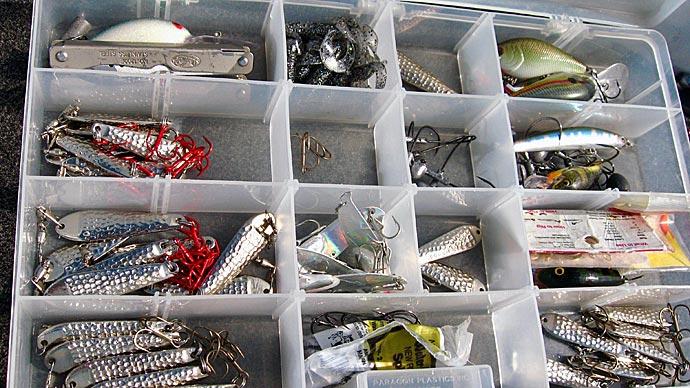
Jigging Spoons
The jigging spoon is the best winter bait when you are searching for numbers of bass. You can catch the occasional big bass, but more often the jigging spoon will entice bass of average size. Bottom composition is the key element to having success with this bait. Water temperatures in the upper 40s and low 50s will cause bass to move to depths of 20 to 40 feet. They'll seek out rock piles, brush piles, or breaklines to hold on through the cold water months.
The best place to locate this type of structure is close to a known spawning area in the depths mentioned. Bass will hold together in deep schools following the shad that have moved to deep water weeks earlier. These bass will usually suspend around any structure. Rather than chasing the shad, bass wait for the small fish to move closer to their strike zone.
The jigging spoon works best fished vertically over the top of the structure. Pumping the bait up and down is the most popular method. The timing between the lifting of the rod tip to raise the bait off the bottom and dropping it again will vary. Remember, when working your lure, always pay attention to your line on the fall. Most bass will hit the jigging spoon on the fall because it looks like a dying shad that is falling to the bottom. Thus is easy prey, and an easy meal.
Jig with Pork or Craw
The jig and pig is one of the best baits in cold water, and year-round for catching big bass. This hot bait has been a big bass lure for many years. What makes the jig and pig a favorite among anglers is that it resembles a crawfish, the number one choice of bass looking for a tasty meal.
Jigs are usually fished in heavy cover, rocks, and deep grass beds. They are excellent on drop-offs, too. Large bass tend not to move very far when feeding. But the key to the productivity of a jig and pig is the slow fall and bulk of the bait.
Depths of 5 to 20 feet are usually where big bass tend to concentrate most of their lives. The natural forage in the area will determine color and size combinations when fishing with a jig. Black/blue is the standard color combination to fish. However, black/chartreuse and pumpkin/green flake can be productive as well. The Strike King Pro-Model jig is popular, but all jigs are basically similar.
Spray attractants can also help entice a strike. Especially during colder months, when bass are sluggish, adding a scent to attract fish is essential. Added or already attached rattles also help by emitting sound through the water to attract bass.
A slower presentation will produce more bites in cold water because bass tend to remain dormant. On unusually warm winter days, don't hesitate to move to 5 to 10 feet of water and flip this bait into brush near the channels. Bass will move into warmer water at shallower depths.
Another productive location on warmer winter days is rip-rap. The bass will move up on the rocks to feed, following the shad that have moved up to feed and warm themselves. Shaking the jig and bouncing it off the rocks can entice a strike from hungry or even just curious bass.
Again, a jig is used by most anglers the majority of the time for catching big bass. It is often a first choice among top tournament anglers.
Crankbaits
Deep diving crankbaits can also be considered a hot bait in the winter months. Bass tend to become active feeders on warm days between cold fronts. Air temperatures usually warm up between cold fronts.
A great starting point for crankbait use is where many rocky points are located. On most lakes, you can find these types of areas on the south end of the lake. Areas with clearer water will warm first. Clearer water allows heat to reach rocks and deeper water more quickly because the sun penetrates the water more easily. Murky water deflects much of the sun's heat, thereby slowing its penetration. A depth of 5 to 10 feet is a good choice for throwing these baits. Why fish so shallow? Well, under these conditions, bass tend to move up and can become active feeders.
Crawfish will be the number one forage for bass this time of year. A 20+ crawfish-colored crankbait is ideal for these conditions. Many lure manufacturers make 20+-foot crankbaits. The DD-22 crankbait by Norman Lures and the Rapala DT20 Series are my choices when the weather is like this. Don't hesitate to spray an attractant on your bait. It can entice a finicky bass into striking.
There are basically three reasons for using such a large crankbait. The first one is that the bass knows it is worth chasing. A large meal means not having to chase anything else for a while, and big bass are basically lazy feeders. Secondly, the large bill and bait size allow a slow retrieve. This will keep the 20+ near the bottom, where the crawfish will be. An added attraction is to cause the bait to dig up a little of the loose bottom, giving the appearance of a crawfish escaping. Finally, the deep-diving crank offers greater casting accuracy thanks to the lure's weight and size.
Crankbaits can be successful if worked slowly and if Mother Nature gives us a few warm winter days. One of the best tricks with cranks is to fish them where you know other people don't. Fish holding in brushy or timbered areas see a lot less crankbaits than fish holding on points. It can pay off very well to utilize these bulky baits in areas where the fish are less likely to have seen them. Most anglers prefer not to use crankbaits in areas where they are more likely to become hung up, but this can offer you an advantage if you have the patience to give it a try.
Finesse Baits
Small, soft plastic grubs can be very hot baits in cold water. Bottom composition is again the key to catching bass with finesse baits.
These small baits work extremely well along bluffs on deep-water lakes for smallmouth and largemouth bass. Points with rock piles and brush piles are excellent locations for catching fish.
Light equipment is best when fishing finesse baits. A good 7-foot spinning rod is my choice for working these lures. 8-to-10-pound test fluorocarbon fishing line is great for feeling the soft bite that you will get when fishing these lures in cold water.
A lead jig head in 1/8- to ¼-ounce is the perfect size, depending on the wind. A 3-inch salt-and-pepper-colored grub by Kalin is an outstanding choice. Chartreuse or white grubs are excellent, too.
What makes this bait hot is that the shad will bunch up in winter and suspend over the bottom compositions mentioned. They will be suspended close to the shad and feed on them when the shad get close to their strike zone.
Electronics are essential when targeting these schools of shad. Once the school is found, work the lure by swimming it through the schools of bass in the general area of the shad. Hopping the grub up and down can also entice a bass into striking. Remember to work the bait more slowly than usual. The bass will have to be tricked into biting during the winter months.
The jigging spoon, jig-and-pig or craw, crankbaits, and finesse baits are very effective during the winter months when used according to the described techniques. Remember, what makes a hot bait is determined by bottom composition, weather conditions, and water temperature. Winter months can be great, mainly because you will not have to fight for a spot to fish. Fish must feed year-round.
Dress according to the fishing conditions. Wear and take more warm clothing than you think you will need. Have plenty of extra socks and other items with you so that if you get wet, you can change to dry clothing promptly. Carry plenty of hot coffee or other warm beverages with you to help give a little warmth from the inside. Some anglers have begun using hand warmers that can be slipped in pockets and inside coats, and even carry small propane heaters for quick warm-ups.
Always let someone know when you're going fishing and when you're expected back during these months. Hypothermia can kill you very quickly. All it takes is falling into the frigid water for just a few seconds. In cold water, you must stay dry and be prepared.
Good luck and God bless.