Brad Reid
Members
-
Joined
-
Last visited
Everything posted by Brad Reid
-
So many good points, histories with the stuff as most of us used it or use it. Contemporary monofilament lines are a thousand percent better than they were when I was a kid. Many are essentially clear. Stretch for many isn't much of an issue. What the heck, your rod flexes after all. Go for it! Brad
-
Well, what I was speaking about would be to push the nose weight on first, then push on a rubber-type bobber stopper. Let the bobber stopper lodge inside the nose weight in a place up the line where you leave a tiny gap so that the hook and its attached plastic swing a bit loose. No, on a drop shot, I use a Roboworm Rebarb hook almost exclusively and it is not an issue, at all, since there is no nose weight. I do what has already been recommended by pushing the hook down through a roboworm on a bias of about 45 degrees, then bring it up but leave it embedded in the worm. It sits there ready to pounce! Brad
-
Congrats for using the great straight shank hook. I find them endlessly more effective than offsets and wide gaps. So, I understand your issue. What I might try is pushing on your nose weight, then follow up with one of the appropriate sized rubber bobber stoppers, then tie on your hook and bait it. Pull the bobber stopper down but not tight to the hook, maybe a 1/16th of gap. I think that'd create a slightly loose hook that would unbind that angle issue you are having. Too, it might let your plastic move and swing more freely and attract an extra bite or two. Brad
-
Lots of good thoughts, ideas. I'd only add as a reminder that spinning gear is generally designed to fight the fish using one's rod, keeping a taut line, a flexed rod, less reeling action . . . until any "drag" session in the tug-of-war with the fish is over for a round (drag is not releasing line) and the rod tip has been raised high or pulled fully in to the side. Then, we reel down very fast to take up line keeping pressure on the line, rinse and repeat until the fish is along side our boats. So, if you use this traditional spinning technique, the gear ratio is a bit less important than it is with casting gear simply because it is more "rod intensive," less so on the reel side of the equation. I have never had an issue reeling down on and dropping my rod tip to prepare for a subsequent "round" with a fish. But, noted above, at least one response mentioned that picking up line fast is a factor if the fish is running at you. I buy that. It happens. I see no disadvantage, at all, in just opting for the higher gear ratio available to you for the series of reels you are considering. Most of the time, you will use your reel to pick up line, not move the fish toward you. Brad
-
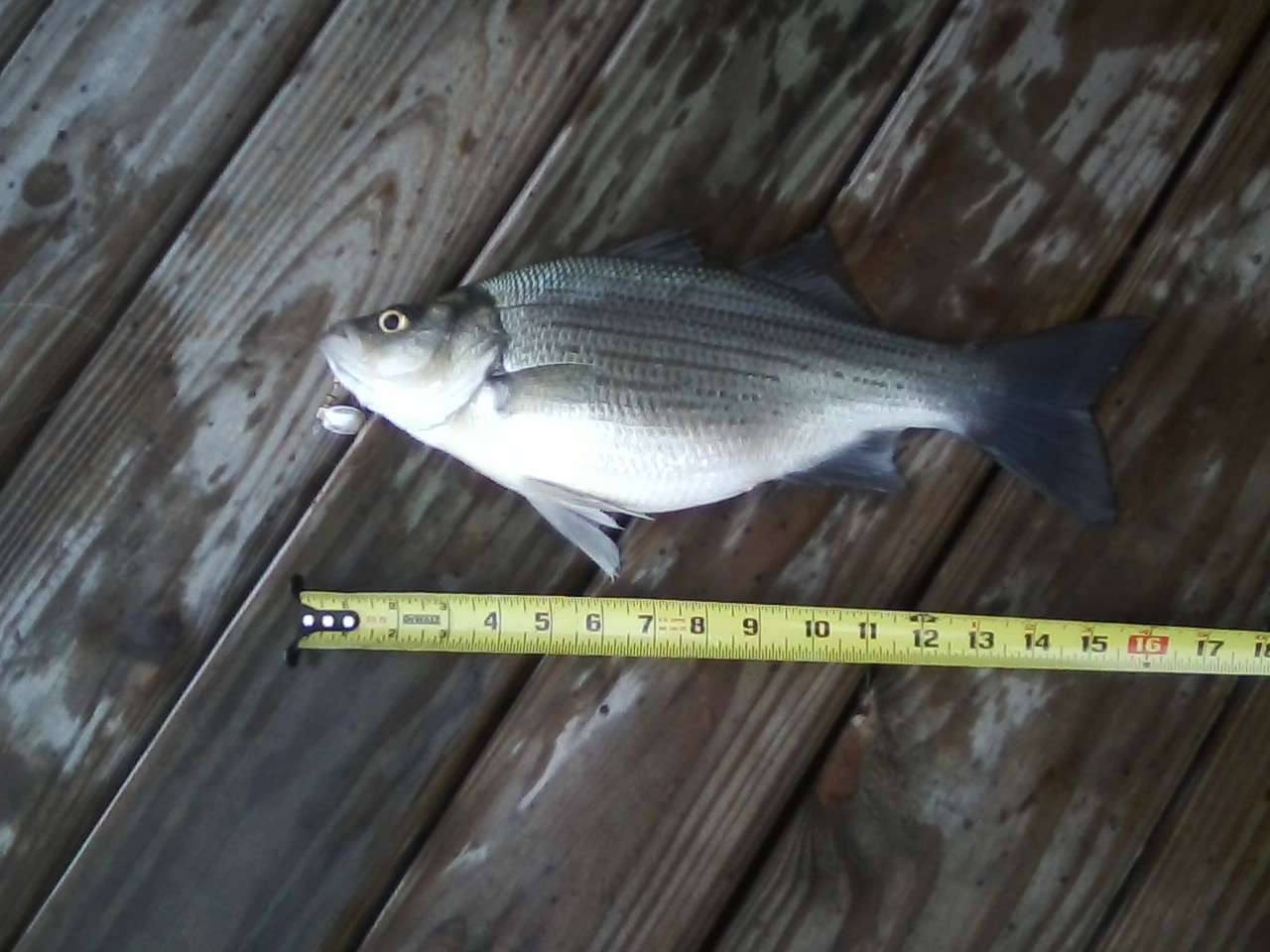
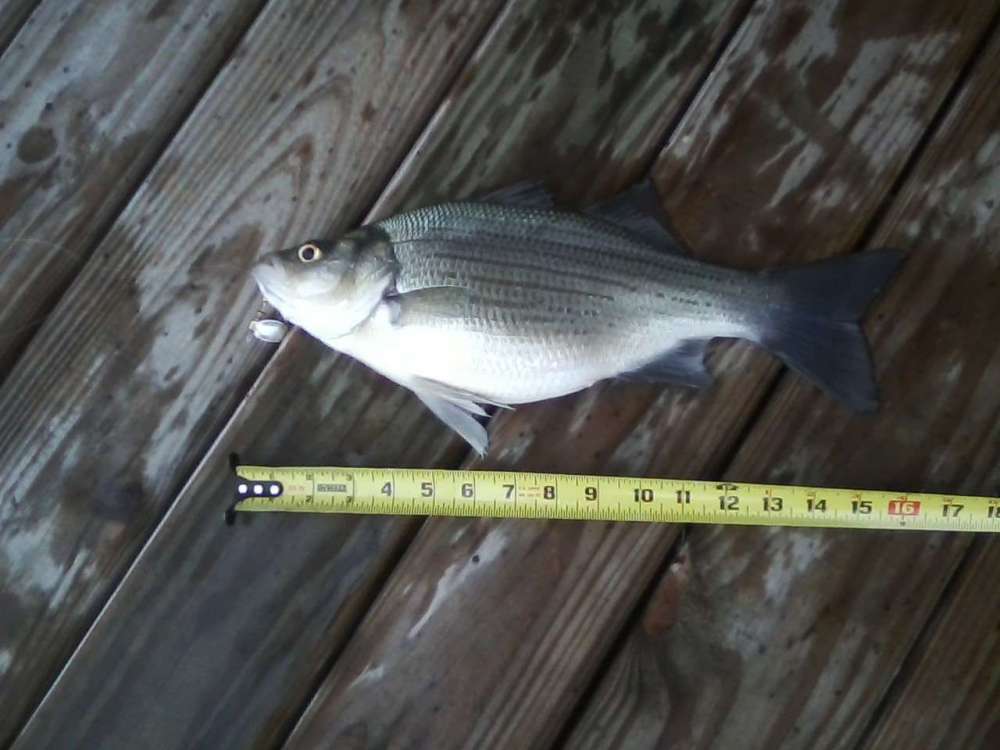
They look really nice to me, sort of similar to Mepps. A plain Aglia Mepps inline spinner in silver, sometimes white, is a killer here in Texas for white bass. The white bass showed up at my boathouse Presidents Day weekend 2018 and I could just stand on my dock and catch them at will. Brad
-
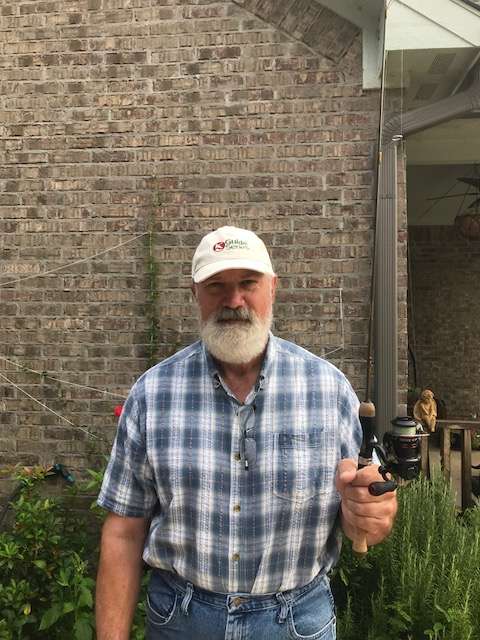
I'll check that one out. I like Falcon rods! And, here in this photo, I am holding a 5'6" M powered spinning rod from St Croix. $120 or so. From a kayak, it is a dream for casting under docks and boathouses, for any short casting or pitching out finesse presentations. The photo? I want to point out that while a short rod has much more leverage (actually less bad leverage) over a fish, the butt end of the St. Croix is short, great for sitting in a kayak, but just know that you have to control the rod with, more or less, just your wrist. The butt end is too short to wedge it under your forearm. If you have a gimpy wrist, it might be an issue. So odd to get a nice big bass on a 5'6" rod and have total control over it owing to the lifting point being so close to one's lifting hand. If I had to carry along just one rod while in a kayak? This'd be it. Brad Brad
-
I, too, prefer a more moderate rod with just a few sort of obvious exceptions. I want my rods to load up, I want the added power of a shorter lift point (better leverage) and more. My take? Rod manufacturers have sort of pushed hard on the fast/extra fast action over the years same as they have on rod lengths. Not as many rods in the 6'6" and under lengths these days. Both trends smack of "bigger is better" to me. From a kayak? When I see someone finesse fishing with a 7'6" rod, H or MH, extra-fast or fast . . . and presentations are short casts, I sort of shake my head. Brad
-
I have a few slither jigs. Nice. I think it is generally recommended that one peg the nose weight. I'd be interested in knowing if you and/or A-Jay do this. And, I suppose a slither jig is sort of a hybrid between a pegged T-Rigged plastic, just with a skirt, this and a traditional jig. I'm sort of analytical and always looking for/considering the "why" behind something and I haven't decided what it supposedly is that would make a slither jig penetrate better, not hang up. It does seem to be true. Is it the fact that the hook and the weight, being separated, allow for some actual flexibility in the overall movement? Ideas? Brad
-
Just a FYI that I saw some Googan baits at the new Gander the other day in Tyler, TX. What I saw looked fine to me, just nothing essentially new that I could detect. Like most of you, I have been down this road, well, quite a few times, and I don't chase new plastics like I used to. Brad
-
Probably belongs on a different thread but I never overhead cast a drop shot, standing or sitting. I just reel up line to the point where I can grab the sinker with my off hand and pitch mine out using my spinning reel. It doesn't somersault as much, my accuracy is improved and my distance is pretty danged good. But, here again, I don't usually make long casts with drop shots. I float up pretty close to my target. For anyone suffering from being poked in the belly button by a rod all day long, I can't recommend a St. Croix 5'6" MF spinning rod too strongly. It is super for accuracy, working under docks and boathouses, etc. And, it creates a short lifting point for more power than you might imagine over large bass. A good topic, lots of good comments! Brad
-
I fish almost exclusively out of a kayak and, at least partially owing to this, tend to favor finesse presentations way over power presentations. In a kayak, the large majority of us fish shallower water. And, in a kayak, unless you stand, finesse is easier to manage, a bit so for sure. I do stand a lot in my Sportspal S-15 canoe and my Bluesky 360 catamaran styled kayak, sit more often in a pedal kayak. I use a collection of St. Croix spinning rods, prefer Stradic Ci4+ reels to all others but I have some NASCIs, too, and they do really well. If you haven't seen the article I have attached elsewhere regarding a pro angler who uses big 4000 spinning reels on matched rods for digging out big bass, let me know and I'll look it up and post it again. Brad
-
Yes, for all large "reservoirs." Some even say Caddo was man-made . . . but I can't recall the argument for it. But, Texas always had decent sized lakes just none big enough to supply water to big cities, hence the development of large reservoirs. A few new ones are coming, too, one up in northeast Texas is slated to begin very soon. Clearest water in the north part of the state I know of is Wheeler Branch in Glen Rose. The water is pumped into the lake, no significant river or large tributary feeding it. Lovely place to kayak fish! Brad
-
Sort of like the scene in the original Jaws motion picture: the two guys comparing injuries! All of us leading active lives and old enough will have our collection of these, I think, for sure. The greatest palliative? Without a single doubt in my mind, it would be to buy a light barbell set, do a simple one single set of around a 10 to 12 reps of around a dozen exercises . . . pretty much without putting the bar down. No, not to exhaustion on any of the lifts, just to work the muscles lightly, work on range of motion, blood flow, increase the heart rate. 3X a week, what, 5 or 10 minutes each time? To this, just long walks work great, don't beat the legs up like jogging. This is a common MMA training circuit. Randy Couture used to follow it as do many others. You can find what I am talking about on YouTube. You don't need to go heavy, this is an example of where "just going through the motions" is actually very beneficial. Brad
-
In north and east Texas, our lakes are man-made, often impounded rivers. It seems to me the great majority of them are less than 50 feet deep. There are exceptions. Wheeler Branch in Glen Rose is 80+ feet, Lake Waco is 90 feet or so, Toledo Bend 110+, for example. Nope, can't see the bottom of any of these! Brad
-
Favorite times? A summer-like day in the winter (unseasonably warm) and a winter-like day in the summer (unseasonably cool). In north and east Texas, we get more of the former, less of the latter. Ah! But such great breaks from the monotony when they come along! I was the only kayak on the water yesterday on Lake Athens in Texas at around 40 degrees air temps when I launched mid-morning. I prefer to use a 4" Keitech Shad Impact (no paddle tail on this one), rigged weedless, toss it into the pads and weeds, let it just sink in the holes and around edges . . . and sit there; and, when I do move it, just small jerks (it is a soft jerk bait) to emulate the "injured look" to attract bass. I use this technique a lot across all seasons. Range: For cold days, if the fish want something moving very slowly all the way to fast retrieves, if they are perky, this presentation covers a variety of presentation styles and speeds. It can get you a "Senko" bite; it can get more of a "crankbait" bite, too. Covers a lot of the water column, too, top to bottom. They wanted it slow yesterday. I never got off the soft jerk bait. If I had needed to, I'd have likely tied on a wacky rigged worm for a slow fall through the water column. *** Yep! Chuckles and laughs from northern anglers with me describing 40 degrees as cold temp fishing. Ya'll would be looking around in your chest of drawers for which bathing trunks to wear on such days. Ha! Brad
-
For $100, a Shimano NASCI is hard to beat. I have several of them and I think a 2500 series is ideal for drop shot presentations, most other finesse applications. My favorite spinning reels are my Ci4+ Stradics, but you get about 85% or more, by comparison, with a NASCI at about 40% of the price. Diminishing returns . . . very common to most fishing tackle/gear. Brad
-
Mentioned elsewhere, I cobble together my own: small swimbait hooks . . . preferring to use a 3/0 60 deg. bend jig hooks, a medium sized Owner CPS (centering pin), and a 4" Keitech Shad Impact. *You can buy 50 of the 3/0 jig hooks very cheaply, same with the Owner CPS pins. My set-up needs that 60 degree bend and the flat hook eye so that the CPS swivels down and points in the correct direction without binding up. And, the Shad Impact is Keitech's soft jerk bait with the straight tail, not a paddle. I DO use the paddletails, too, but slightly prefer the straight tail. So, anyway, the weight of the hook and the minor added weight of the CPS will pull the swimbait down, no issue there using braid and a fluoro leader. But, I most often throw it into lily pads and coontail, etc. and it pulls across pretty weedless very well if you nose screw the plastic then Texas Rig it but keep the point in the groove on the dorsal side of the plastic. Slightly skin hooking the point, just ever so little, works great. One technique that works well is to drag it up and over pads, let it drop down off the edge for any bass hanging out in the shade. I also like to cast it down the edge of a pad field or vegetation and jerk it back, let it fall all the way to the bottom, etc. Works well, too, casting in open water, let the bait drop and jerk it and change the retrieval up to make it look like a dying shad. Brad
-
That pretty much sums it up. It does derive some extra strength by alternating the "grannies" over and under. But, hey, that is all a Palomar knot is, too, excepting it is tied using a bight; that, and the loop acts as an "anchor" after it is passed around the hook. Brad
-
Chad, Tom has it dialed in regarding the rain. We have caught so much lately in north and east Texas that the water on most lakes is murky, fish are seemingly adjusting to changes in depth, etc. Come on down to Lake Athens! We are about an hour out of south Dallas just 20 miles or so from Purtis Creek. Our lake doesn't have a large river system feeding into it so the water is pretty clear. I'd recommend a drop shot, a wacky rigged worm and a shad/fluke plastic thrown weightless. Brad
-
If you are looking for a stable paddler (maybe fill us in here a bit), I'd also look at the new Native 12XC. One of my acquaintances was one of four or so people involved in defining the vessel. What I like about it is the fact that it has a built-in retractable skeg; and, it has a chain anchor chute that slopes down and off the stern. If one fishes out of a paddler, a good and easy anchoring system is a big deal. 36.5" wide, a little over 12' and heavy. For rivers, small lakes, etc., this would be on my list. Brad
-
Odd, too, that it is just the ending series of alternate "over and under" half hitches that terminate the respected FG knot used for junctions between leaders and main lines. If these half hitches all by themselves are so very strong, I don't doubt this, it means all of the line plaiting for the FG itself done beforehand . . . are of no actual incremental value. At least in theory, one could overlap two lines, as in a Uni junction knot, tie the hitches in both directions and snug together. It'd take a lot of time. Oddly, the knots shown in the example videos are sort of bulky looking compared to the sleekness of an FG knot. Not so much an issue with terminal tackle knots, but a no-go for junction knots that often have to pass through guides. Hmm? I'm rolling all of this around in my head. Fun for us knot freaks. Brad
-
We have all had it happen. I've hooked into large opponents on small spinning tackle and just start hoping it shows itself so I know what it is. So, indentifiers: 1) Bass (LMBs) tend to jump especially in warmer weather. You rarely see some other fish do this. I rarely have a blue gill or a white bass go aerial on me. 2) Catfish, less experience here on my part, but don't they tend to roll? I think that has been my general observation when I catch them unexpectedly while bass fishing. They feel totally different from LMBs to me. 3) Turtles don't grab something to eat it and generally swim away. They usually clamp down on it, start munching away in place. When they do realize they are hooked, they move off very slowly compared to most fish. And, more or less in a straight line. Bass move more like kites on the end of a string. 4) Carp and bowfin? For me, they go nuts and move away with great speed and power at times. Bowfin often take me down into the lily stems and break me off rather easily with the 8 lbs. leaders I typically use. Carp in shallows tend to make a dash for deeper water. My guess? Ponds have turtles. A slow and deliberate straight line pull sounds like a turtle to me. Based on the force it was creating on your tackle, a big one! Brad
-
As a retired Certified Financial Planner and pension consultant, I'll tell you one more anecdote related to something I used to tell prospective clients, younger ones. I always told them that almost everything they will have when they retire will be obtained "one payment at a time." So, I start by telling them what I always found when talking to retirees. It went like this, interviews with people right at retirement age: "Do you own a home?" "Yes, we paid off our mortgage about 5 years ago." "Do you have a pension?" "Yes, I worked for XYZ for 20 years and I get $XXX a month." "Do you have an IRA, a 401(k)?" "Yes, We put the $2000 a year away for both of us whenever we qualified for IRAs. And, my wife has a 401(k) she contributed to for 20 years." "Do you own a business?" "Yes, I began as a plumber, built my business up to the point where I had a dozen plumbers working for me. I sold my company for $XXX when I retired." "Do you receive SS?" "Yes, I get $XXX and my wife receives $XXX, too." Then, I'd ask: "Have you ever won a lottery?" "No." "Have ever made money speculating in commodities or options?" "No, lost a bit there actually." "How about tax shelters?" "Well, we owned a few and, man, did they ever cut our taxes . . . since we lost so much money!" "Horse race gambling, Vegas?" "No, but we had a bit of fun losing!" And, on and on. *** The whole exercise was to share with younger people an understanding that almost all of their net worth at retirement age will be acquired "one payment at a time." When you buy a home, a bit of the principal is paid off month by month. The home will likely go up in value, so there is a major asset building for someone compared to, say, a renter. Social Security? You build it one paycheck after another. Pension? IRA? 401(k)? 403(b)? All the same. Business? More often than not, built brick by brick over many years. To this, if you get lucky, I suppose the one thing that might become a major percentage of one's net worth in retirement might be an inheritance. But, still, look at how it was built before it was passed along to you! Brad
-
I would highly recommend Ack. It seems I heard that the company might have sold recently, and it has been a while since I have needed anything, but I've ordered a half dozen times from them and was never disappointed. Unless something has changed, Ack is top notch. Ack's order fulfillment process is unbelievable. I am not certain how they do it. I once ordered some accessories for one of my kayaks a few years ago and the package was sitting on my front porch the very next day. I tend to buy my kayaks "in person," but for someone who might be remote, need to order one, Ack would be a great source. Brad
-
I thought I'd share something I used to tell potential clients with grossly under-funded retirement accumulations, often in first interviews. It often worked like magic. They'd often show up around age 55, about 10 years before retirement age, when they couldn't put the inevitable off any longer. I'd say, "Live like no one else will for 3 years, live like no else can for the rest of your life." I'd develop the theme, a road map from there and it gave people relief, hope. What I often found would be two people, a husband and wife, with combined incomes often exceeding $100,000 after taxes, kids grown and out of college. It wasn't an income issue for them, per se, it almost always related to spending, budgeting. And, I'd expose them with the next question: "Give me your monthly budget, how do you spend your income?" The standard answer would be: "$1500 on our mortgage including taxes and insurance, $500 on medical insurance, one car payment of $250, $500 on food, $250 on utilities . . ." and on and on they'd go until they ran out of things that popped into their heads. It'd often add up to $5,000 a month. They'd run out of ideas. "Anything else?" They'd say, "No, nothing else comes to mind." And, I'd say so your after-tax income is $8,333 a month, you can name only $5,000 in living expenses . . . what of the other $3,333?" These couples would look at each other and you could see the question marks in their expressions. I'd end the suspense by saying something to the effect that "there are $3,333 worth of expenditures that you can't even put a name to and yet they have taken precedence over investing toward retirement for the last many decades." Anyway, we'd do budget work from there, move retirement savings "up" on the list of monthly things to pay giving it priority over the "unnameable." Saving the $3,333 each month for a decade in a tax-deferred account, using 8% returns from a balanced fund, would accumulate over $600,000. No, not super wealthy, but by then with a paid off mortgage, Social Security checks, they wouldn't end up like mendicant pigeons. With a paid off home, a few other assets, they might even be millionaires. The "live like no one else will for 3 years, live like no one else can for the rest of your life" works in cases where clients need to sort of go very "minimalist" and shed big chunks of thoughtless "luggage" we all seem to accumulate to some extent. This is harder core than just saving money that is thoughtlessly spent. This might entail selling almost everything, moving into an efficiency apartment, dropping down to one car, eating at home and not out at restaurants, etc. For many, this might allow them to save $50,000 a year. Perversely, at the end of 3 years, they might find themselves happier without all of the pressure of life's "luggage," and continue forward in a modified version of this lifestyle. Anglers should understand this. It is very similar to cleaning out and organizing our tackle boxes. Lots and lots in them that we never needed, don't want, can do without. Brad