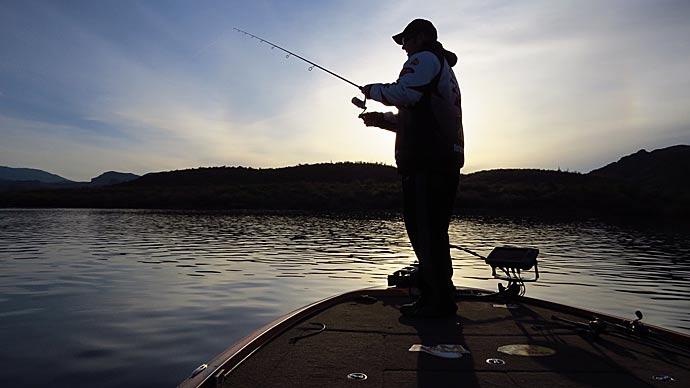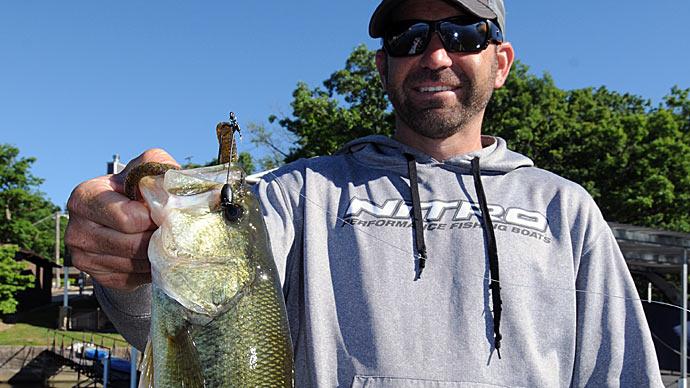


Finesse fishing is not a new fishing method; I prefer to call it light-line fishing. Smaller baits, smaller weights, lighter line, and medium action fast-tip rods move the bait slower. This delicate and subtle style of fishing can and will entice inactive fish to inhale your bait.
Trying to catch lunker bass, smallmouth or largemouth, is, of course, the main objective of bass fishing, but sometimes they don't cooperate. We all want to find that magic bait or unique technique to catch inactive bass. Understanding that increased fishing pressure, low and dropping water conditions, and dying grass can cause bass to relocate to wherever their food source moves and where they feel protected from predators is very important during certain times of the year.
Weather changes and eating time schedules also affect the bass, and anglers must react accordingly by changing baits and/or techniques. Bass have feeding time schedules within a given area. Next time you go out fishing, check the time you caught bass in an area, then try that same spot again the next day. Begin fishing the area an hour earlier and continue an hour later; you should catch a bass within that time.
It is a known fact that bass on Lake Fork do not bite as well when the dam gates have been opened, causing dropping water conditions. These bass are not accustomed to current in the water and will put their noses up to a tree stump, hide in grass, or suspend in deeper water. Fishing can be challenging when you add to this scenario all the lures, plastic baits, boat motors, trolling motors, etc.. This is part of the reason my husband George and I began to fish lighter tackle many moons ago. Our version of finesse fishing may or may not be your style of fishing. However, it does work for us quite well.
Before fishing, take all your confidence baits out of the boat. If you want to learn how to finesse fish, you must concentrate only on learning how to fish lighter tackle. It would be tempting for you to pick up those other baits if you are not catching bass right away, and it is easier to stick with something new when the old, tried, and true is unavailable.
You must know the type of area you will be fishing in, such as water depth, grass, wood, tree stumps, docks, or reeds, to name a few. The reason is if you are going to fish the shallows up to eight feet of water, you will use light line. If the area is very stumpy, no matter what depth you are fishing, I suggest using heavier lines until you get comfortable catching bass with smaller baits in the stumps. If the stumps are in shallow water, you can try fishing with lighter fine when you feel you can get the bass out of the stumps and into your boat.
Use 8- or 10-pound test line for shallower water and 12- to 15-pound test for the deeper water. You can use baitcasting or spinning rods, whichever you are comfortable with. Using a spinning rod and reel does not tire me as quickly as a casting rod. I usually will have three rods ready when I go fishing, one with 15-pound test line to fish deeper water and two rods with 10-pound test line. On the rods with 10-pound line, I will tie a grub hook on one and a 3/0 wide-gap hook on the other. The reason for having a separate rod for the grub hook is that it takes too long for me to change the hook on the same line every time I want to use a different bait. I do not tie a hook on the 15-pound test line until I have decided which bait I want to use in deeper water.
Depending upon the wind, you will also need removable split-shot weights, either a number 5 or 7. When fishing the Ring Fry or Senko on light line in the shallows, you will not need the split shot weight because these two baits are heavy enough to cast without the split shot and will sink slowly into targeted areas. Also, the split-shot weight is optional when fishing the grub because you use a lead-headed hook. Clamp the removable split-shot weight 12 inches above the knot on your hook. Before you cast out the trick worm on the finesse hook, spread the weed guard wires for an easier hook set. You are now ready to go finesse fishing.
This technique of fishing is very similar to fishing Carolina style. You are just fishing with lighter lines, smaller weights, and smaller baits than usual.
The place you have decided upon fishing may be a grass bed in one to six feet of water. Place one of the baits I have mentioned on the correct hook, and use the rod and reel you have 10-pound test line on. Cast to the outer edge of the grass line and let the weight and bait sink. DO NOT MOVE THE BAIT. Count to 20 slowly, twitch the rod tip slightly, and wait. Count to 20 again, then twitch the rod tip and slowly reel the line back to your boat. Sometimes the bass will inhale your bait as it initially floats down into the grass edge after you cast. Other times it may follow and inhale the bait as it moves in a hopping/swimming motion back to the boat when you least expect the bite, so be attentive.
I cannot stress the importance of slowing your retrieval when catching fish under challenging conditions. I realize this method of fishing may not be for those of you who are antsy. However, if you want to catch fish that are not in a feeding mood, this is a technique that works.
You will either feel the fish bite, see your line move away from where you have cast, or the line may feel mushy. Set the hook immediately. Do not attempt to horse the fish into the boat when you light-line fish. Allow the fish to tire itself by not putting too much tension on the line. If you forget and pull too hard on the fish, you have the memory of having a nice bass on at one time.
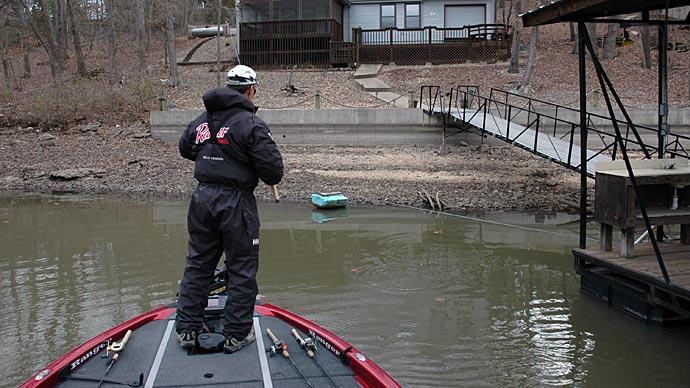
Fishing dock areas can be frustrating, as you probably already know. Cast, or flip your bait into the cooler water under the wood-structured docks. Allow the weight and bait enough time to reach the bottom, and wait for the bite again. Bass will be at the back of docks in the shady areas waiting for food or under the dock, holding near one of the support poles. Some people find open-face spinning reels and rods easier to flip their bait under docks and overhanging tree limbs.
I must warn you if you decide to try finesse fishing around stumps. You may be disappointed when a bass decides to wrap your line around the stump, and the line snaps. Use a rod and reel with heavier line and a split-shot weight on the line when fishing these areas until you have mastered retrieving a fish with light line. Any of the baits mentioned will lure bass into biting.
Cast your bait beyond the stump. Wait for the weight to settle on the bottom, then slowly retrieve your bait to the outside edge of the stump. Allow the weight to hold the bait near the stump. Do not move the bait for a count of ten unless you have a bite. Then set the hook. Slowly move the bait past the stump base until it has passed the stump. Remember that the bass may follow your bait and inhale it when you least expect it. Pay close attention to the feel of your line.
When the bass inhales your bait, set the hook and keep enough tension on the line to turn the fish toward your boat and away from other tree stumps. Again, don't put too much pressure on the line, but enough to keep the fish from wrapping it around the stumps. This technique takes practice, so don't give up easily.
A large bass will always attempt to go into deep water once you have hooked it. If it gets past your boat with its head pointed toward deeper water and away from you, maybe a prayer will stop it because light line usually will not. However, when the bass gets close to your boat, try to direct the fish carefully, at an angle, toward you. This technique does take practice, but once you learn how much pulling pressure to use, you will land more fish using these techniques under adverse fishing conditions.
Types Of Finesse Rigs

Wacky Rigs
Go to a weigh-in at any lake with lots of vegetation, and you'll usually find that most of the winning fish were caught on this rig. Sometimes called a trick worm, it got the name wacky from how it's rigged.
Using no heavier than 12- or 14-pound test clear line, many people use a Gamakatsu G-Finesse Wacky Jig Head hook. It has a 1/16-ounce lead molded on the shank with a wire weed guard built onto the hook. A 1/0 hook works best, but the essential part of the rig is how you put the plastic bait on it. Most plastic worms have an egg sack. The trick is to go into the rear of the sack and continue inside the worm, staying parallel, then come back out of the egg sack on the same side. The point of the hook and the shank end are both lined up parallel to the worm and facing you.
The best part of this rig is the weight of the worm. If you use a G-Finesse Wacky Jig Head hook you won't need a weight, but with a plain hook, you'll need just a little weight. There are zinc nails available for this purpose. I use a VMC Nail Weight pushed into the center of the worm body on the head end. This rig works well, fished around scattered grass, under boathouses, and around rocks. The slow fall and the unique bending action when you pull on the worm make this rig irresistible to finicky bass.
Split-Shotting
Perfected on the West Coast, split-shotting is especially popular when fishing is tough. The magic is in the bait you put on the hook. Small worms, 3-inch salt craws, and others are perfect for the gentle application required. Often called stitch fishing because you move the bait in increments no larger than a sewing stitch and made just as slowly, and patience is the key. Use a small #5 split-shot and crimp it about 18 inches above a light wire 1/0 or lighter small hook. Spinning tackle is a must. In summer, a windy point can produce some monster bass on the tiniest of baits fished ever so carefully and slowly. Position your boat in deeper water out from a point and stay out where you can't cast but half the distance to the bank. Let the bait settle after your cast, and then move it as slowly as you can stand. I promise you, big bass can't resist this tantalizing rig.

Mojo Rig
This rig is simply a Carolina rig without all the weight. A mojo sinker is a small, long cylindrical sinker from 1/8- to 1/4-ounce. The addition of a glass bead in front and another between the sinker and swivel is followed by at least 18 inches of clear light line tied to a light wire offset shank wide gap hook.
The small sinker gets hung up less, and the good part for fishermen is that everything from a 10-inch worm to tiny finesse baits can be fished on it. By using less weight, the fish feel less resistance when they pick up the bait and will hold it a little longer. I like to use 6- or 7-mm red beads as they are about the same diameter as the sinker, which helps reduce hang-ups.
Don't use a hook any larger than necessary for the best results with this rig; otherwise, just about anything goes.

The Drop Shot
This is one of the hottest rigs and techniques around. Designed to be fished in deeper water near humps, tank dams, and other structures shallower than eight feet, it can be rigged on baitcasting or spinning tackle, but line no heavier than 12- to 14-pound is best. Tie a 1/0 wire hook directly on the line with a Palomar knot leaving the tag end three inches below the hook. Attach a 1/8oz tungsten dropshot sinker to the three-inch tag, kind of like you used when you were a kid catfishing.
This rig would likely work with just about any soft plastic, but the best choice is The Reaper. This rig works in shallow or deep water, but it does not allow you to feel a bone-jarring strike. Nevertheless, it works great for me. You cast it out and let it settle. Then, instead of reeling, you give it three or four shakes. Then you can move the bait forward a few feet, let it settle, and shake it again. Always pause long enough for the bait to settle back to the bottom each time. This bait really shines for finicky fish or on a day when the bite is slow.

Texas Rig
The favorite worm rig of many anglers, not all of them in Texas. I prefer a 1/8-ounce bullet-style weight and no heavier than 12-pound super clear, small diameter line fed through the sinker. Finish this off with a light wire offset shank wide gap hook no larger than 1/0 and a small worm or craw in a bright, flashy color with a wiggle-type tail.
While fished with heavier weights and larger worms, the Texas rig can be just as productive with lighter tackle and plastics during certain times of the year. Using color and brand you have confidence in, the slow fall with a light weight allows fish to get a better look at the lure, and it's easier to pull through the cover. This rig is usually easier to use in heavier cover than its cousin, the Carolina rig. Still, both can be fished with lighter plastics and lighter lines, hooks, and equipment or on more sturdy setups when necessary.
I hope your next trip to the lake will be memorable using the finesse method of catching - not fishing for - bass.