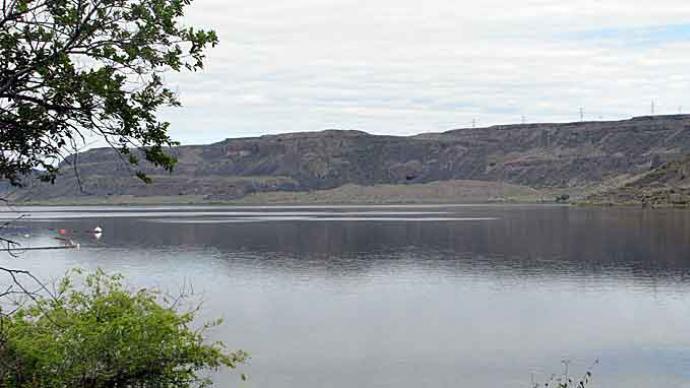


One of the most challenging aspects of being a tournament angler is that you must fish many different bodies of water during the tournament season. Since it is impossible to be familiar with so many lakes and rivers, successful tournament anglers learn the skills necessary to tackle unfamiliar waters.
Many weekend anglers choose to fish the same lakes year in and year out because they are familiar with them and confident in their ability to catch fish on that particular lake. Unfortunately, this increases their confidence level but can also create a boring trip.
With a little knowledge and preparation, any angler can approach a new lake with the same enthusiasm and confidence they have when fishing a lake they have fished for years.
To do this, the angler should first understand the seasonal patterns of the largemouth bass and how they react to the different conditions related to that particular season.
In much of the south, the water temperature is less than 60 degrees during December, January, and February. Spring typically occurs when the water temperature reaches 60 degrees and rises to 80 degrees. When the water reaches 80 degrees and above, summer has arrived. Fall begins with water cooling from the first series of cold fronts and rain during mid-to-late September and runs through most of November. Fall starts for bass anglers when the water temperature drops to or below 80 degrees.
During spring, the move to shallow water starts with bass that do not migrate into the main water body. Instead, these fish are shallow-water-oriented and spend much of their time in or near secondary creek channels.
As spring rains begin, the first group of fish will move up to their staging area in water 10 to 15 feet deep. If excessive rain occurs, it is not uncommon for them to move to the shallowest water, significantly if the temperature rises. These fish are easily caught on Rat-L-Traps, lizards, spinnerbaits, and jigs.
Bass usually spawn when the water temperature is between 63 and 65 degrees. This may be the only time some large female bass venture into shallow water for an extended period. Therefore, when the female lays eggs and tends to the nest, she is very vulnerable.
Since not all fish spawn simultaneously, there is usually a good chance of finding fish in deep and shallow water. I choose not to try to catch a female bass on the nest, so I usually will try to fish water 10 to 15 feet deep on the breaklines adjacent to some type of cover.
I will also throw a jig along the outside edge of a creek or at the junction of two feeder creeks for a point in the shallow water. Green pumpkinseed, sour grape, pearl, black and blue, and chartreuse are good colors this season if the water is somewhat clear.
Boat docks can also be very productive during this time - especially at daybreak on docks with lights that turn on and off every night by an automatic timer. Bass will frequent them at night to feed on the shad drawn in by the bugs attracted to the light. I also look for docks adjacent to a creek bed or some other type of cover.
When the water temperature reaches 80 degrees, it can be assumed that summer has arrived. June is one of the best months to fish aquatic vegetation. In water less than 15 feet, large 8- to 10-inch worms or a jig and Hawg Craw are excellent baits to use. Typically black, black-blue, green pumpkin-chartreuse or watermelon colors work well. A 1/2- to 1-ounce black spinnerbait with a large single Colorado blade will be productive during the nighttime.
As water temperatures approach the 90-degree mark, the 10- to 20-foot water zone will become the feeding zone during the day and night for as much as half of the bass population. So I try to find a hydrilla bed and fish the outside edges where the hydrilla stops growing. During this time, crankbaits, Carolina-rigged fries, and wacky worms work well.
I will also look for a breakline off main- and secondary-lake points close to the cover that will hold the bass. You can find these breaklines with a topo map and a depth finder. Carolina-rigged worms, crankbaits, or jigs usually produce pretty nice fish in these areas.
During the fall, the water begins to cool with the advent of cold fronts, and bass will become very active. I fish the shallow, main-lake humps, points, and shallow coves in the middle of the tributary arms at this time of the year. Schools of bass will also forage all over the lake. Unless you find one of the schools of bass, most feeding will occur above 20 feet depth until late in the fall.
In the early morning, shallow-water grass lines are usually productive when fished with a chrome and blue Rat-L-Trap. As the sun moves higher in the sky, moving to the main lake points and throwing a tail-spinner, spoon, or jig-and-grub combo will be necessary. This is also an excellent time to fish vertically with a spoon.
Main-lake points are usually deep enough to use a depth finder to tell if shad is present on the breaklines and around the cover. If you find shad, there is an excellent chance you have found productive water.
As fall progresses and the water approaches 60 degrees, bass will follow the shad population deeper and deeper. During this time, bass will be crowded into the 20 to 30 feet depths with baitfish. Spoons, tail-spinners, and Carolina-rigged fries will be the most productive lures.
As water temperatures approach the mid-50s, bass instinctively know that cold water is approaching and want to get in a few more good feeds before their metabolism slows. This is the time for deep-water fishing.
Spoon fishing will be at its peak during the cold days of winter. Fish will feed from 20 to 30 feet on the tops of humps, roadbeds, ridges, and points. A spoon can be fished vertically by raising it a few inches off the bottom, then ripping it upwards and letting it fall back to the bottom. You can also cast the spoon and retrieve it like a Texas-rigged worm.
While these are only a few tips I have used over the years to help me approach unfamiliar water, they have worked very well for me. As you become more knowledgeable of the water, you can refine your tactics, change lures, and try other areas that might be even more productive. Good luck and good fishing.