All right, let's talk about bass fishing for beginners if you're just starting out. It could be a little confusing. There's an awful lot of things out there that it just seems like a ton to take in. Let's make it real straightforward for you.
So first of all, let's talk about the rod. You don't need a dizzying array of rods. I know some anglers have them, you know a ton of them. But for starters. You got to get the right rod. Now a lot of guys are transferring over from trout fishing or from other types of fishing and that rod isn't going to do for you. A light action rod. Is too light. It's not going to be, you're not going to be able to get a good hook set on a bass, you know, a trout or a bluegill or any kind of, you know, fish like that has a real thin, light, paper thin mouth. So small hooks and that limber rod work really well to keep the fish pinned. But bass, it's all cartilage and bone. So you have a stronger hook. You need a stronger hook set to get that into his mouth. You got to lodge it into that mouth in order to get him hooked and a light limber rod and thin line is not stout enough to do that.
So your all-purpose all around rod is. 7 foot medium heavy Fast Action Rod. Either spinning or bait casting. About a 7 foot medium heavy fast action rod. Memorize that. That's what you want to have for both spinning and bait casting. For spinning reel, you want a size 2500 and for your bait casting you want something that's in the you know, a 7 to one gear ratio range. Armed with that is like that is your Jack of all trades, your Swiss army knife kind of rod and reel. You can throw virtually any bait. Almost any bait in bass fishing with that rod and reel for that reason. I think I have like 4 bait casting and two spinning in my in this boat right now. Rigged with different different baits but it's that versatile.
So you don't need a ton of rods, you just need 1 and I would put 15 LB fluorocarbon line on it. And the reason why is fluorocarbon line is the most versatile of all lines. Braid is great when you're in grass, it's fantastic for that and even wood braid works really well in that. But fluorocarbons shines when you're in rocky areas. Braid isn't as resistant to fraying as fluorocarbon is and fluorocarbon itself, it's just, you know, it's, it's clear line, it's multi-purpose. You can throw it around weeds, you can throw it on rocks, you can throw it in open areas, you can throw it around docks and not worry about it. Braid is more of a specialty type line designed mainly for flipping and pitching and working in. Heavy cover thick weeds when you're getting that lure into the bushes, that's when braid you need that.
So just for all-purpose setup all of my. My rods that are, you know, 7 foot medium heavy fast action rods have fluorocarbon line on it almost to a tee, 15 LB line. I use Seaguar InvizX line. Again, that's a very all-purpose Seaguar line. So now with that rig, you can, you can throw just about any bait out there.
Speaking of baits, let's not get too crazy with that. Let's just stick to three baits right now, OK? One's going to be your crankbait, another one's going to be a spinner bait, and the other one's going to be a couple of soft plastics. You're it's going to be. Ribbentail worm and a Ragebug. Like with that? You'll be set. You can catch a ton of fish with that.
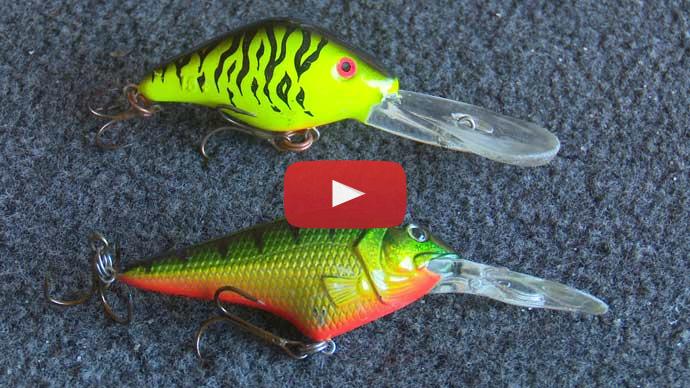
So a crankbait itself, you don't need a ton of crankbaits. Just get a lipless crankbait. And then I would get like a medium diving crank. Bomber 6A maybe a Bomber 7A and get it into baitfish color like a perch, bluegill or shad color in with your. With your Rat-L-Trap or your lipless crankbait, I would go with a Chrome with blue back or Chrome with black back. Maybe a crawdad pattern. And that's about it. You don't go crazy with crankbaits.
Spinnerbaits, very simple, white with gold blades. A 3/8 ounce get a little trailer on the back of it. Not a hook, don't get a trailer hook on it, but a little you know they usually come with a. Twin tail trailer, put that on the back.
The key with that is make sure it's on very, very straight. Otherwise it's going to lean to one side when you're reeling it back. So make sure you get it on super straight. I like gold blades. I use twin Willow leaf or twin Indiana blades on it. That puts out enough flash and vibration. You're going to catch a lot of fish with just that. You can use a white and chartreuse skirt as well. That works really well. If you've got smallmouth. They like a white and chartreuse. Blend, but that's about it with spinnerbaits and.
Again with plastics. A 7 inch Berkeley Power worm or A 7 inch you know, Big Bite Baits has I think it's called a B2 worm or something like that. It's a You know, 7 inch ribbon tail worm. It's got some scent in it. You put it on a three eighth ounce or quarter oz sinker with a size 2/0 or 3/0 extra wide gap hook. And you're in business. You're in the same thing with the Ragebug. Get it, get watermelon seed. Green pumpkin. Those are like the two colors you would need in both of those.
Armed with these baits, where you Fish? Best thing that I can tell you is it's kind of like. If you got a cat. Cats like to ambush stuff. You take a string and you throw it out there and you let it lay. The cat's not going to do anything if you start to pull it by him. He's going to pounce on it. And typically a cat likes to sit somewhere next to an object or something as kind of cover as an ambush point. And when you bring that string by there, boom, they pounce out and nail it. Bass are very similar in that fashion. They like, they're ambush feeders for the most part.
And they'll get up under docks, anywhere that's shady in docks, weed lines where trees overhang, you've got some stumps or boulders and they cast a shadow. Bass will hug up against that stuff or be in the weeds, and that's where they'll wait for bait fish to come by. And then can go out and ambush and hit them. That's why these baits, for the most part, resemble bait fish.
OK, so you want to be casting your lures out in usually shallower areas where these exist. Docks are great, great things to throw at for bass. But if your lake doesn't have docks, anything that's got, you know, cover or weeds. Sparse suites on the scatter weeds or boulders.
Points. If I've never ever fished a lake before, the first thing I do is I go to the points and I start fishing the points. I'll fish deep to shallow because if I get my boat up shallow then I may be sitting on top of active bass. I might scare them off. So I start deep and work my way shallow until I start getting bites. When I start getting bites, I make note of what the depth is and then I go shallower. Because sometimes you get more and more active fish and sometimes you don't get any more bites. But once you figure out that zone. Where you're getting bites, now you know what depth to be at and you can go from point to point to point to point, right that depth and catch a lot of fish.
So with all that information in mind, you can go out there and catch yourself a bunch of bass. Have fun. For more tips and tricks like this, visit bassresource.com.