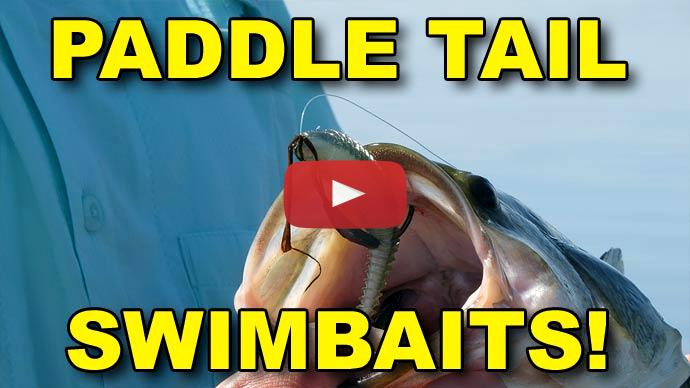
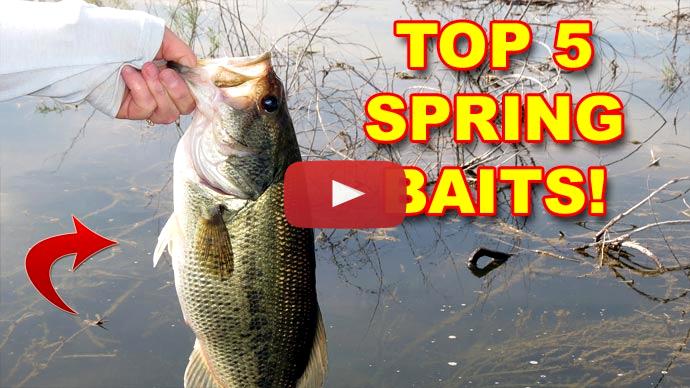
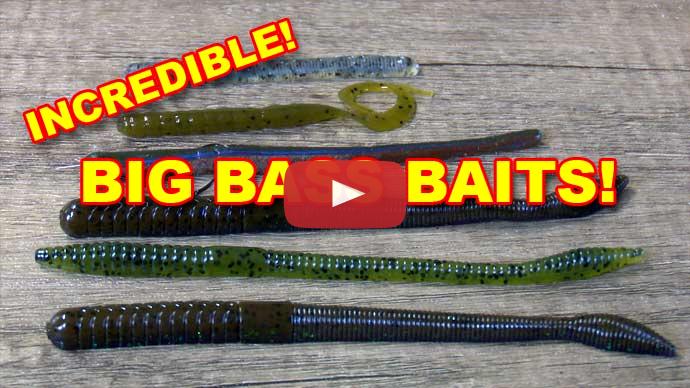
What's up, guys? Russ Lane here with Bass Resource. This week we're hanging out on Lake Hartwell. And today, we're talking about springtime bass fishing using nothing but soft swim baits. And I'm going to give you a few setups that I use, you know, some tips of rigging and some scenarios to look for. And maybe I can help you out and teach you how to be a better soft swim bait fisherman in the spring.
You know, when I talk about seasons, I don't look at it just as large enough because I grew up fishing like the Coosa chain of lakes in Alabama has the Coosa River spotted bass. So you know, there's two species there. And then as I started traveling the country, I got introduced to smallmouth fishing up north. So you know, a lot of what I've learned is relative to the species that I'm targeting. So there's several things that I'll share with you. First we'll cover largemouths. You know, springtime, you got the leaves changing, the days are getting longer, you hear more of the birds chirping in the morning, and everything's livening up. What that means is largemouths have spawn on their mind.
You know, we're pulled back here in a protected cove right now, and this is basically the kind of area you would want to look for. You want to find areas where you've got that westerly sun that shines on it on up in the day, and it warms those coves up, and they're protected from the north wind. So this is like a perfect scenario for that. Well, you know, say we have fairly clear water like we do here in this area, the lake on Hartwell, you're going to want to try to choose real natural colors. One rule of thumb to me, the bigger the swimbait, the more natural color because if you have a six or seven-inch swimbait, it doesn't need to be a bright chartreuse because it's just too much. I think it overwhelms them. But if you're using like a little two-inch swimbait, you can get away with a brighter one and then they can see it a little bit better. So that's just one quick thing.
Two baits here that I've got that I have a lot of confidence in, you know, chasing largemouths in the spring. One, I kind of played a part in helping design this bait with Big Bite. It's called the B6 Line Thru. So it has like a coffee type straw inserted in here with a weight in it, and you just run your line through it and tie it to a treble hook. Pull this deal up and stick it in. Well, this bait is really good for just bombing around, you know, just say a parallel cast 10 feet off of the bank, out there where fish would spawn, say in 4, 5, 6 foot, like a little bit deeper than what you can actually see, you know, from the deck of your boat. And that's the fish you're going to be targeting with this bait. It's a real high floater. So you have to reel this bait really, really slow. And on those bright sunny days where it's real, real calm, you want to keep this bait up towards the surface, slow rolling it. And those fish can see it good and they'll come up off the bottom and hail it.
I use, just like I said, a slow retrieve and just let the bait do the work, and let the fish get honed in on it. This here is pretty much my favorite color. It's the blue gizzard. Golly, man, I got tons of confidence in it. It works in semi-stained water and crystal clear water. The way I rig it up is I use an 18-pound Sunline Sniper and a 7:1 reel. This is an old Shimano that I've had for several years, and it's been a good reel for me. And a Phenix Feather, a 7'3" extra heavy. So good setup for this. And like I said, that's a good way to target bigger largemouths that are spawning in that deeper water column.
So on the days where maybe it's rainy or real, real windy or drizzly, you're not necessarily going to want to reel that bait up high because the fish can't see quite as good. So you're going to have to have a little bit heavier bait with a little more action that they can hone in to. So you can get that heavier bait down closer to the bottom, and more of a wide tail wag that they can really find and get on. And the bait that I use on those conditions is the SPRO Megalojohn. It has the weight inside, has a swivel harness right here with a little magnet that you can screw in there to hold your Gamakatsu treble hook. And like I said, it's a little bit beefier bait, a little bit heavier so it runs a little bit deeper. It has a little wider tail action, and I rig it up the same way, 18-pound Sniper, that 7'3" Phenix Feather, extra heavy, and just slow roll that thing. It's really good, like I said though, when you have windy or dark cloudy conditions.
We're talking about largemouths there. Just say like, on Hartwell here we have spotted bass. Well, spotted bass in the springtime tends to spawn on average deeper than a largemouth will. Say if the water clarity dictates that the bigger largemouths may spawn in 5 foot right here, you know, the spots are probably going to spawn in 10 foot, you know, the bigger ones. We're talking about bigger fish. And two, you know, they tend to like a smaller bait. What I do is I rig up... Where is this? All right. So I rig up the Big Bite 4-inch Pro Swimmer. And it's just a solid body swimbait, and I rig it up on a 3/8 or half. This is a jighead that I pour with Do-it Molds. Buckeye Lures has a couple of really good swimbait, you know, finessier type swimbait heads that work also. And you just want to fish this thing close to the bottom, and just reel it really slow.
Say if you're trying to get it down to 10 foot, half ounce is a good size to keep it close to the bottom, but being able to reel it at a decent slow rolling pace, I go a little bit lighter. I go with 12-pound Sunline Sniper, and I really like to tie this loop knot on here. There's lots of videos on YouTube where you can figure out how to tie that loop knot. But what it does, it allows that bait to really free up and get more action when you're using a heavier head like this. So loop knot is really important. I have it on a M1 Phenix rod. This is a 7'2". It's like a medium heavy. It's got a softer tip. And you just want to bomb it out there and make long cast. Generally I'm looking for...say you got a spawning pocket right here. Say there's a long flat point, like right in the mouth of it, like a long flat gravel point, that's where those spotted bass are going to generally stop and spawn, and you want to slow roll this thing out there on the bottom.
The thing about a spotted bass is real protective of a bed. Like they have a bad attitude, you know, like a smallmouth does. And if you get a bait that's not too intimidating in size, like this 4-inch Big Bite Pro Swimmer, they're going to get it. Sometimes they may grab at it, spit it out, grab at it again and then get it. But generally, they're going to get it if you find them. But you know, that's my setup for the spotted bass.
So moving on, like if we head up north, you know, spring's a little bit later than it is here in the south, and we're looking for smallmouth in the spring. Big thing with smallmouth in the springtime is they tend to get on these big shallow flats, lots of big flats up north. I'm calling a flat like 6, 7, 8-foot of water, a big, big, big flat area way away from deeper bottom contours. You're going to look for patches of gravel, like cobblestone size rock, anything that's like an isolated little area that's surrounded by sand. Sand is always a big deal, not necessarily relating to the sand, but the objects that are in the sand on those big flats. And man, this little bay right here has been incredible for me on lakes like St. Clair, the St. Lawrence River, let's see, several of them had good success with. But it's a Big Bite Suicide Shad. This is just a three inch. It's real small, compact.
I have a smaller, Do-it head that I pour, that I rig it up on. As a general rule of thumb, a quarter ounce is a great size head. One size heavier, or one size lighter can be good too. I rig it up, of course, on a spinning reel so I can throw it a long, long way. That water, when you're targeting those smallmouth waters, generally really, really clear and they can be really, really spooky in that shallow water. So you want to make a long, long cast. So that's why we rig it up on a spinning rod. I use a seven-foot Phenix MBX drop shot rod.
And one of the key deals, Sunline makes a braid, it's called Almight. This is an 18.5-pound braid, but it sinks. Well, I tie a leader to it, Sunline Sniper, generally 8 to 10-pound Sniper, but I don't tie a long leader, maybe 3 foot is about all you need for doing this. But this braid, it sinks, and it allows that bait to get down there and stay down there so you can reel it a little bit faster. Because you want it to sink to keep the bait down there so that you can use a lighter head as you can get away with. Because if you need a heavier head, it takes away the action of the bait.
So that's the key thing about using this sinking line to be able to get your bait down there with that quarter ounce head instead of having to go to a 3/8. Freeze that bait up and they really, really like it when you get that extra head movement. You're just looking for those dark spots, those cobblestones, like I said, patches of weeds, gravel, anything on those sand flats and just cover water. And man, what a great way to catch smallmouth in the spring.
But that, generally, is some of the ways that I target all three species in the springtime with soft swim baits. And man, just get out there and try some of this, and hopefully it will help you catch more fish.