Hey everyone, I'm Pat Schlapper with BassResource.com, and today we're going to talk about tube fishing in the spring. I'm kind of going to break it down into a smallmouth category and a largemouth category because for me, it's a little bit different.
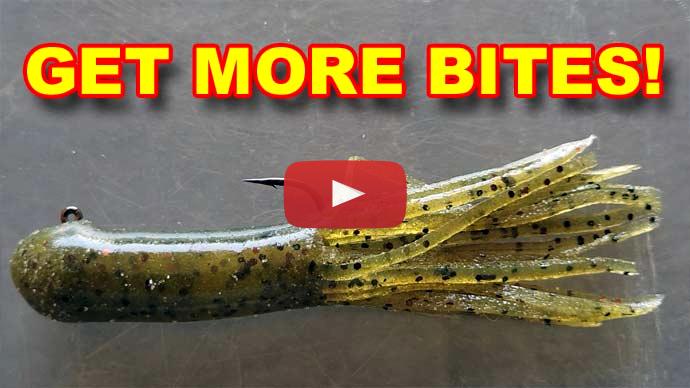
So we'll start with smallmouth since I'm from up north, grew up fishing smallmouth. A tube was an absolute staple in my tackle box, especially in the spring for smallmouth. Probably the most common way it's going to be rigged is going to be on it with an insert tube head, where you just take your tube, slide the head up inside there, and then tie it on. I'll typically do that with a spinning rod—7'1" medium power, fast action. I like to use braid as a main line, so I'll use a 12 lb Sunline SX1, and I'll go to an 8 or 10 lb Sunline FC Sniper fluorocarbon leader.
So in the spring, the majority of the time with this style tube, I'm going to be dragging it. Later on in the year you can get a lot more aggressive with it, but a lot of times in the spring the water is cold. With smallmouth, they're starting to think about moving up. When you get into, like, where I'm from, when you get into that mid to early May is kind of where it starts to happen. They'll start to move up towards the flats to spawn. A lot of times they’ll be out off the edges or on the drop-offs.
So what I'll do with this tube, rigged with the insert head—typically 1/4 oz is what I throw the most, depending upon the wind and how deep I'm fishing, up to a 3/8—I make a long cast, and I'm just gonna drag that tube. You just want to try to feel everything on the bottom—gravel, rock, sand spots. If there's a little bit of grass, that's even better. Just drag it on the bottom and pretend you're making it look like a crayfish because that's what it's imitating for smallmouth 99% of the time.
Flats, long points, and then transitions from deep to shallow water—these are a lot of the same places you’d throw a jerkbait, or a hair jig. A lot of times the tube is just another option that you're going to drag along the bottom. So that's the most common way that I'm going to fish a tube jig for smallmouth in the spring.
Now for largemouth, you can certainly use this, and I have caught a lot of largemouth on this, but they're kind of in different areas. With largemouth in the spring, it's going to be more about shallow coves, shallow bays, and areas leading into those spots. So I'm going to target wood and I'm going to target grass. Those are the main two things I'm going to target in the spring for largemouth.
So I'm not going to rig an open hook tube for those types of fish. For them, I'm going to use a Texas-rigged tube. This is just a 4-inch Big Bite tube. And kind of the unique way that I rig it compared to a lot of people—a lot of people use an EWG-style hook for their Texas rig. I've done a lot of experimentation, went through a lot of different hooks, and this style hook, which is called the Kahle hook—some people call it a shiner hook—is really, really good for a tube. The way that you see how it just rigs perfectly in the nose—it has a really big gap, which is really important in a tube. A tube has a little beefier body when compared to a lot of other baits, like a creature bait or a brush hog, or a worm. It has a bulkier profile, so you need a wider gap on that hook.
So that's what I rig it with—this is actually a 4/0 Owner K hook—and I tie a fluorocarbon keeper on that, just like you see on some of your flipping hooks. I just tie that on to keep it from sliding down. That’s my basic rig.
Now, I’ll have it usually pegged and unpegged. When would I throw one or the other? I like to throw the unpegged whenever I can. I just feel like it's a more natural action, because what’ll happen a lot of times—say you cast to a grass edge—that sinker will kind of separate, and then that tube falls down really slow behind it. Looks so natural. So typically I will fish it unpegged.
Now if I’m actually flipping it into a tree, if I’m skipping it under a dock, then I’ll peg it. Because you just—you cannot efficiently skip a tube with that sinker free-sliding. It’s almost impossible to do.
So largemouth, I’m going to do a Texas rig and I’m going to fish it around grass, isolated wood, laydowns, docks—areas leading into a shallow cove where they're potentially going to spawn or actually back into a bay. That’s my favorite place to fish it. And I’m going to throw this quite a bit.
The setup’s a little different than my smallmouth one. It’s a 7 foot 4 inch heavy-power, fast-action St. Croix Legend Extreme. And then I do 20 lb Sunline Shooter fluorocarbon and an 8.1:1 reel. I want something fast, because if them fish pick it up and they move off real quick with it, I want to pick up that line really fast.
And this—it’s more, I will drag it on the bottom, but it’s more target-oriented. I’m pitching at something—piece of wood, little clump of grass. It’s just—I’m not dragging it on the bottom as much as I would for smallmouth. I will a little, but it’s more target fishing. I want to hit as many targets as I can.
Now, as them fish transition from pre-spawn into spawn, and they actually move up onto the bed, a white tube is one of the best baits for sight fishing for largemouth—and for smallmouth. But for largemouth, it’s almost like it’s been forgotten about with all these new fancy baits. But if you get around spawning fish, throw a white tube—because they absolutely will destroy it.
So same setup as what I’ll throw—the other tube, the darker-colored tubes—I’ll use the same setup for sight fishing. And then for smallmouth fishing, I’ll actually just slide that insert head up in that white tube. And a lot of times for smallmouth, they’ll spawn a little deeper. Like where I’m from, them fish will spawn 12–15 feet. A lot of people like the white just so they can see it down there better and watch it disappear. I think with largemouth it has a different triggering effect than other colors.
So definitely try a white tube when you're sight fishing. That’s kind of my approach for tube fishing for springtime largemouth and smallmouth.