Alright, guys, we're going to talk about how to fish one of the most productive baits being a Texas rig in one of the least productive times of the year, which is typically the winter because the fish are kind of in that not really wanting to feed zone when that water temp gets low.
You know, fish are bass specifically are cold blooded creature. So when that water gets colder, they have to eat less. So it makes it where it's a little bit harder to catch them and the in the windows are a little bit shorter throughout the day whenever you actually, you know kind of run into those flurries.
So to me the winter is vastly different depending on if you're early winter, the heart of winter or kind of late winter because late winter, a warming trend can make for a phenomenal day of fishing. Early winter, a warming trend doesn't help it as much. It doesn't seem to when you're in the heart of winter, those fish are kind of locked into that pattern that they're going to be on and they just, it seems like the weather doesn't really affect them. They just kind of are where they are.
But when they start creeping up a warming trend in the late winter. One of the best times to catch a really, really big fish.
You know, and I've always really enjoyed flipping and casting a Texas rig worm. You know, all of us kind of grew up and started fishing with a Texas rig that's just kind of one of those first baits that everybody kind of gets gets to know. And over the years I've still used it a ton, but I've kind of developed a couple of tricks for it to stay productive throughout all the times of the years. I'm kind of get into that.
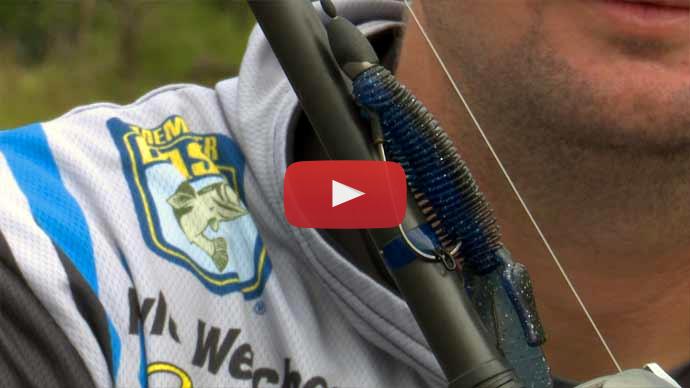
You know, the number one thing for winter is I typically lighten up all of my Texas rigs like if I'm flipping a Beaver-style bait like this Crush City Bronco bug. It's typically going to be 1/4 ounce, 3/8 of an ounce at the most if that's if I'm fishing some relatively. Heavy cover, you know, or deeper dock, stuff like that. I'm going to typically go 3/8 at the most all the way down to a 3/16. And sometimes if I'm flipping a small bait, even an eighth and I kind of, I typically will have two, I'll have one that's pegged and then one that's not pegged.
This right here is not pegged. And the reason for that is when you flip that bait out there, that sinker will separate from the bait and then it's going to fall slow already when that bait hits the bottom, then that when that weight hits the bottom, that bait's going to fall. Slowly down to the bottom, so if that fish was kind of looking at it and kind of falling it down, she'll give a little bit more time to commit to that bait before it gets to the bottom.
Because even in the winter, most of your bites are going to come first. Soon as you cast it about the time it hits the bottom, most of your bites are still going to come in that time frame. Now if you're fishing around a lot of heavy cover brush piles, deep laydown trees in the winter, you can work that bait and obviously still get some bites because you've expanded the strike zone when you pitch to an area that's got a lot of bass. They're typically going to get it or they're typically not going to get it.
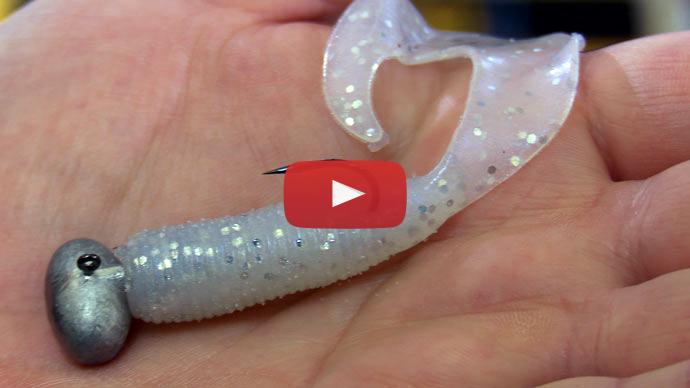
Another thing that I do in the winter, I'm typically not going to throw a bait that has a ton of curly tails or a ton of wide-kicking action. I really prefer a bait that's kind of going to glide to the bottom. Like I feel like that natural glide, you know, helps you get a lot more bites in the winter.
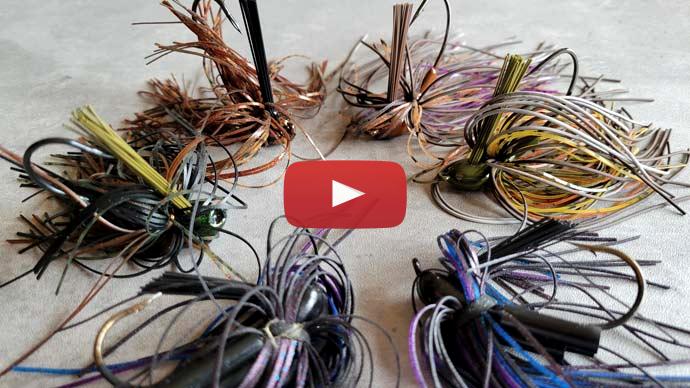
Same thing when you're flipping A jig, you know, I like a chunk instead of a, you know, a really big flapping trailer because I just like that kind of gliding action. I feel like it generates some really big bites in the winter.
Another thing that I think about a lot in the winter is what the weather has been doing. So if we're early or late winter, it depends on if we had a cold front come through. I'm typically going to go to something that is really slender and you know, I feel like just got gives me a lot of confidence in getting a lot of bites.
Another thing is when it when the lakes are fishing tough. Where I live, we have multiple species of bass in the lakes, so I don't want to throw something big and bulky that's only going to catch largemouth. I also want to catch spotted bass or I'm fishing an area that has smallmouth. I want to be able to catch all three species whenever the bite's tough especially.
So I'm going to keep something laying there that's a little bit easier for the spots and the small mouth to bite. And I'm also going to have something bulky that kind of generates those big largemouth bites. So but you don't want to you don't want to take anything out of the equation in the winter. You want to make sure that you can get as many bites you possibly can.
So early winter, midwinter, like in the heart of winter, I'm going to lean on this a lot, but whenever we start going. To late winter, especially if we've had a warming trend, you know those fish are full of eggs. I mean, they basically start producing eggs like 5 or 6 months before they actually go to spawn. So when you start getting towards that late winter, they kind of turn into there. They're getting close to that early pre-spawn pattern and a warming trend.
That's whenever I'm going to flip something really, really big and bulky and I'm going to try to get on those stageing places, you know, not anywhere near where they're going to be spawning, like not within, you know, sight of where they're spawning, but out from it.
Those kind of deeper, steeper drops and the heavier covering that those docks that. Really go from got some good doc posts and stuff up there in two or three foot and then also have a lot of cover out in that 10 to 12 foot range. That's where I'm going to target a lot in the winter that so a place they can kind of see it and they can kind of plan for the future and they not going to have to go crazy and swim 2 miles whenever they do decide to spawn whenever springtime comes.
That's that's one of the things I'm looking for so that that warming trend that's the time where I'll go fast and I'll really flip a big Texas rig a big creature bait. A little bit heavier weight, I feel like I can cover water a little bit better because they're cold-blooded creatures.
And if it's been a cold front for a while, they haven't been eating a lot. Soon as that warming trend starts to, you know, warm that water temp up just two or three 4°, they can feel it. I feel like they get a little bit of boost to energy in those in those days. And you got to capitalize on it whenever you can.
You know, that's that's hard to do though, depending on where you live in the country, some people, some people have more mild weather. Sometimes we have, you know, years where it's more mild weather. And another thing that I do, depending on the weather, you know how much rain you get the watercolor in the lakes, I'm typically going to use darker soft plastics in the winter.
I feel like the light penetration in the in the water is actually less because I mean, it is actually less. There's less light penetration through the water. So I want to bait they can see from a little bit further away.
So I'm not going to throw watermelons or green pumpkin unless the water is exceptionally clear. I'm typically going to throw something like a Bama bug or you know, a black and blue. Pumpkin mix or something darker.
This right here is a California 420 color, you know, like just a staple color, just something that adds a little bit of, you know, kind of a shadow to it, something see from a little bit further away. I feel like that's a really big key in the winter because I don't think they can see quite as good and I know they don't fight quite as hard in the winter.
So I typically downsize my line a little bit. The the lightest line I'll use all year is in the winter. That's whenever I'll go down to the 14-16. Flipping a, you know, big bait on 20 other times of the year, I'm typically going to go to a bigger line because I don't think the fall rate is as important.
But in the winter, that's the main thing you have to think about is your fall rate because those fish are going to suspend most of the time, whether it be on dock post, standing timber out in front of a bluff bank.
Wintertime fish love to suspend and it's just kind of their their place where they just kind of see it and just they're not really active, they're not really aggressive. They're just kind of waiting on something to get close enough to them for them to eat it.
That's you know the main reason that I downsize my baits and I'm always thinking about that I kind of want a sharp drop somewhere they can suspend off of close to where they're going to spawn here in a few months but the winter time can be a great time to catch giant fish almost every single big fish I've ever caught at my house like 8 lbs plus which is a really big one for where I live it's been somewhere between December and January.
They always seem to bite that time of year so if you go on into February, that's whenever it can get super, super good. But that's kind of the way that I've kept a Texas rig relevant over the years, just kind of just kind of tweaking it a little bit.
You don't have to change the world and go completely different. You can just have a lot of confidence in your bait and just tweak it a little bit and then tweak the places you're fishing it and you can kind of fish with the same thing 12 months out of the year.