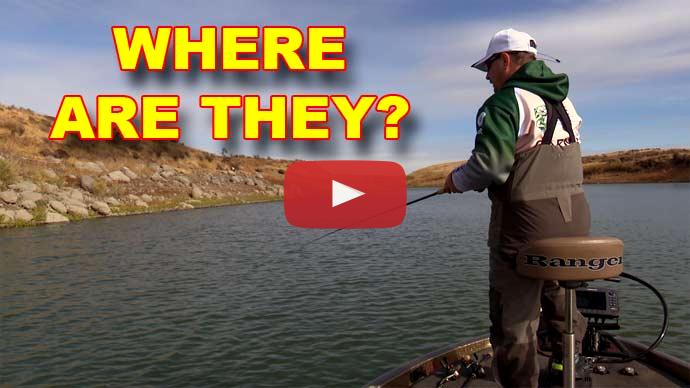
All right, for many of us, it's the coldest time of the year and lure selection can be a little tough, but. There are some tried, proven lures out there that work every year and I'm going to go through at least mine that I feel are the most productive for me during the winter months. Starting with the jigging spoon.
The jigging spoon, in case you haven't seen these before, it's kind of a slab of metal. Looks just like that, right? You get the hooks. And it's just, you know, it's a real thin piece of metal, not a whole lot to it. But what they do is when you throw it, it just kind of flutters and falls down in different angles. And it looks like a dying bait fish, which triggers bass into biting.
You can throw these in deeper water. That's what they're designed for. So in like that 20 to 40 foot zone you're looking for. Specific types of structure such as humps, ridges, brush piles, rock piles, creek edges and channels, ledges, drop offs, things like that. You know this is where the bass are going to set up shop and hang out throughout the winter time. The key to finding the really good ones is you want ones that are near spawning areas. So you can have a lot of that throughout your entire lake, but the ones that are closer to spawning flats are usually the ones where you're going to have higher concentrations of bass and those bass hang out and wait for bait fish to come by instead of chasing bait fish. So they're more of an ambush type thing or they're just going to suspend over the tops of this type of structure.
And that's where the jigging spoon comes into play. You can just drop that bait right down on top of their heads and you just pop it up and down the way you jig them. The way why it's called jigging is. It's very simple. You let it get to the bottom and you lift up and then let it flutter back down. You'll lift up and let it flutter back down. But there's some variables to that. For example, how fast and how hard you lift it up off the bottom. And when you let it flutter back down, you kind of guide it back down with your rod so you can slow down the rate of fall. And how slow that rate of fall is is another variable. And how long you wait between lifting up and down is another variable. And when you start to combine these different variables you’ll finally figure out what the bass want that day, and it's oftentimes different from what it was the weekend before. So pay close attention to that. Play with that type of. Those variables.
Couple things color. All you really need is gold and silver. That's about it. I wouldn't deal with really any other colors except for maybe a perch pattern, especially if the forage in your lake is perch. When you're down that deep, a lot of the colors get washed out and they turn to neutral tones, kind of shades of gray. And so any other colors really don't make that much of a difference, but if it's a perch pattern on there, it's still shades of you can see that even if it's gray or black and white, you can still see that pattern on it. So that's worthwhile getting. But otherwise a gold or silver works just fine.
One other quick tip about it if you notice. When these baits come out-of-the-box. They come like this. Right, Well, the problem is there's no snap. You don't want to tie directly to that hole because that's a surefire way of cutting your lines. You'll thin that that metal is that's going to cut your line. So get yourself a little snap, right? That's what I've got on this tied on here. Just put like, you know, size #2 snap on there. And that way you're not going to cut your line and it actually allows the bait to float freely and flutter more. So you're giving it a little more action. It looks a little more natural in the. Just a quick tip.
One other thing too is the treble hooks that come on that come with them out of the package. Typically I replace those with Gamakatsu round bed treble hooks. They just hook up a little bit better. If you're getting hung up on the bottom a lot, shorten that up to a short shank round bend treble hook and you won't get hung up as much.
Jig are another favorite lure of mine to throw during the winter time. Actually, they work year round and winter time is no different, but how you fish them is a little bit different. For example, first of all, we're going after that deeper water that I just mentioned, those rock piles, those ridges. Typically it's void of cover per se, unless you got some logs or something down there. But you can fish deeper weed lines, though jigs work pretty well along those.
Jigs kind of represent crawdads. And contrary to some what some people believe, crawdads don't hibernate during the winter time. They do bury up in the mud when it gets really cold and they stay warm that way. And they get a little bit dormant and a little bit inactive, but they still come out to feed and they still get active, especially if you get a little warming trend and they get a little more active, they come out in the feed a lot. So those are just a protein snake snake, a protein snack. And if the bass can find them, man, they're going to eat them because that's packed with a lot of food, you know, a lot of a lot of energy for them.
So jigs can be very, very productive this time of year when you're fishing them, you're just going to drag it along the bottom. Just slowly crawl on the bottom. Normally when it's warmer months, you're hopping it and dropping it and making all kinds of action. This time of year, just drag it. Those crawdads come out, they're kind of lethargic, they don't move very fast, so you have to mimic that. So simply drag it on the bottom with long pauses in between. Really mimics a crawdad.
Color wise the old black and blue works really well. Black and chartreuse. And you know, shades of green and brown, those are like the colors that I go with. I don't really go too crazy with a bunch of other different colors. That's about it. And a football jig is really all I fish during this time of year because I am dragging on the bottom.
One of the differences that I will do is riprap. If you get a stretch of warm weather, typically sunny weather, but even if it warms up and it's raining, that'll warm that water up and the crawdads that they'll be in those rocks and they'll come out to feed and the bass will come there to feed on the crawdads. So they will come up a little bit shallower. Typically in this time of year, you're fishing 20 to 30 to 40 foot deep. But when you get that warming trend and if you got some riprap get up on there, you'll be in 10-15 foot of water, maybe even shallower than. But fish it with that jig and fish it in and around the way I just mentioned.
However, one little trick I like to do is sometimes I like to bounce it really hard on the rock and let it pause, especially just with a tungsten jig head. Now, I just told you not to hop up and down. So why would I recommend that? Because here you're appealing to the natural curiosity of the bass. You make some noise, kind of a clicking sound. Tuck, tuck, tuck, tuck, tuck on the rock and then let it sit. And then? After that long pause, move it slow again. A lot of times when you tick, tick, tick, tick on the rock, the bass will come to investigate what is that sound and look around that's trying to figure out what it is. And then it sees this jig moving along and like, oh, and grabs it and bites it.
So it's not really the action of it bouncing up and down that causes the bass to strike it. It's that sound, they come over. Investigate. Now they see your jig and they bop it. So try that little trick.
One other thing I like to do when I'm fishing jigs. As I don't use you know what, I'm using a plastic trailer. A lot of guys, you know, there's a ton of plastic trailers out there that have those ridges and edges on the claws, which makes them, you know move a lot, they wiggle a lot and they're very active and that's great to use in warmer water when there's a lot of action going on. But in the winter time you don't want that.
So I'm using a trailer. If you notice here, this trailer is just doesn't have any kind of ridges or anything on it. It's just. Straight up flat and that works really well this time of year because it doesn't have a whole lot of action to it just the craws just stick up and don't move a whole lot which is what you want, One other quick thing I do is I add attractant here I just use some MegaStrike. I bet you can use whatever you want and just put a little bit of attractant on there. I shouldn't even call it attractant, but what it does is when a bass bites it they get that little burst of flavor and they tend to hold on to it a little bit longer giving you a chance to set the hook. That bite can be really subtle sometimes and difficult to detect, so you want to put all the odds in your favor. I don't think putting scent on a lure really attracts them and makes them bite. Some people believe that, but I just feel it makes them hold on to a bit longer, giving you that advantage to set in the hook.
Now I don’t know if you believe it or not, but actually crankbaits can be really good in the winter time. Yeah, except, you know, again, just like the jigs, you got to fish it a little bit differently. You know, typically in the summer, in the warmer months, you're casting and cranking and casting and cranking and moving it pretty quick. Here you're going to slow it down and fish deeper. Fish with those crankbaits that get down to 20 foot or even deeper and you're going to fish them slower.
Now here's the thing. A lot of these crankbaits, you know, they've got these giant bills, right? And they get down there nice and deep and they work fine. I think these kind of crankbaits are good when the bass have moved up shallow. And they're, you know, like when the weather warms up and they're fishing and they're going along riprap, for example, like the scenario I just mentioned, you can throw them up there even though this goes down to 20 foot deep by crank it real slow and kind of bounce it off the rocks and it just kind of wobbles and bumbles along. And even if you get a crawdad pattern, even better, it kind of resembles a crawdad bumbling along and just kind of go nice and slow that way, even though it dives real deep.
The problem when you're trying to dive even deeper where they are designed to go 20 foot or more is they've got this wide wobble to them. And although you can dig in the ground and. Kick up some silt and get some more attention that way. That's a lot of action. A tighter vibration crankbait works a little bit better during the colder months, and manufacturers are now coming out with deep diving crankbaits like this. They've got a narrow bill, really long look at that, but it's a narrow bill. And that helps with that wiggle action. It doesn't wiggle as much. It's a little bit of tighter action. It still gets down there really deep. You're finding more of those type of crankbaits in the market these days. That one's a Japanese bait that I just showed you, but there's more and more coming on the market these days that have a thin, narrow bill that gives that tight wig all that gets them down deep. So that's a really good way of getting reaching those fish that are really deep. Again, just fish it slow though. You got to remind yourself to fish it slow and you'd be surprised how many fish you can catch even in the middle of winter time on a crankbait.
And finally arguably my favorite type of bait during this time of year is the finesse baits. These are the ones you throw on spinning gear. Right. Fluorocarbon lines, 6 LB tests. Yeah, right. But that gives a real natural, natural appearance. That real light line fluorocarbon doesn't float up and interfere with the action of the bait. It makes it look very natural in the water. And you're using typically a split shot or drop shot rig. I actually use split shot more than I do drop shot, unless I'm targeting something very specific like a point or a hump or a specific break line in 25-40 feet of water, drop shot. Great for that pinpoint. Working it over a rock pile, for example. You can work it real thoroughly with a drop shot. Otherwise, split shot is better when you're doing a, you know, covering more water and searching for bass.
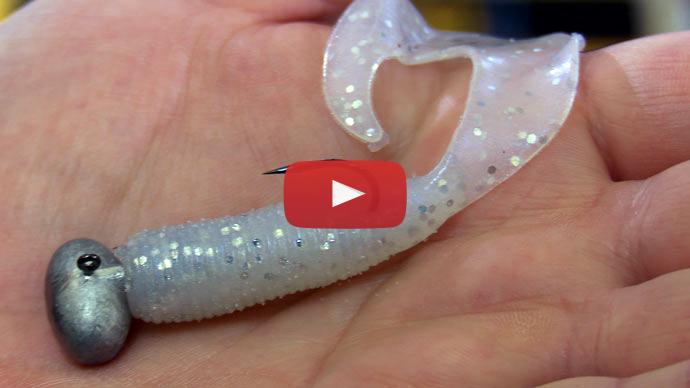
Jig heads work really well too, for that matter. You can drag them along the bottom just like you do with a football jig, and you can drag these baits along the bottom in similar fashion. I like to use grubs. That's like one of the mainstays. Little 3 inch grubs your salt and pepper grub like this or smoke, you know smoke, those two will work perfectly. This is a smoke and pepper or just straight up smoke and a salt and pepper like that and clear works really well. I mean that's just put it on a jig head or split shot or drop shot. I mean they're very, very versatile lures. You can use those in and day in and day out tubes work really well.
This tube here, I think this color is like it's called an old ugly I believe, but you can see it's on a jig head. And you know, if you can see right here just on a jig head and you again, you can just drag this on the bottom, it resembles a crawdad. And just work it real real slow on the very bottom and with little movement, no real hopping and popping, just kind of dragging along and stop and dragging along and stop and catch a ton of fish, both largemouth and smallmouth. On tubes during the winter time.
And finally, your finesse rigs, right? Your finesse. Sorry, your finesse worms like this. Buddy, Yeah, This is a this is a magic. Aaron's Magic. This is a. A Roboworm. So it looks like it's hand poured but it's really not. Works fantastic. This you can put on any aforementioned rigs. This one happens to be a 5 inch. You can do 4 inch and three inch. And it's real, real subtle way of catching fish in all depths. But a particularly deeper depths and again, I'll put some scent on them too for the same exact reason I mentioned before.
And it can be a slow day of fishing that way. But you know, sometimes the slower the better. When the bite's really off and it's really cold, maybe a front's come through. Man, these finesse baits shine. That is when they are standouts, they're just little edibles. I mean, think about it, if you're really full and you don't really feel like eating, you're not going to eat a big snack. But. Or, you know, a big meal, but if, you know, someone comes by with a plate of cookies, yeah, I'll have a cookie, you know, or maybe a potato chip or two. But that's kind of what finesse baits do. They're a little small little snacks that a bass that may not be really actively feeding, but a little snack comes by like that and like, Oh yeah, I'll, I'll have that. Right?
So even when they're not very active or very aggressive in feeding, those finesse baits can shine during the winter time. So those are the different baits that I use during the wintertime. I hope that helps. For more tips and tricks like this, visit bassresource.com.