All right, we're in that period of time of year when winter is quickly becoming a distance in the rearview mirror, but we're not there in spring yet. It's in the horizon, and the water temps are slowly beginning to creep up. But you're still in the 40s, maybe low 50s, but mostly for us around the country, we're still well into the 40s.
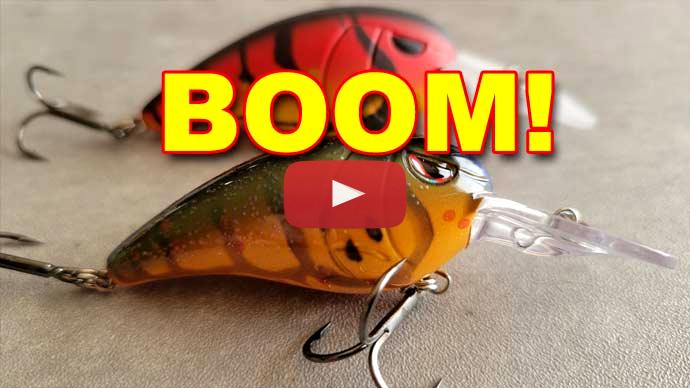
Crankbaits. You can catch fish on crankbaits, but a lot of people keep trying those rounded, bulbous crankbaits with the big bills, and they wobble a lot. You know, the ones that you throw in the summertime. They don't work so great this time of year. The ones what you want to be throwing right now are the flat sided crankbaits. You know, stuff like this. Like these? Long and slender. And look at that. See, they're thin. Thin, flat sided. That's, that's, that's what we're looking for, right? They give you a real tight wiggle. They still dive down deep. You can get them down to 8 to 15 foot maybe depending on the make and model, but they have a real tight vibration to them. And that's the thing that triggers them right now, this time of year, there's a bunch out there.
So how do you decide? Well, let's, let's talk about the different makeups and stuff of the of these crankbaits. First of all, let's start off with plastic versus wood. The majority of the crank baits out there today are made out of plastic because they can replicate them pretty easily, make them relatively inexpensive. The cool thing about them is first of all, they're durable. If you're down there digging and rip rap or bouncing off rocks or maybe you're throwing up against, you know, a little bit shallower and you're banging it off things, they're going to stand up to that abuse. Paint doesn't chip as much. You're not going to get as much Nicks and stuff on the finish and on the bait itself they're going to stand the test of time, even though you're abusing the snot out of it.
Right. The other thing is that they weigh a little bit more than their wood counterparts. And during this time of year, that's not a bad thing because you can cast it a lot farther, especially if it's windy out, you can be a little bit more manageable in casting. And also a lot of them are hollow body and they put rattles in them. So they make a lot of sound and and noise going through the water. And that works really well. When you have turbidity, you've got some stain in the water or early morning or low light conditions, that rattle can really help attract those bass from farther distances.
On the other hand, you've got wood. Now, most wood baits are made out of cedar or balsa. And a couple things about it. First of all, wood is, you know, it has its anomalies. It's wood, it's not consistent. So you may have four baits that are exact same baits from the same manufacturer, but they may act a little bit different from each other and that's just because of the differences of wood. And you may find one of them outperforms the other one. Sometimes that happens, not always, but occasionally.
Couple things about them. The wood is lighter. So it doesn't cast as well, but it has more buoyancy to it. So when you're digging it down, you do that stop and pause retrieve it floats up faster. And sometimes that quick change of direction is what triggers a bite or when you get it up, you hit up against some bushes or maybe you're bringing it through a lay down. You hit something hard, you pause, it'll float up above that obstruction and you can continue on and without getting snagged. So there's some definite benefits to it.
Plus they're solid body and they usually don't have rattles. There’s still there's still some manufacturers that with rattles, but most of them don't have rattles in them, which is great for a more subtle presentation. More realistic presentation, particularly in clear water and sunny days, you want that sometimes that rattle actually can turn them off, and so having a bait without rattles in it is the alternative which works better.
The downside of it is they're a little more expensive because the manufacturing process costs more. There's often they hand tune them so you get a little bit more out of pocket, but during this time of year, man, sometimes that's all they want, wood crankbaits, and they work really, really well, so it's worth it.
OK. All right, so let's talk about the bills. Let's talk about the bills on these crankbaits, which is, you know, really interesting. What you'll see here is notice on these. Couple couple characteristics. First of all, they're long and slender. OK. And they can vary. They can go almost as long as the bait. The longer it is, the deeper it will dive. So keep that in mind. The other thing is they're rounded in the front. OK, that helps. When you go over, you're hitting rocks, you're hitting debris. The crankbait will it'll hit it, it'll roll over and keep going and protects the hooks from behind. It just kind of rolls to one side and rolls the other and just keeps on going. So that really helps with that.
You'll notice also the bill isn't really any wider than the crankbait as opposed to those ones you would throw on the summertime when you would have those big wide bills. And that would cause that wiggle big, you know, over exaggerated wiggle action. These have a pretty narrow bill to them. And so that really helps with the characteristic of the way that they go through the water. And again, most of those go to 8 to 15 feet.
Now, sometimes during the, you know, February and into March and the water warms up. The fish will be shallow some days. They'll move up shallow, the next day they'll be deep again. And so you want a little bit different bill if you still want something that's a bit flat sided. So a square bill tends to work a lot better. This one here is from Storm. It's a Speed Trap and it is a square bill, but you'll notice here, see the body, it's got that narrow. It's hard to see, but see it's, it's not that wide, round bulbous body. It's got the narrow sides to it right.
As opposed to say, here's another square bill. You can see them side by side. See this one's more bulbous and round. As opposed to this, it's got more of a flat side to it, so this still. This works really well when they're in the cover. You can bring it through cover fairly well and in shallow areas when they're, you know, shallower than 8 foot deep, you can switch over to a square bill, flat side square bill like this and still get a lot of good action out of it.
Color wise you really only need 2 this time of year. You want something that mimics the bait fish. And you also want crawdad, so like this. So we've got, you know, baitfish imitator and then crawdad and that's really the two things that the bass are feeding on right now this time of year. So you don't need to go too hog wild with the color. One of the things I would recommend with the crawdad is have like a little splash of like orange. Or maybe a little chartreuse, something like that. Just a little splash of color there somewhat. For some reason that seems to help you get more bites that way.
So where are the prime places to fish it right now? Really you're looking for hard cover, logs and wood stumps, rocks with maybe a hard bottom and depth. Depth in that 8 to 15 foot range typically, if the three of those intersect and come together, you found yourself a real sweet hot spot.
So where do you look for that stuff? Well. Points. Points are the main thing, first of all, main lake points and then secondary points as we get closer to the spawn. Definitely look for those areas. Start deep and work your way up shallow. I don't want to start shallow and out deep if I'm on a boat because I don't want to bring that boat up over the top of them and spook them. So we'll bring it out deeper and start fishing that deeper. You know, try to deflect, try to hit that lure on the rocks or on the stump so it gives that little deflection action. That change of direction real quick often helps.
And look for lay downs like the ends of laydowns. Not up super shallow, but the ends of lay downs tend to work really well. Another area to check for is docks and bridge pilings. They sometimes can be in really deep water at 10–15 foot or deeper and a lot of times that's along near creek channels or drop offs or close to a point. And so you've now you've got that intersection there, especially bridge pilings. A lot of times you have a lot of rock around it too.
So the key with fishing those docks and those bridge pilings. Angles, don't just cast up to it a few times and then move along. Cast a lot different angles and different approaches. A lot of times when fish are setting up on those pilings, they want it a certain direction and only that direction. You got to figure out what that is that day. And the only way you're going to figure it out is to experiment. So try, you know, directly across and then another angle, another angle, the backside of it. Just cast, cast, cast, cast, cast. Make it very, be very thorough until you figure out what they want that day.
OK. Now, one of the key things about fishing in this time of year is when you strike an object, when you hit a piling, when you hit a rock and you hit a stump, you want to bounce it off that and then pause. Not just keep on reeling like you would in the summertime here, you want to pause it and you want it to hang in their face. The longer you can have it sit in that strike zone, the better.
So you want to make it suspend a little bit, which is a little difficult. A lot of these crankbaits float, especially the wood ones. So in order to get them to suspend a little bit, you can do a couple of modifications. One of them is to get little lead suspend dots. They're adhesive and they weigh just a little teeny bit. You put them right underneath the belly, like right in front of the front hook or right under. Behind the front hook to keep that nose down attitude and you just look in the water keep adding weights until finally suspends just that barely moves. You can sink a little bit or rise a little bit. Some anglers definitely have their opinion on whether they want it to rise a bit or let it drop. I like to let it rise a little bit but. Up to you, but those suspend dots work really well doing that.
You can also change the way and how fast it rises or even sinks by changing the hooks. Go up a size and don't do both hooks at the same time. Do the front hook first, move up one size and see what that does. Oftentimes that's just enough and then if that isn't, then change the back hook size and a lot of times you can get it to suspend that way.
Also use fluorocarbon line. Because fluorocarbon line sinks, monofilament and braid are buoyant and can pull up on the bait and help it rise faster. So fluorocarbon works really well. All these in combination sometimes you may have to use a combination of these to get them to suspend and. The thing about it is, as the water temperature changes, so does the density of the water, and so you may have a crankbait completely tuned the way you want to, and then you go out fishing the next day or the next week. Or two weeks, water's changed and now it sinks all of a sudden and it's not suspending, for example. So you have to retune it every time you use it. Just keep that in mind. It doesn't matter whether it's wood or plastic, if you've tuned it, retune it every time you go out for the best success.
Now, how to fish them? These baits are light. They're small. These little, you know, small, lightweight, you know, little flat sided crankbaits like the Little John right here from Spro, you know, they're super light. They’re hard to cast on your big bait casting outfits or the the big crank bait rods that you typically use in the summertime. So this time of year it's actually easier to use spinning outfits use a 7 foot one to seven foot three medium power or medium light fast action rod. A drop shot rod would be an excellent choice for this because it's easier to cast those light baits out farther with this kind of setup.
Plus you're using lighter line. You can use 8 LB line instead of 12 pound or 15 pound and that lighter line will help get that crankbait down further. And as long as you've got a reel with really smooth drag. That's the key, because those little crankbait hooks, you know, they're not super strong and they're thin, and if you use a real stout rod or a strong bait casting reel, you run the risk of ripping the hook out of the fish's mouth.
So spinning outfit with a nice smooth drag on it. When that fish lunges, that'll peel off the line nicely, acts as a shock absorber. That limber rod will work together. You got the fluorocarbon line with a little bit of stretch in it too. All those work together to keep that fish pinned. Get it back to you in the boat.
So with all of these tips in mind, you're going to catch a bunch of fish on crankbaits this season, I promise you. For more tips and tricks like this, visit bassresource.com.