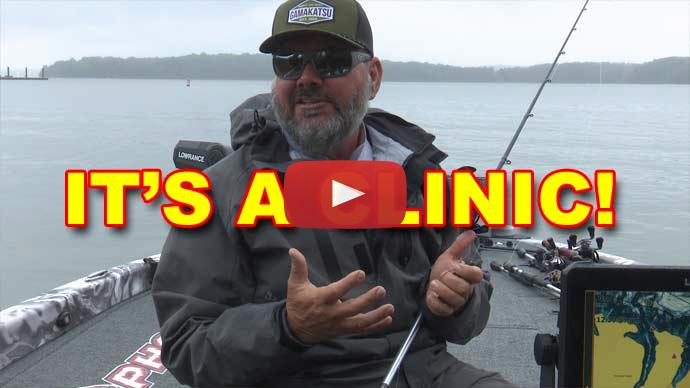
When the water temps get down to the lowest of the year, it's jig time — time to break it out — and there's a couple of different jigs to use and a couple of ways to tweak them.
So let's start with the types of jigs you should have, starting with the Arkie jig. The Arkie head style jig is the one that's been around the longest and for good reason. It's a little sled head design; makes it so it lands nose down, tail up, and so it looks like a crawdad at rest and that's obviously natural forge of the bass. You need to scoot that along very slowly on the bottom, imitating those slow moving crawdads. You can catch a lot of fish that way.
The second jig head you want is bullet style. Bullet head style works best if you have weeds. Now this time of year most of the weeds are dyed off, but in your lake it might be different. You may have some weeds, especially down deep, pretty thick, and the bass can get up in there — is that if they're oxygen producing weeds, especially the bass and the forage will use that — and bullet head stop goes through those weeds better, doesn't get hung up as much than other style of jig heads.
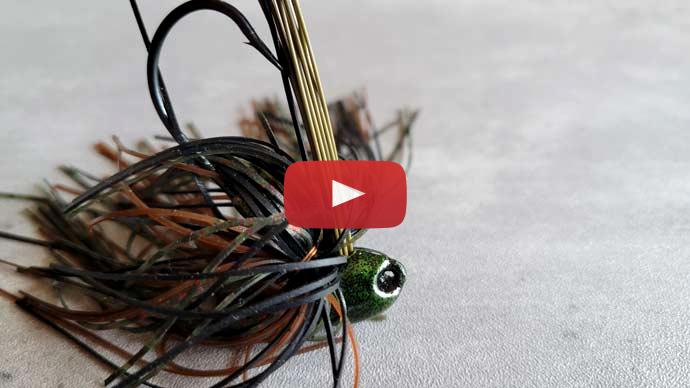
The next one is going to be your ball head Jag. Ball head jigs, these work best in really rocky areas such as RIP rap because number one, they don't get wedged in the rocks as easily. But if you do, because that islets at the top and the round head, you can pretty much pop it out pretty easily. It's not going to get stuck where you have to break it off. So it works really well in those areas and again, for winter time fishing, a lot of times those crawdads and whatnot are up in those rocks and this is a good jig style to work in there and imitate those crawdads without the fear of getting all hung up and stuck and losing jigs.
And the last one is your football jig style. Now football heads, I mean football heads and winter time is like peanut butter and Jelly, man. Those two go together really, really well and for good reason. Typically you're fishing open water hard bottoms with sparse rock. And you want to imitate a crawdad. And this is exactly what a football jig does. It's great for bringing across these hard bottoms. It'd be like a tapering point, could be a drop off a ledge, could be a sharper drop, but it's typically a hard bottom with scattered boulders. It's like iconic area to fish during the winter time. And dragging a football head jig across that makes it wobble a little bit side to side and kind of looks like a crawdad walking on the bottom. Perfect crowded imitator for this time of year.
Now you can customize these jigs. And then you should have a couple of different ways to do this in your tackle box so you can adjust for the conditions accordingly during that day of fishing. One of which is your skirts. Skirts typically you can have silicone or rubber style skirts. You can have a variety of different colors to match the forage, typically your brown hues. Green hue. They are the best to use as you get a little bit deeper or darker outside, maybe this cloudy, you can go with your, your, your black, black and blue jigs. That's an old standby. Works very, very well. If you're fishing really deep, say 30 plus feet deep, most of the time the light penetration isn't going to get more than that and you're just looking at shades of of gray at that point. So a white jig is what I like to use because it stands out the most against the bottom. And fish can locate it, so I'll use a white skirted jig 'cause it's basically a bright shade of Gray in those deep depths.
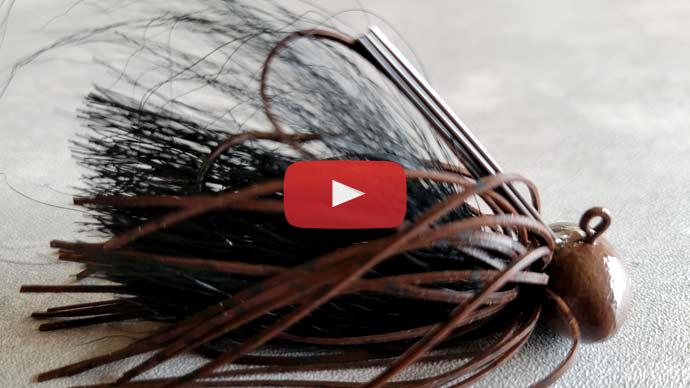
Hair jigs work really well this time of year. It could be marabou, it can be bucktail, whatever you want. Both work very, very well. But hair skirts is is very predominant this time of year. They sit there and undulate and move. Even if you're not moving the Jag during those long pauses in between your retrieve, it just sits there and breathes and it looks lifelike. So be sure you have a couple of different types of those skirts with you and you can change them up if necessary.
Trailers is another thing to consider. Craw trailers, they imitate, they look like a real craw. They don't have a lot of movement in them, which is great this time of year. There's not a whole lot of action and movement going on. So across they have lifelike pinchers on them. They have antenna. They — you can see the eyes sometimes — they look really lifelike and realistic and they can work very, very well in Fisher feeding on crawdads. Another type of trailer is your craw chunk. Now these have a short stubby body and have large flappers for their craws. Now here's the deal. During the summertime, the kind that you want to use have like an edge or a flange on those cross and it makes the, you know, it makes it move a lot, flap around a lot of action. You don't want that this time of year. Less is more right now — you don't want a lot of action. So those flatter style ones without the flanges are best. That's like the zoom chunk or. That's definitely what I would be using.
Now the gear you want to have is pretty straightforward. A medium hit like a 7 foot medium heavy fast action rod baitcaster typically is going to work best for you for these for these jigs. Fluorocarbon line. I would be using fluorocarbon. Typically the the water is clear right now and that braided line shows up really well. Braided lines is best for heavy vegetation and you're just not going to find that this time of year, so you don't — you can leave the braid at home right now. Fluorocarbon also sinks a bit so you have a more direct connection. There's no bow in the in the water and it doesn't lift up on your jig so you have a better feel. And fluorocarbon is extra sensitive so you've got everything you need for winter time fishing.
Weight of the jig, I'm often asked about that. Now this time of year, you're, you're fishing on the bottom, you're dragging the jig, you're not lifting, hopping and bouncing it. A lot of times the bite doesn't happen on the fall. So the fall rate isn't really a consideration. It's more about feeling that jig along the bottom and keep it on the bottom with long pauses in between. So I use 1/2 ounce jig and if I'm fishing deeper, I might even go to a three quarter oz jig. But 1/2 ounce typically is the is the right size for me. I can really feel it. Over those subtle changes, maybe if I feel a transition between chunk rock to pebble rock, for example, you can really feel the difference, particularly if you're using a tungsten head. Tungsten does two things here. 1 is very sensitive, so you can feel every nuance on the bottom, which is going to need. You can also feel those subtle pickups, so it gives you an advantage there. But the other part of it is that they make a little more noise on the bottom than lead and those little clickety clack noises that tungsten makes. That can attract the bass, their curiosity. They're going to seek it out, figure out what it is and it ups your chance of getting bit.
Now, as I mentioned, you don't have a lot of weeds this time of year, so you don't need a really long weed guard on your jigs. As a matter of fact, you might even try an open jig with the one that doesn't have a weed guard. But if you don't have that, you can cut down your weed guard, shorten it up a bit. This is going to improve your hookup ratio a lot. Then you won't have that weed garden away and you're not going to get more hang ups because you're not fishing in these weeds. So trim your weed guard. That's that's a one little tip.
The other thing to do is to make sure your hooks are sharp. A lot of times you're dragging it through rocks, whether it's rip rap or hard bottom and sparse rocky areas. You can dull a hook really easy or even bend the hook point without even knowing it. You just won't even feel it. Especially those ultra sharp hook points. You know there's not much metal there and it doesn't take much to dull them or to bend them. So keep checking your hook points throughout the day. And sharpen them as necessary and you're not going to miss any fish. I promise you you're not going to have a ton of bites this time of year. So every bite is precious. You want to make sure that you hook them. So check your hook points and make sure it's good and sharp so you're ready when that fish bites.
Hope that helps. For more tips and tricks like this, visit bestresource.com.