

Vanguard Practice Plug Plastic -- LINK
https://www.bassresource.com/bass-fishing-videos/flipping-pitching-tutorial.html
Texas Rig Techniques You Should Know
By
/ January 29, 2026
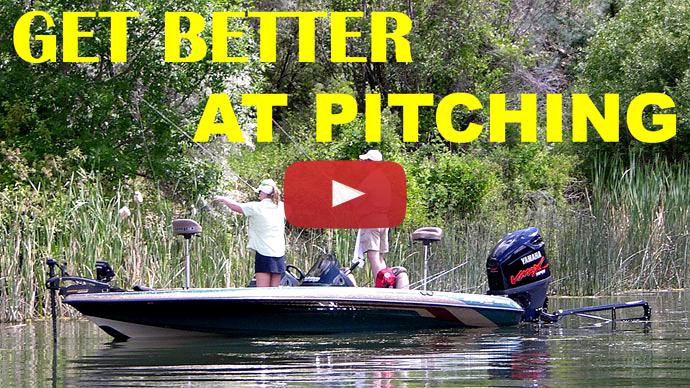
Flipping and pitching are two of the most important casting techniques in bass fishing — especially when you need accuracy, quiet entry, and pinpoint placement around docks, bushes, laydowns, and heavy cover. In this video, Glenn breaks down the difference between flipping and pitching, when to use each, and how to practice both effectively without ever leaving home.
You’ll learn the right rod, reel, and line choices, why a fast-action rod tip matters, and how to avoid dangerous mistakes with open-hook lures. Glenn also demonstrates how to pitch with spinning gear using the "finger-feather" method for precision control — plus a simple at-home practice system that will dramatically improve your accuracy and splashless entries on the water.
If you want to get better at placing lures quietly and precisely where big bass live, this video is your complete flipping & pitching beginner’s guide.
You’ll learn the right rod, reel, and line choices, why a fast-action rod tip matters, and how to avoid dangerous mistakes with open-hook lures. Glenn also demonstrates how to pitch with spinning gear using the "finger-feather" method for precision control — plus a simple at-home practice system that will dramatically improve your accuracy and splashless entries on the water.
If you want to get better at placing lures quietly and precisely where big bass live, this video is your complete flipping & pitching beginner’s guide.
Transcript
Let's talk about two casting techniques that you hear about often with bass fishing, and that's flipping and pitching.
First of all, a quick definition. Flipping is when you peel off some line with your free hand about half to 3/4 the length of the rod that you have, and you use a underhand casting motion to fling that lure out there. And while you do it, you peel that line right back through the guides. You just kind of feed it through with that free hand and the lure. Go out there and land out real nicely and then instead of reeling the line back in, you just pull back on that line with your free hand where you lift up on the rod. And then you find another spot, quick little underhand cast and feed that line back through your guides. And that's flipping.
Pitching is if you want longer distances further than that amount of line that you're able to peel off on your reel, that involves a little bit more. You actually, instead of holding the line, you now hold the lure in. Hand and you give it a little bit harder of an underhand toss and you let go of the lure at the same time and you can cast it out further away now the key to doing this is that you got to make sure that you're consistent and we'll get to that in a minute but.
With both of these type of techniques, you're using lures that typically are Texas rigged, like Texas Rigged plastics or jigs, something like that. Open hook type baits don't work as well for two reasons. Number one, this technique is really good for casting under under overhangs, underneath docks, right next to lay downs, into bushes, open pockets of weeds, pinpoint. Accuracy counts here, but if you get the theme here, it's there's cover, there's always cover right there and you're putting it right in or next to the cover. And if you throw with an open hook lure, you're going to get hung up, you're going to get snags.
The other reason, particularly if you're casting your pitching with an open hook or with a crankbait, for example, something with a treble hook, you're gonna hook yourself and probably bad. I mean, buried deep beyond the barb kind of thing. It's dangerous. So I would not recommend pitching with any kind of open hook. It's just you're asking for trouble.
But the key thing here is learning how to get it right where it's supposed to be. And practicing that, you have to have the right rod and reel setup to do that.
So the rod typically is 7 foot to 7 1/2 foot medium heavy fast action rod. Now the fast action is part of the critical component of this. The fast action has a lot of rod tip to it, relatively speaking. And that's going to allow you to fling that lure out there. That rod tip is going to load up a bit and it's going to let it throw that lure out there. If you got an extra fast rod tip, it doesn't have enough movement on the end of it and. Really a lot harder to fling it out. There is more wrist action and you have less control. So this is better suited for a fast action rod.
And if you're throwing into most typical types of cover, a medium heavy rod is going to do just fine. However, if you're throwing a heavy weeds, thick matted vegetation for example, or into bushes and lay downs and you know a lot of thick heavy cover. Than a heavy power rod is probably better suited for it, but still with that fast action rod tip.
Here's the other thing guys, a lot of people do it with just bait casting and you learn on bait casting for good reason. Again, throwing in this heavy cover, a lot of times bait casters are better suited for that. However you can do it with spinning gear. I mean, I've cast a lot of lightweight finesse lures into tight spots. Using a pitching technique.
Yeah, let me show you real quick if you've got a got a spinning outfit like this? Say for example, one of the things that you can do is you can use your finger and you put it alongside the edge of the spool that holds the line in place, and as you lift your finger and touch the side again, you can stop the line. Right, so quick close up of this. Let me show you. Let me do this real quick. There we go. So you can see. I've got my finger right on the line, right on the spool, and if I just do that. See it peels out a little bit of line until I put my finger back on it. So you can stop the cast, right? Just like you could if you put your thumb on a bait casting reel. You can stop it.
But similarity, you know the the key thing with pitching, any kind of casting technique with a bait caster is to be able to thumb the reel. You can do it with your finger too. You can feather the line if you can see this. If I lightly let up on my finger, the line will peel off at a rate relative to how hard I press down on the reel. So I can slow down. How fast that lure flies off, right? So with just that and then stopping it just like that. Now when you cast, you can do it just like you would a bait casting reel. Right, with a baitcaster, you're using the thumb when you pitch. You're using your thumb to feather it as it gets close to the target and then pressing down on the spool to stop the lure. And you're much more accurate that way.
Well, you can do that with spinning with this technique. So now you can do grubs and tubes and lightweight, you know, finesse jigs and other things that you're using with spinning gear. You can also pitch doing that. OK, quick little tip.
The key with this is practicing with either using big casting or spinning is practicing. And that's one of the cool things about bass fishing is you can practice casting when you're not on the water. You can do this at home, especially with pitching and flipping. You don't have to overhand cast or sidearm. You don't need a lot of room, just quick. You can do it down the hallway, right? Or you can do it in your living room. Just try to pitch underneath chairs and under your couch and under your tables. Just practice doing that, just trying to get the accuracy down or down the hallway, you know, pick a spot in the hallway, or better yet, get a paper plate. Set out some paper plates as targets and try to land it on the paper plate. And once you start to get more consistent with that and start to get it on the paper plate, the next level is to practice with that thumbing technique or with the finger technique to get it to gently land on the paper plate so it doesn't bounce. If you can get it to land on it nice and soft and gently without bouncing, that translate to a splashless entry on the water.
And that way you don't spook fish because a lot of times the fish are right up on that dock piling or right up on that lay down, or maybe you're even pitching to a fish on a bed. You're less likely to spook them if you get that splashless entry and you sometimes you get a bite as soon as it hits the water because of that splashless entry.
So practice that now if you don't have enough room. You know, I first learned this when I was in a one bedroom apartment. I didn't have a hallway. I had a small little living room, didn't have the depth to be able to really practice pitching, so I went to a local park and practiced there and actually the better thing, what was nicer about that is I could stand up on the bench part of a of a picnic table. If they're stable enough, make sure you don't flip it over, but you know, be careful there and make sure you don't get on an unstable park bench. But if you can stand up on that, that kind of simulates being on the deck of a boat. So you're a little bit higher up off the ground. And that makes it actually more of a simulation and you can practice pitch in that way. Now, of course you're going to have people come by and like, oh, you know, how's the fishing? Ha ha, ha. You know, Well, you know, you got to put up with it, you know, oh, like I haven't heard that before. And I had plenty of people heckle me. But, you know, when you practice that way, then you're spending time practicing off the water, not on the water. And you're spending more time fishing and catching fish on the water.
One of the things that really helps with this is if you don't have like an old jig that you can cut off the hook point or maybe an old plastic that you can, you know, put a Texas rig or you afraid of snagging furniture or your carpet or whatever, you can get one of these. This is a little casting weight. To practice plug you can get them a Tackle Warehouse. I'll put a link here in the video, but these work great and they don't hang up on anything and you can cast away. They've been making these things since I was a little boy. I'm telling you then this is what they're for is for practicing. So get yourself a couple of those in a couple different weights and practice away.
Speaking of weight, it's easier to learn this technique with say 1/2 ounce to three quarter oz weight to begin with and then back down to 3/8 and maybe 1/4 ounce. And even an eighth ounce. But start off a little bit heavier and that makes a little bit easier to learn this technique. Now, once you kind of get this basics down, I have a video here, I'll link it right here that's more advanced techniques and really can hone in on getting better at it and even more distance and more accuracy. So once you've got the basics down and ready to level up or you're almost there already, go to this video and learn even more tactics.
Hope that helps. For more tips and tricks like this, visit bassresource.com.