All right, September is here, and this is when the bass start to put the feed bag on and get ready for the winter months. What that implies is, yeah, fall is a transition period. It is, you know, between summer when they are in predictable areas, and in winter, they're in predictable areas. In fall, it's transition, and the weather's changing. We get progressively stronger fronts as time goes on. And bass change their feeding patterns. Now, they're going after baitfish, be that perch or shad, bluegill, and these baitfish are always on the move. And so the bass are always on the move too. So it can be a little bit tough. But let's talk about this. I mean, that's the key thing here, is finding the baitfish.
Now, of course, you can use your electronics if you're on a boat, and I would recommend using forward-facing sonar or side-facing sonar. You don't want to drive your boat over the top of these balls of shad, for example. But there are better ways to find the baitfish than your electronics, honestly, and that is using visual cues. Because you can see a lot farther out than your electronics can. So you're looking for, say, for example, birds that are feeding on baitfish at the surface. Cormorants, those nasty little creatures, they feed on baitfish. If you can find congregations of cormorants, there's probably baitfish nearby. Blue herons walk on the shoreline. They also eat baitfish. So those are signs that baitfish are nearby. You can also look on the surface. If you see baitfish busting the surface, especially large groups of them, that's usually there's something underneath chasing them like bass. All right? It gives you an idea that there's baitfish activity in that area.
Now, using electronics, like I said, you can use forward-facing and side-scan. You can find baitfish that way. One of the things I like to do is right when I launch the boat is I start scanning right away for any type of activity. I'm looking for an area where the majority of the baitfish are at, or even predator fish, just a band. Say, for example, it's 15 to 20 feet deep, or let's say 10 to 15 foot deep, okay? That's where the majority I see fish hanging out at. Well, then I will just target structure that intersects with that depth zone. And a lot of times that's where I start picking up a lot of fish. I haven't even thrown a cast yet. I just got out of the...launched the boat, and immediately I know where I'm going to go. Some of you guys that are in tournaments, you're hanging out waiting for that gun to go off, to blast off, and you're talking with your buddies and hanging out. I have my depth finder on, and I'm looking. I'm looking for that activity. I'm already starting to fish. Okay?
Because here's the deal. If you're a bank fisherman, you know, or a shoreline, you beat the banks all day long, you can spend half the day until you realize, yeah, the fish aren't up that shallow, they're actually deeper. Well, if you just spend five minutes on your depth finder, and you can figure out the activity level is at 10 to 15 feet deep, you've saved half a day of fishing right there. So targeting and figuring out where the baitfish are at is key for this time of year.
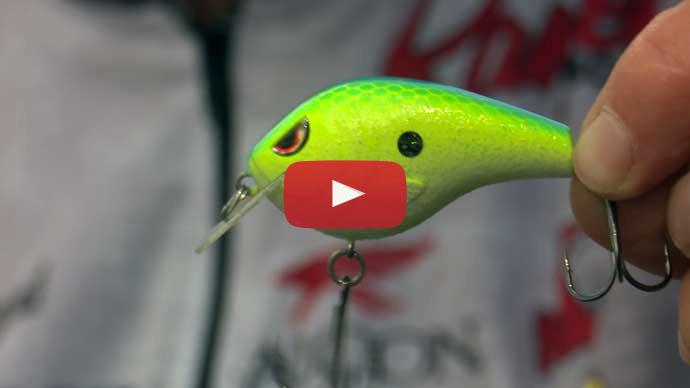
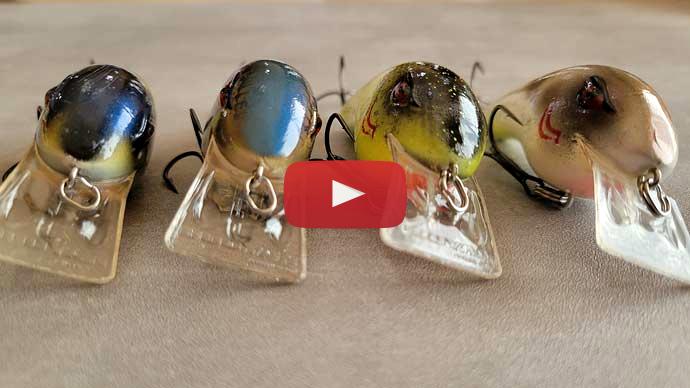
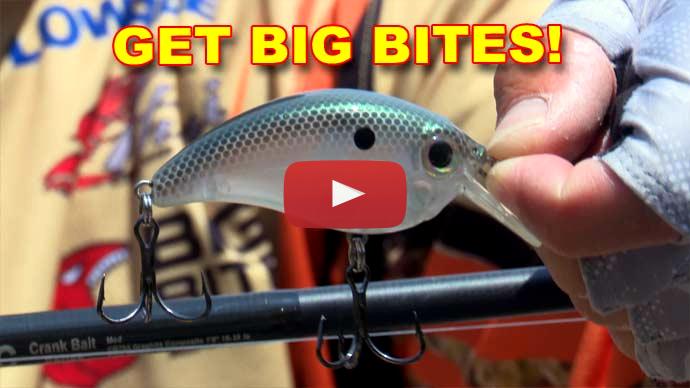
Now, you have to use baits that imitate baitfish. Crankbaits are fantastic. Medium diving crankbaits, in particular, is what I'd be using this time of year. But any time a, you know, crankbait, wide wobbling, lots of action crankbaits, that's the kind of thing you want to have. Same thing with swimbaits, spinnerbaits, topwater baits, you know, all these imitate minnows and baitfish. The key with all these is to downsize them because right now the bass are keen on, you know, the young of the year. These are all the baitfish that were hatched in spring. They've now grown up to 2 to 4-inch sizes. And that's what the bass are keying on. So a little bit smaller-size baits reign supreme right now. So the smaller Zara Puppies, the 3-inch to 4-inch Keitech swimbaits, for example, right? Just the smaller-size baits are going to rule right now, and you'll catch a lot more fish doing that.
Now, like I mentioned, the bass are nomadic right now. They're hard to find. And it is a transition period, which means some bass are still in their summer patterns. They're still deep, while others are ahead of the game and they're up shallow. So let's talk about the deep fish first. They are still in their summer patterns, meaning they are going to be up where there's steep banks, even sharp ledges, or just where an area where the river swings up next to the bank, where you got these deeper banks where the bass can move up and down the water column without having to move far laterally, that's where they like to hang out this time of year.
And they would even be man-made structures like bridge pilings and dams. And you can go after them using, again, the smaller paddle tail swimbaits. You can also use a variety of plastic baits, small plastic baits. I would like a rage bug or a rage tail, something like that that imitates a small baitfish, works really, really well. Working in those deeper waters, even on a Carolina rig or a split shot rig, a tube, works really well, a 3-and-1/2-inch size tube that mimics a baitfish just right. Get it down on those depths using just a jighead on them and working it down along those areas next to the structure. If you've got some kind of cover with that structure, like scattered boulders or stumps, maybe a deep weed line, even better. That makes it more of a hot spot. You can hit those bass that are still in those summer patterns, and they're still there, and you can still catch them.
Now, on the other end of the spectrum is the shallow bass. They're going to be up feeding on any baitfish that are up there. So weedy areas are the main places I would target. You can, again, target the outside weed lines, the weed edges, or pockets inside of them. Using, again, spinnerbaits, crankbaits, throwing soft plastic baits, you're pitching them, Texas rig baits up in the weeds. If you've got matted vegetation, throwing a hollow body frog over the top of it can be very, very productive. Those bass are up under...you know, there's baitfish under there. They've been there all summer long, and they're still there feeding and, of course, the bass are now up there hunting the baitfish. So you put something across the top that looks alive and the bass are opportunistic. They're going to blast through that thick canopy and nail your frog. Just be ready for the bite. It's exciting.
You can also punch plastics through it. Take a rage bug, you know, a beaver-style bait, on a 1/2-ounce to an ounce bullet sinker, pegged, and you kind of pop it up in the air and let it hit that canopy. It punches through, and when it breaks that surface and comes down to the bass down below, it gets gobbled up before it even hits the bottom. So those are a couple ways you can hit them, and pay close attention to hard cover. Bass and baitfish will start to migrate out of the vegetation as September rolls on, and they'll start to move towards hard cover. Things like rocks, stumps, bridge pilings. And it doesn't necessarily mean that they will vacate the vegetation now. So if you find those things interspersed inside the vegetation, even better. But you want to look for those areas because those are going to be hot spots in September.
So fishing shallow, fishing deep, making sure you're downsizing your baits. That's how you attack bass in September. Looking for those baitfish all the time because that's where they're going to be. Hope that helps. For more tips and tricks like this, visit bassresource.com.