All right. Let's talk about post-spawn bass fishing. This can be a boon or a bust sometimes for anglers because it's a bit of a challenging period. The reason why is post-spawn doesn't all happen at the same time. Bass, they spawn in waves and they can do this across the course of several weeks or even months. So, at any given time during this time of year, you have some bass that have already spawned, some that are spawning, and some that have yet to spawn. The post-spawn period is predominantly marked when most of the fish are finished spawning, but understand it happens way before that and continues well after that.
One of the misconceptions about it is when you're out there, you've seen bass on beds for a while, you've even caught a few on beds, and then one weekend you go up there and the beds are empty. All you find is just empty beds everywhere. And where are the bass gone? A lot of guys think, "Okay. Summertime bass have turned around and they're out to deep water, gone. They're out of here, Jack." And that's not true. There's a transition period, and that's called the post-spawn, where the bass actually hang out still in those shallow areas. They may have just drifted off a little bit deeper to the next deepest drop or to the outside weed line, or they may have buried up in shallow cover or under docks. But they're not going to totally vacate an area and be gone overnight. That doesn't happen.
So first of all, keep in mind, if you're in an area where you've seen bass bedding and now the beds are empty, look around you and see what's available. There might be a creek channel in this big cove. They may have just drifted down into that. Or like I said, the weeds, outside weed lines, any kind of cover that's available, rock piles, stumps, what have you, find something nearby, a little bit deeper water, and that's where they tend to be.
Another thing is the type of forage. The more forage that's available, the less reason the bass have to leave the area. So it may not be shad, because shad are more open-water, roaming-type baitfish. But if you've got any kind of sunfish, like perch, bluegill, around, if you've got gobies, sculpin, crawdads, I mean, it goes on and on and on. There's all these different types of forage available to them. If the area is abundant with that, then the bass are going to be feeding on that. So keep that in mind.
Things to use, baits to use, let's focus on that. So let's start with spinnerbaits. This is one of my favorites, especially during this time of year. Spinnerbaits with a double willow-leaf blade, perfect, because it mimics baitfish. The key thing about it right now is to use a smaller size bait. Typically, I'm using 1/2 ounce or larger spinnerbaits. Now, I'm using 1/4 ounce. It's like, this is the only time of year you're going to see me using a 1/4-ounce spinnerbait, the smaller compact size. There's a lot of different species that have gone through the spawn now. And so, there's an abundant amount of small, you know, minnows and things available for the fish to eat. So, a smaller size bait works a lot better right now. So, smaller size spinnerbaits work really well.
Jerkbaits is another one, both soft, plastic jerkbaits and hard jerkbaits. Soft ones are like the flukes. You know, rig it weightless and gently twitch it over the top of weeds. Just let it kind of saunter through the weeds. A white-colored fluke works great, a smaller one, not the standard 5 inch. Use a smaller one. A Senko, same thing, smaller. Get a 4-inch size for right now, or maybe even a 3, 4-inch size. And just again, weightless, cast it out there and just drift it carefully around docks. Skip it under docks, around these weeds, submerged weeds works really well.
Hard jerkbaits, use the shallow-diving smaller size hard jerkbaits like the floating ones. I like to use the Rapala 11. It's a thinner, smaller profile than your typical jerkbaits that are out there today. It's not as big. And that smaller profile, it only goes down about 1.5 foot, 2 feet deep. And just pop, pop, pop, and give it a little rest. Let it float back up and then wait a while and pop, pop. These bass, you have to keep in mind, they have been spawning this whole time, not eating. So they're hungry. They got the feed bag on and they're going to eat a lot of variety of different baits you can give them right now. They're aggressive. So, you can try these different lures across different areas. The flukes I would put over weeds where the treble hooks on a hard jerkbait would get fouled. And then you use the hard jerkbait in areas where you're not going to get fouled. Great combination.
Topwaters. This is arguably the best time of year for topwater fishing. I love throwing topwaters during the post-spawn. It's nuts, man. It's crazy. So you can use fast moving topwaters like prop baits and buzzbaits to cover a lot of water quickly. I like to use the buzzbaits that have really big blades on them so you can bring them back at a slow speed. Poppers work really well or a chug bug or type of popping-type bait that looks like an injured bait fish struggling on the surface. Again, the smaller size. A smaller size like a Zara Spook Jr. works really well. The smaller Sammy's, anything like that. Just downsize it of the regular size and work those like you normally would those larger size baits. And you can catch a lot of fish on topwater throughout the day during the post-spawn. This is not just an early morning or evening bite. During the post-spawn it'll work throughout the day. You'd be surprised on a bluebird sunny day how many fish you can catch on a buzzbait, for example. It's great. It's a lot of fun. Topwater action all day. Who would refuse that?
Jigs are another lure that works really well. You can throw these up and around any area where the fish may be holding tight to cover. If it's really sunny out or you've had a light front come through, those fish will tuck up tight to cover or in the shady side of things. And flipping and pitching a jig into that cover is usually the best way to get them out. So any kind of jig will work, but I like to use, you know, the kind that are designed...the flipping jigs. They've got the stout hook on them and they can get through cover very easily without getting hung up. So jigs work really well.
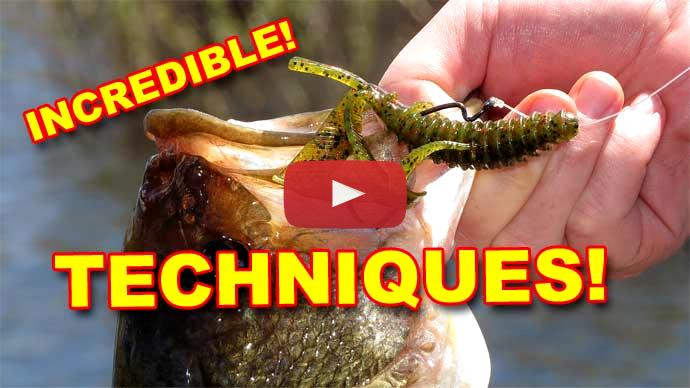
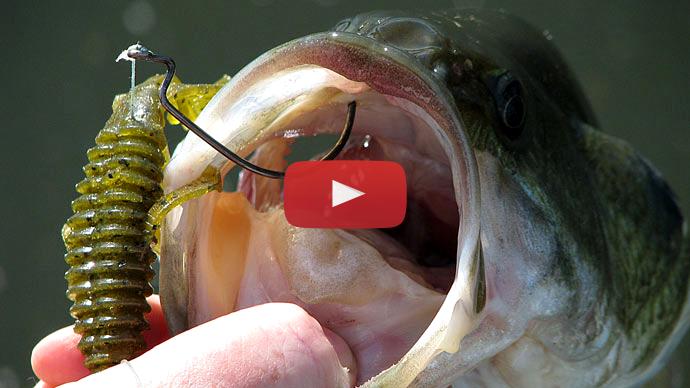
Soft plastics, Texas-rigged soft plastics. I like to use a Rage Bug. It's got the profile of a bluegill. Bluegills are nest raiders and, you know, the bass instinctively will attack those during the spawn and post-spawn. But also a lot of times during the post-spawn, that's when bluegills are up shallow, they're going to spawn. And so, you have an abundance of bluegill up there. So, a bluegill imitator like a Rage Bug can be very effective.
The key with these two baits, the jig and the Texas-rigged Rage Bug, is real light presentations, use a 1/4-ounce bait. And flipping and pitching, you want a light splash because it's shallow water. You don't want to spook the bass. If you cast to them, it's like throwing rocks at them and they're going to scatter. So a light, easy presentation into it is going to draw their attention. You want their curiosity. They're going to hear something plop in the water and go, "Ooh, what was that? I got to go see what it is" versus scaring them away. So focus on the soft entry. Sidearm casts work really well. I even do it with spinnerbaits and hard baits. Sidearm casts, you can get a lighter landing in the water so it doesn't spook fish is really key.
Another type of soft plastic bait is a lizard. Now, a lot of people use lizards while the spawn is on and they fish them around nests because the bass will annihilate a lizard because a lizard is a natural predator to nests. And so, the instinctive defensive nature of bass will attack a lizard. And then they put the lizards away after the spawn. Well, don't do that because the post-spawn can be very, very effective and it's different than what you might think. Instead of casting out and let it fall like you would a Rage Bug, here, you cast out, I don't know, maybe with a 1/4-ounce weight, maybe a 3/8-ounce weight, and then slowly reel it back and swim a lizard back. You've heard of swimming jigs. Well, a lizard you can do a lot slower and it has a lot more action to it with the arms moving and the tail. And again, bass are super-aggressive. They're really hungry. This presents a large meal, like a 6-inch, 7-inch lizard. And you can rig it Texas-rigged so now, you can throw it anywhere without getting hung up. So, everything in any place where bass can be hiding, you can use a lizard this time and you'd be surprised. This is a presentation a lot of people don't use. So, it's something different and you'll catch a lot more fish swimming a lizard this time of year.
Another thing to keep in mind, guys, is in addition to the bass spawning in waves and at different times, they also spawn in different frequency or different times around a lake. So, super-shallow back end of a lake, if it's a lake that's a dam, they'll spawn there first and then as the season goes on, they'll get into post-spawn, whereas another part of the lake is just firing up with the spawn. And then as that dies off, it's firing up somewhere else with the spawn. So, you can fish the post-spawn for an extended period of time, right? So, if you have been fishing the post-spawn in a certain area of the lake and that starts to wane as the fish start to vacate and start to make their way out to deeper water, you can find another section of the lake and keep that alive and keep fishing that post-spawn for as long as Mother Nature will allow you. And you'd be surprised. You can get three, four, six weeks out of the post-spawn, whereas you can maybe only get it a couple, three weeks if you stick in one area. So try that out.
Try these baits out, and you're going to have a blast this post-spawn. Hope that helps. For more tips and tricks like this, visit bassresource.com.