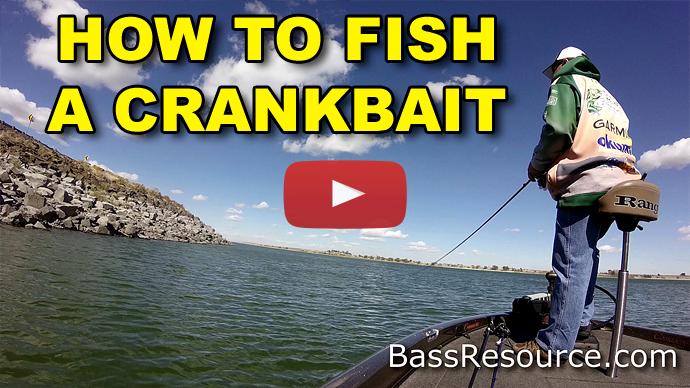
Walk into any tackle store or any online tackle shop and you'll see a ton of crankbaits. And why? Well, bass primarily feed on baitfish and nothing really imitates a baitfish no better than a crankbait. So that's why there's so many out there. Now if you're trying to figure out what to use, when to use, and how to use it, that's what this video is all about.
Let's make it super-simple. Crankbaits can be broken into basically three categories: shallow diving, medium diving, and deep diving. As a matter of fact, I have my tackle box divided that way. It makes it a lot easier. Those three main tiers is really what you want to focus on.
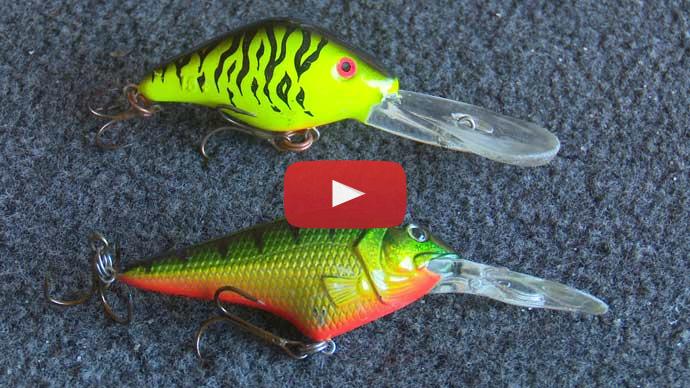
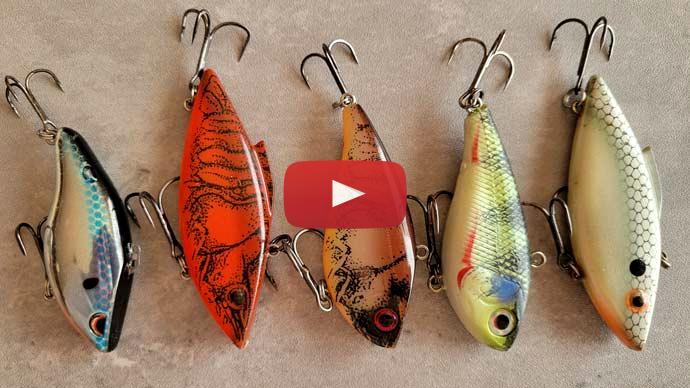
So let's start with the shallow-diving ones. These are ones that are like 0 to 5 feet, 0 to 6-feet deep. They have a short bill on them. Sometimes no bill, like the lipless crankbaits, the rattle traps, for example. The squarebills, those are great for working around areas that have some amount of cover to them. You'd be surprised at how weedless they really are, despite having treble hooks on them. What happens is they go through the water like this at an angle. Well, the treble hooks are behind them. So the body works as a weed guard. So that's one thing that keeps them from getting snagged as much. But this square nature of the bill, if you look at this, see it's flat. That's why it's called the squarebill. What happens is when it comes up against, let's say a stick, even if it's on an angle, it hits and it squares up. So, it's flat against that stick and then it rolls up over it. And the hooks stay behind and they don't get hooked in that stick. In lipless crankbaits, over the top of weeds. If you want to snag a weed a little bit and if you get a little hung up, just pop it with your rod. And when that pops out, sometimes that quick change of pace is what triggers a bite. Any kind of crankbait that's got a little short bill and shallow diving, you can throw it around docks, you can throw it around riprap, you can throw it around points and outside weed edges, these work really, really well and very effective.
The next type of crankbait is the medium-diving crankbait. And this is where you probably see the most amount of crankbaits. And that's because for the most part, bass will sit in that 5 to 15-foot range for most of the year. So, that's why you have so many different crankbaits that go in that range. And you have a variety of different bill types. Again, you've got the squarebill, they're longer now, but they work on the same premise that I just mentioned. They also have the longer bills and the rounded bills. And these work really well, especially when you throw it on rocks or dock pilings, they hit and they kind of curve around when they hit it. The lip kind of catches and flips around it and deflects off of it. Sometimes they hit and they go off in a weird direction and that actually triggers a bite. So these work, again, around docks, weeds, outside weed lines that are very effective on the outside edge of weed lines, points, humps, right over the top of humps. If you've got some vegetation on the top of a hump or some rocks or logs on the top of the sides of a hump, you bring it around the top of that, works really well, you know, creek channels. Anytime there's a change in topography on the bottom, bringing that crankbait along that is really good.
There's a couple of retrieves. You can cast it out and just retrieve it straight and that works really well. If it's a little bit colder, the water temps are say, in the mid-to-lower 50s and below that, but then bring it back at a slower retrieve, tends to get a little more bites. Stop-and-go retrieve though is one of my favorite. You cast it out, you wind it along and then you pause it and you give it a count of 1 to 2 seconds and then retrieve again. What happens is the bait stops, it starts to float up, so it's completely changed direction now and then you reel it and it takes off again. That change in direction is usually what triggers a strike. Bass will follow it up and they're chasing the lure and suddenly the lure stops, they got to react. And a lot of times that reaction is they bite it. So, stop-and-go retrieve can be very, very productive.
And then the next category of baits is the deep-diving crankbaits. These go 15 feet or deeper. Some of them go as deep as 30-feet deep. Crazy, right? But this is where you want to, if you really want to reach the bass, it's in the summertime or on the early winter and late winter when they're starting to move that transition period where they're still very deep. This is where these baits come into play, particularly summertime now. Now, you're targeting primarily areas that don't have a lot of weeds, but you're looking for structure like points, ledges, humps, creek channels, and you're looking for any kind of hard cover on it, like, say rocks or stumps, laydowns, things like that, you know, abandoned cars, whatever. Things that are on the bottom that you can bounce it off of because that's really key. Especially as a trick with these lures is say you're in 18 feet of water, grab a lure that dives to 20, 22-feet deep. You want to get it down there and dig on the bottom and bounce it off the bottom. Maybe not dig all the time, but go along and maybe just touch the bottom. It hits and it triggers and it goes off suddenly, deflects at a different angle.
Or, if you even want to take one that dives 20-foot deep and you put it in 14 feet of water, now it's constantly digging. And when it does that, it goes, "eh," just bounces around and does weird stuff. I've been able to trigger bass to bite. Sometimes they don't want to follow crankbait or attack a crankbait. Sometimes they're not in the mood to really go after a vertical-falling bait. But you can wing this by them at a fast pace. You just crank and go and just let that thing just go all over the place. And the bass suddenly just go, "ah," they go crazy and attack it. I don't know what it is, but sometimes they just go mental and they just have to attack it. So, it's a way of coercing a strike out of bass. Again, the stop-and-go retrieve works very well with these deep-diving crankbaits. You know, there's a variety of ways to do it, but you can get a lot of really good sized bass by using these deep-diving crankbaits.
Colors, across the spectrum on all these. There's basically three different types of colors. So there's your baitfish kind. So that's shad, perch, and bluegill. Stick with those three baitfish patterns. The second category is crawdad. That's going to be primarily your brown and your green crawdads. There's red hues that come into play here too. You can get it in red. That's good for the shallow-diving crankbaits like in the spring and the fall when the fish are all shallow. And then the other color is what I call chartreuse. And there's a variety of different patterns they can come in. But a bright chartreuse works well in muddy water or especially in the fall when the bass are really keying on bluegill, for example, or perch, that chartreuse color works really, really well. I'll throw one more in there, which is chrome. Chrome with a black back or chrome with a blue back works particularly well for small mouth in clear water on sunny days. I find it to be very, very productive. I don't know what it is, but those smallies can't stand it and they got to pounce on it. So that's also a really good color. But that's it. You don't have to go hog wild with all the millions of other colors they have out there. You stick to those basics and you'll cover all your bases.
Now, no video would be complete if I didn't talk about the gear, because that's a very important component of this. These crankbaits have treble hooks on them. And treble hooks, they don't have a big bite to them and they're thin wire. And you've got the weight of the crankbait, especially when the bass jumps out of water, they can use that as leverage to throw the hook and get unbuttoned. So with a proper pairing of the equipment, you can really reduce that chance and catch a lot more fish. So what am I talking about? Well, it starts with the rod. The rod, you want a medium power, moderate action rod. This has got a lot of bend to it. Some people call it a whip. It's a whippy type of rod. It's not very stout. It's got a lot of bend to it. And because of that, it acts kind of as a shock absorber or a spring. When the bass surges, when you've got them hooked, that gives, it kind of bends down and goes with it and slows the bass down and kind of catches them gently. Instead of using like a stout rod, then they can use that as leverage to rip and pull away from the bait. So instead, it goes with the bass. They can't use it as leverage as much. For that reason, you want a longer rod, like a 7'4", 7'6" rod. Not only does it aid in that, but it also enables you to cast long distances. And why you want to do that is you cast a long distance, you can get that bait down to this diving depth and keep it at that depth for a longer period of time, because you've cast it out so far, before it starts to come back up to you. So, you can get it in the strike zone for a lot longer. So a longer rod helps with those two things.
Paired with it is fluorocarbon line. I like to use 12-pound fluorocarbon line. I use Seaguar Tatsu line. No braid. No braid at all. Keep it simple, guys. Okay, braid has no give whatsoever. And you don't want to give that bass any leverage to pull those hooks free. So if you're using line like braid that has no give, it can use that to rip out and pull the hooks free. Fluorocarbon by comparison, has more stretch and give to it. It's not super...it's like a bungee cord. It's not like super-stretchy. Some people exaggerate how much fluorocarbon stretches, but it's got a little bit of give to it. You pair that with the give of the rod and now, you've got a little more of a spongy shock-absorbing action which helps keep the fish pinned.
Along with that is you've got to have a reel that has a really good drag. I use bait casting outfit for this. It's not so much the gear ratio, although a 6 to 1 to 6 to 5-gear ratio covers most of all your crankbaiting situations. You don't need a super-high gear. A really low gear, I mean, you'd just be winding like this all the time. So, you know a 6 to 1 to 6 to 5 covers most of your crankbaiting situations. But the drag is what's important to me. You know, 12 to 14-pound drag is sufficient. It's the washers and how smooth it is. That's what I want. That's what you want because once that rod maxes out and that fluorocarbon has given all the stretch it can, the drag kicks in and catches that fish and slows them down in a nice gentle way and keeps that fish pinned. All three of those components work in concert and then you're going to catch a lot more fish.
And finally, I use snaps with all of my baits. I take the split rings off and I use a snap to connect them. Not a swivel, just a snap. And the reason for that is first of all, it gives the bait more movement than a split ring. But also, a lot of times when I'm crankbaiting, I'm switching between different colors and styles of crankbaits and it's a lot faster and easier to just unhook it and grab the next one, hook it back on and go versus cutting the line and retying and doing a new knot every time. Over the course of a day I get a lot more casts in instead of spending time retying. So that's why I use snaps.
With all that information, you've now armed yourself with enough info to go out there and catch a bunch of fish on crankbaits. Hope that helps. For more tips like this, visit bassresource.com.