All right guys, what's going on? I'm Kyle Welcher, Bassmaster Elite Series Pro. We're here with bassresource.com and we're talking about Texas rigs for bass in the fall.
You know, the fall is a weird time of the year. It's notorious all over the country that the fall is a really weird time to pattern fish and catch fish. And I think a lot of that is frustrating because, you know, a lot of fish are shallow in the fall. They're moving up. I feel like there's poor oxygen content deep on a lot of the lakes. The baitfish move up pretty shallow. Bass move up pretty shallow. Everything seems to move up shallower than they've been all summer. So it can be frustrating to know that you're around fish and you can't get them to bite. You know, and that's that's something that we've all dealt with. You see them come up schooling in the fall and you know you, you know, there's fish there, but for whatever reason, if they're not schooling, it's really, really hard to get them to bite.
Well, for me, I've kind of developed an approach where I run and gun in the fall basically exclusively. So if I know there's fish in a certain area, I'm going to identify in my head where is the sweet spot on that area. And it may be one rock on the side of a point, it may be one stump halfway back in the creek, it may be a laydown tree, offshore brush pile, whatever it is, but I'm going to try to go. And I'm going to decide if there's fish here, this is where it's going to be. And I'm going to really milk that area as much as I can.
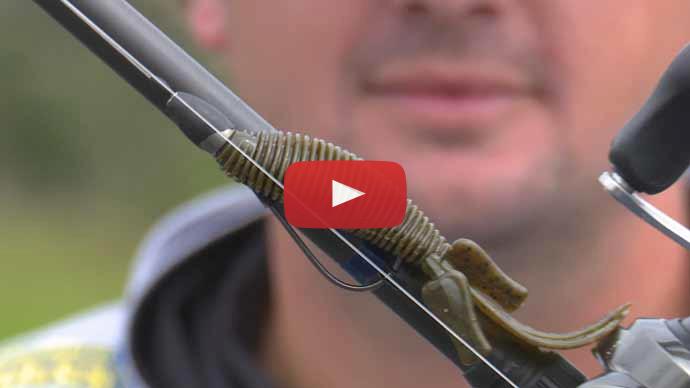
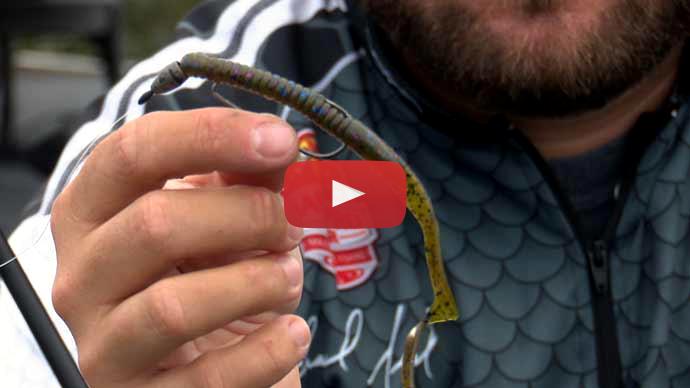
Typically a worm is the best bait to get bit on in the fall. I mean, that's, you know, the most consistent by far. It doesn't matter if you're, if it's rocks, docks, deep laydowns, brush piles offshore. A worm is the one that can get you the bite and kind of kind of break the frustration of knowing there's fish around you in the fall. You can't get them to bite.
So whenever I've identified this stump should be the place I know there's fish on it, I'm going to really milk that area. Multiple casts to the same place. You know, 4, 5, 6 casts to the same place, maybe even change angles. And a lot of times in the fall you'll get a bite or two and then you'll fish for a while and you won't get another bite. And then you'll change angles and then you can get another bite or two.
I don't know why, but it seems to be more important in the fall than any other time of the year. So if you pull up to an offshore brush pile and you know you're fishing it from one side and you get a bite, don't get another one, I would just swing around and cast the exact opposite way and work it differently. And then a lot of times you can generate more bites in the fall.
But for whatever reason, those fish get up there so shallow in the fall and they just want to cruise around and they want to wolf pack. And the places that they'll actually sit and stage is typically they'll sit in shade pockets under the backs of shallow docks. But we all have seen those wolfpackers that swim up and down the banks in the fall and they can be extremely difficult to catch if you've already seen them.
But something to think about is you have to visualize where you think those fish would stop and take a break in this area. So one shallow dock, that's where I feel like if those fish are wolfpacking and they want to stop, they're going to stop under there. So it's another thing that I'll do is pull up and throw that Texas rig over there and milk it just the same because typically those are your better average fish. Those wolfpackers, I've never understood why, but it's just some of the biggest fish in the lake want to swim super, super shallow in the fall, but they'll they'll stop on that isolated cover for just a second.
Now there's there's a kind of a a two-pronged approach for me in the fall. That shallow isolated deal, that mid-depth deal with the stumps and the brush, that plays immensely in the fall. And the docks plays immensely in the fall. But it seems like when those fish have moved back up out of deep water, they'll get on the outside of these deep laydowns and the very tip of a deep laydown, especially a big pine tree, a big hardwood tree, there'll be a school of fish suspended, you know, 10-12 feet underneath the water.
And that's whenever I'm going to flip something with big line on there, something that can go down through there through that school, but I'm not letting it typically go through the laydown all the way to the bottom. I may do that after, but my first cast, I'm two let it go down there and get on the limbs and I'm going to let it kind of suspend and I'm going to just shake it on the limbs in the fall because those fish will. I've seen them with my eyes. I've seen my forward-facing sonar. They'll suspend on the tips of those trees in the fall. And I feel like it's just the best cover that they have after they've came back from being offshore most of the summer.
And don't think just because the fish are targeting shad that they won't bite something else. Like a fish is an opportunist. They're going to—they may be feeding on shad one minute, but when they see a crawfish, they're going to eat it. And whenever they see a bluegill, they're still going to eat it.
So the biggest thing is make sure that your bait looks super super natural in the fall because typically we have really clear water in the fall also. And it takes rigs that really easy bait to look natural because we've got really good colors nowadays, you know, we've got green pumpkins and, you know, natural shads and all these colors that you can really trick these fish with.
So that's one of the things that I always do is I keep it super simple in the fall and I always want to be as natural as possible. And I just—repeated cast over and over and over is one of the best things you can do in the fall.
So that's a couple of my tips and tricks that I do in the fall. You know, I, I still like to flip the big rod in the heavy cover, but it just doesn't seem like they want to be in the cover quite as much as they're just kind of swimming around and you just kind of want to have that collision happen if you can. That collision happened a couple times a day. You got some really fun days in the fall.
So a Texas rig in the fall is a great way to catch some of those big ones that are just staging on that isolated cover. So remember that next time you're out there and just visualize where you think the bass are going to be and you can get some really good bites on the Texas rig in the fall.