Hey everyone, I'm Pat Schlapper with BassResource.com, and today we're going to talk about tube fishing in the fall.
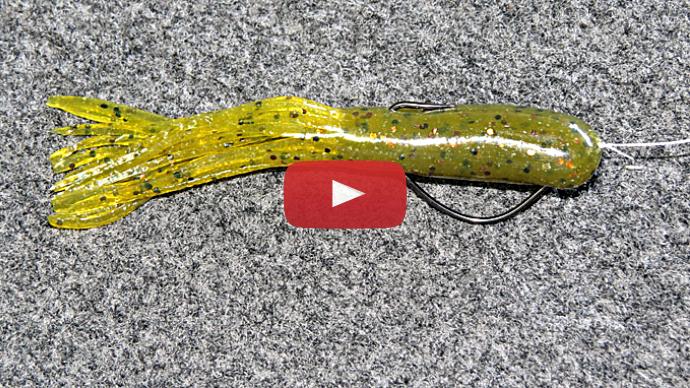
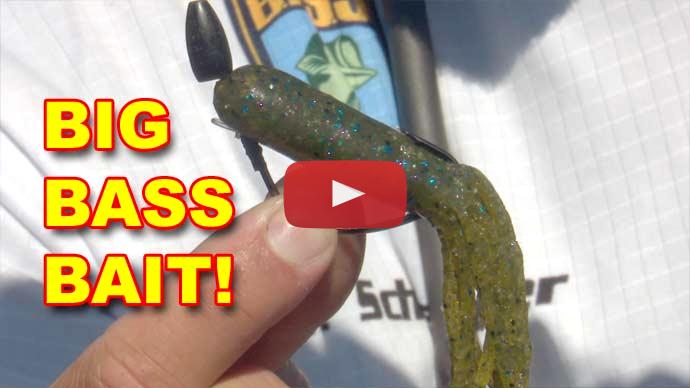
So, tube fishing in the fall—a lot of times for me, it's about getting a reaction. I want something real erratic in the water, and a tube is perfect for that, especially for smallmouth. I mean, you'll definitely catch largemouth on this too, but this technique is just—it's what I call snapping a tube. So I'll take a standard insert tube head that I slide up in there, and usually 3/16 or 1/4 oz, sometimes 3/8 if it's windy or if I'm a little bit deeper. My favorite place to throw it is either on grass edges with a rock mix or grass clumps—just around grass. It doesn't have to be super thick. I mean, it can be short sand grass, it can be cabbage—any type of vegetation. This technique really shines.
A lot of people traditionally fish this tube by just casting it out and dragging it on the bottom, which is great—it definitely catches fish. But a lot of times in the fall, I want that reaction bite, and they're also feeding on baitfish a lot more in the fall. So I think a lot of times when I snap that tube, it makes it look more like a baitfish.
What I'll use is a 7-foot, 1-inch medium-power St. Croix Legend Tournament. You want something with some good length to get a long cast. And then I'll use 12 LB Sunline SX1 braid and usually a 10 LB Sunline FC Sniper leader. I want a fairly long leader on this technique—well, I mean 10-foot leaders usually what I'll throw on it.
So what—like I said—with snapping a tube, it's exactly what it sounds like. Instead of dragging it on the bottom, I'm going to cast this thing out there. And this is where the key to the technique is—it's all on the rod. You want to do it on a semi-slack line. You don't want to reel up and get tight line and just start ripping on it. You want to have a bow in your line, and then you're just—you’re going to move your rod about 3 feet quick. And now when I pull my rod 3 feet, I’m really only pulling about a foot of line. So what that makes it do is just really dart off the bottom. So you're just going to snap that rod. I’ll usually do it one or two times, let it fall to the bottom, snap that rod one or two times, and then sometimes I’ll go 1-2-3. But you want to have that little bit of slack in there.
So the reason I like to do it around grass is I almost like to get this thing almost balled up in the grass—where it’s almost where you want to reel up because you've got weeds on your line. But a lot of times what that does is—I think that those fish, when it’s kind of in the grass and it’s hung up—I think that they're paying attention to it. Whether it’s, you know, something’s not right or they think something’s going to pop out of there, like they’re paying attention to it.
So I'll get that thing hung up in the grass. And I’ll almost do it on purpose. I'll pull it into the grass and just let it load up. Then I'm going to snap, snap, snap and pop that out of there. And 99% of the time, if there’s a fish there, as soon as you stop that pop or that snap and it starts to fall, you’ll watch your line just jump. And then most of the time, you’ll go to snap it again and you’ll be like, “Oh, there’s one there.” And then you almost do like a double hook set.
Awesome way to fish. It’s super fun. It gets some really aggressive—really aggressive strikes from smallmouth and largemouth, but mostly smallmouth. And it's something that, once again, not a lot of people do. A lot of people when they throw that out, they just want to drag it on the bottom. So try snapping this baby in the fall because you—you will—you’ll absolutely get some of the best bites of the year when you do that.
So that’s how I like to fish a tube in the fall for smallmouth.
For largemouth, I am going to go more with my traditional Texas rig, because once again, I’m going to be up in the grass—usually in the grass or around wood. So I want something Texas-rigged that I can work through there. Pitch it around wood, pitch it in grass clumps, under docks. In the fall, I’ll still fish around grass edges a decent amount depending upon how much it’s cooling down. A lot of time, as it cools down, you know those fish will move—move up shallow again. But I still will fish some deeper weed lines. But it’s primarily going to be shallower water around visible cover.
So flip that 4-inch tube, 4/0 K hook, 20 LB fluorocarbon most of the time, and then I’ll typically run a 5/16 or 1/4 oz bullet sinker, depending upon how deep it is and how fast I want it to fall. Green pumpkin, black-blue. And in the fall, definitely if you’re around baitfish, you could go to a lighter color—you know, a Gobi color or even a white is great for baitfish.
So that’s kind of my approach to tube fishing—smallmouth and largemouth—in the fall of the year.