

If you want to start your season confident, organized, and ready to catch more bass, this is the perfect checklist.
All right, so we're getting ready for a great season of fishing. It's a real exciting time, and I'm going to take you through kind of what I do every year. It's kind of my ritual as I kick off the season, and that's just getting all my gear ready to go. My rods, my reels, my tackle, everything organized, everything's all set to go. Same with the boat.
So first of all, what you want to do is look at your rods and rails. I take the reels off and I look at my pairings, my real that's paired with each rod and make sure that it's what I want. Maybe during the season I figured out that maybe 1 reel isn't quite the right reel for that the purpose that I wanted and it's not a good match for that rod. So I'll I'll make those adjustments then so I know where they pair up and then I start to inspect them and, and clean them all up.
The reels pretty easy to clean up. There's a lot of commercially available cleaners out there. Doesn't take much to wipe them down and get all the debris. And dirt out of there, it helps make them last longer. There's some reel grease and some oil you can use. Just don't overdo it. You just takes a little bit of grease, a little bit of oil in the right spots and you're good to go. If you're not comfortable with taking it apart and doing that kind of stuff, you can definitely have it serviced by somebody and they'll take care of it for you. And it doesn't cost very much. And that's going to keep your real performing throughout the whole season really well, top performance and make it last a lot longer. So a little bit of maintenance goes a long way.
The Rods couple things about that. Now the line eyes. They're made of all kinds of different material, but it doesn't seem to matter, they still crack, they still chip. You're going to whack it against something and eventually you're going to get a chip or something, and sometimes you can't see it at all. And that's going to fray your line, cause a nick in it. And then when you set the hook on a nice monster fish, your line snaps and you blame it on your line. When actually it was an eyelet that caused the problem.
So take a Q-tip and just, you know, fray it up a little bit so it's not compact. Cotton on there and just kind of run it through each of your eyes and see if it grabs any filaments off of it. If it grabs some cotton off of it, there might be a nick in there that needs to be fixed. And you can replace the eyelets pretty well. You can find someone that knows how to replace them, but that's going to save your heartache later. And while you're at it, check the eye foot that where it connects to the rod and see if they're cracked, bent, maybe the glue's coming undone. Sometimes they're broken and those like those double foot line guides, they sometimes I've found them where I'm expecting like, Oh my gosh, one of them is broken. I didn't even know it. So you just got to look through that carefully, make sure that they're all good. Make any repairs right now so it's ready to go for the season. If you got cork candles are dirty, you can clean them up, clean the real seats, all that stuff, get it all ready to go. It's kind of a fun project to do.
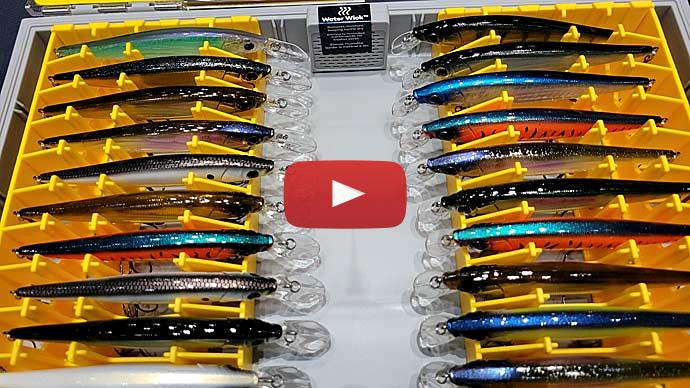
The next on your list is to organize your tackle and to replenish your tackle. This is kind of the fun part. You know, you take all your stuff out and look at it all. And what I do first of all is I look for the stuff that I haven't used for a few years that's still in my tackle box. I'm like, either I'm going to use it this year to make an effort to make sure that I use that stuff, or I'm just going to take it out because it's just taking up space. So make those decisions and then start to replenish. What do you have that? You need to restock a lot. That has to do with the hooks and the weights. You know those type of things, Bobber stoppers. Jigs, jig heads, all those things. Take a look and see what you need to restock with and you'll be good to go for the season.
A lot of a lot of that is I deplete that by the end of the season even though I restock even throughout the year. It's a good time to reassess all that stuff and then look at the overall organization. You know, each box, sometimes you got plastic worm here, you got your crankbaits over here, you got a jig box and so on and look inside and make sure they're all organized in a way that makes sense to you. Maybe the previous year you spent a lot of time hunting and pecking for a certain kind of. So however you had it organized before, didn't work very well, so you might want to think of reorganizing it to make it more intuitive to you. So it's a good time to go through all that and then see if there's any lures you want to buy, maybe there's some missing from your arsenal that you want to try. Now is the time to replenish that.
As for line. For the most part, you're all going to replace your line this time of year. If it's the line, especially if it's been more than a year old, you want to replenish that line, replace it completely. And that can be expensive if you've got a lot of rods and reels. So one of the things to do is to use some cheap monofilament line as backing on your bait casting reels so you're not spooling up the whole spool. With all expensive lines, like fluorocarbon line, for example, maybe fill it up 1/4 to 1/3 of the way. And then tie a blood knot onto it and then have your better fluorocarbon or braid on it. That's that can make one spool of Lion go a lot farther.
Also, if you're on a budget, your braid, if you did fill your spools all the way with braid, then the braid that's down towards the core of the reel is still good. So take a reel that's got braid on it and take a reel that needs braid on it and that old braid, just spool it on, you know, use that as your filler and spool it onto the the new reel. And by the time you get to the end. The braid on this older reel, it's all brand new braid and you can save yourself some money there by reusing that braided line without having to throw it all away. Just a couple ways to save some money. But this is a good time to go through and just make sure you've got all good line and it's all ready to go so you don't have any break offs in the middle of your season.
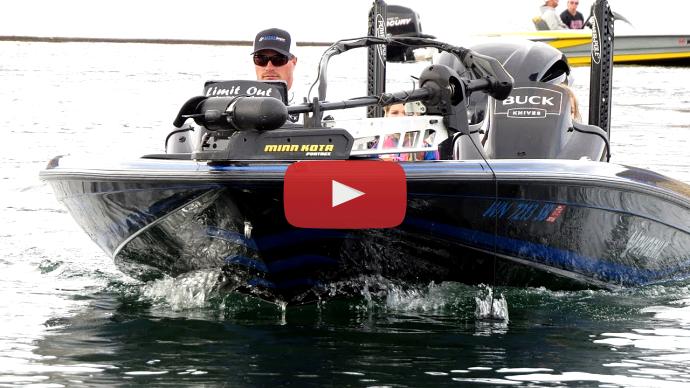
And then finally, you know if you got a boat. This is a good time to check on the maintenance on it. All right, so you can get your engine serviced once a year and make sure you replace your water impeller every two years. If you got, you know, spark plugs, your gear, oil, all that stuff, make sure that it's all done by a qualified mechanic unless you feel comfortable doing it yourself. You can do that, but also go around. I like to look for all the screws everywhere and see if anything's come loose or something's rattling loose or about to fall off. I'm surprised how many times I find something. Come loose, so just tighten everything back down.
Go through your trailer, make sure your tires are inflated properly. Check your grease on your bearings, check the seals, make sure they're not leaking anywhere. Your straps, your tie down straps, make sure they're all good and working order. Your lights and so on. Just make sure it's all good to go. The brakes, if you got brakes on your trailer, get them serviced if you need to. And then you're good to go for the season.
One of the things I like to do because you can see I keep my boat stored in the garage so I don't have to winterize my engine. So I will get the mechanic stuff that I need to take it somewhere. I do that during the winter. I'm like, hey, get my boat ready for spring. And they’re like, Glenn, it's, you know, 29° outside. What are you doing? Yeah, well, I keep it in a garage.
The thing about that is you avoid the line because in the in the spring there's a mad rush. Everybody goes to the the marine dealership and gets all their boats worked on. Sometimes you got to wait 3-4 or five weeks for them to get to yours. So if you can do it in the winter time, if you're able to keep your boat, you know, indoors in an insulated garage like this one or heated storage facility, take advantage of that and get your spring work done during the winter time when there's no weight. So that's the stuff you do right now.
It's kind of fun to go through everything. And some of the sometimes they're like, Oh my gosh, I forgot I had this. You know, when I go through all these things, it's kind of exciting. It builds up that anticipation for the season and you'll be ready to go and hit the water hard when the bite turns on.
Hope that helps. More tips and tricks like this, visit bestresource.com.