Hey guys, Bassmaster Elite Series pro Wes Logan here, going to talk to you a little bit about probably one of my favorite times of the year to fish, especially where I grew up in the in the southern part of the country is it's the month of June.
There's a lot of stuff happening that time of year. Basically, if you're anywhere below the Mason Dixon line, you're probably going to be past the spawn. There may be a few stragglers, but you're going to be completely postspawned. They've done gotten to their summertime haunts, and there's a couple different avenues you can go about depending on what lake you're fishing.
Like, I'm fortunate to live in Alabama where we have a lot of different diverse lakes. We have deep clear Smith Lake, we have the Tennessee River where they get offshore on ledges, and then we have—I live on the Coosa River—where they tend to live generally shallow all year round.
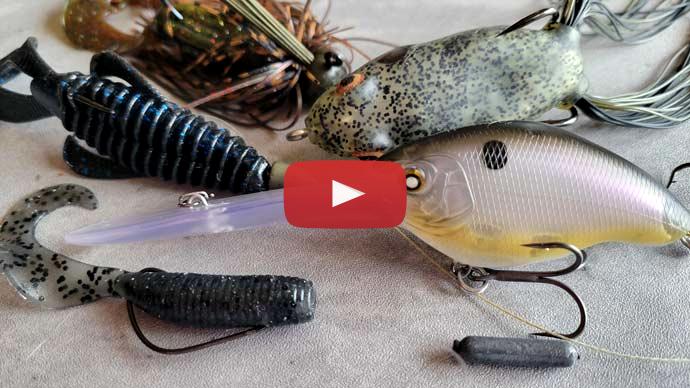
But just for the way I like to fish, and a lot of the places we go, I've picked five baits that kind of work everywhere in different scenarios and stuff like that. But it's a real good baseline to start out for that time of year. And like I said, the time of year is going to be June, and I'm kind of just going to break it down from like a water column thing, and then just kind of what kind of forage you have in the lake, what kind of cover, what could the bass hold on—stuff like that.
So this, like I said, this is just a general breakdown. And we're just, I guess we'll just get right to it.
Probably my number one favorite bait in the summertime, especially the month of June, is going to be a jig, a flipping jig. You don't get a lot of bites, but what you will get—you'll get that big bite you need in a tournament. And when I'm talking about all this stuff, it's going to be in a tournament scenario. So I'll use a 5/8 or 1/2 ounce. I've got a 5/8 rigged up here. A lot of times I either have this Zoom Super Chunk like I have on here now or a Zoom Big Salty. I just like that real big profile, especially when it's hot.
And the reason for that is that the fish's metabolism—those really big females don’t want to exert a lot of energy when the water’s hot. So they’re not really apt to chasing around little bitty brim or little bitty shad up and down the bank and have to eat five or six of them to get full. Where if you can just put this jig in places where they like to hide in the shade and stuff like that, that really big profile really tends to trigger those bigger bites. And that’s kind of why I just gravitate towards that.
But color all depends, you know, just basically on your watercolor where you're at in the country. But it's hard to beat a green pumpkin if you've got stain to clear water. If it's stained to dirty water, I'll tend to start with a green—I'm sorry, a black and blue—and then kind of transition from there and just kind of let the fish tell me what they want to do as far as it goes to that.
But definitely looking for hard cover with this like shade, you know, big laydowns, big docks—just anywhere those fish can get in ambush scenarios. Like I said, tucked away in the shade. Number one, it’s going to be cooler, and number two, they can ambush bait in it. So it’s really where I’m going to be throwing the jig.
#2 is going to be a Texas rig. It’s hard to beat a Texas rig any time of the year. I've got a Zoom Zlinky on here now. It’s just a great way to get bites. This is a really good bait in the springtime, but it also gets a lot of bites anytime of year, especially in June. If I’m having a tough time in a tournament scenario, not getting any bites, I’ll pick up a small, light Texas rig—1/4 oz, 5/16 oz—and just pitch it around and try and get a feel for what's going on.
It's not necessarily a bait I want to throw in a tournament, but if, like I said, if I’m struggling, it’s a good way to just get some bites, see how the fish are setting up, see if there’s any quality fish up shallow or if there’s none at all, and then you can kind of go about your day from there. But it’s just a good indicator of getting a feel if you’ve never been there on what’s going on—especially up shallow.
Another deal where this is pretty good is dragging around in grass or anything. You start seeing a lot of grass in lakes—offshore grass in the summertime—you can drag this around, throw it, drag it through holes and stuff and definitely get a lot of bites that way as well.
#3 is going to be really near and dear to my heart—that's swimming a jig. It's just a staple anywhere there's shallow cover, especially that time of year the fish are up there on brim beds, stuff like that—especially if there’s water willow present or any kind of bushes. Or you can even throw this offshore, put a paddle tail swimbait on it, let it sink down a little bit and just slow wind it back.
I've got it rigged up here with the Sunline FX2 60 lb braid, my signature series rod, signature series jig—this is 5/16. I’ll make it all the way up to 1/2 if I was going to be doing the letting it sink down and slow winding it, like in a ditch or over some grass or anything—I probably would go up to 1/2. But for the way I like to fish, like going down the bank with the Alabama shake, stuff like that—definitely going to stick with the 5/16.
I don’t have a trailer on here, but the three trailers that I mainly go with—I would say there’s probably four—but the three main ones are a Z Craw Jr., a Zoom Super Speed Craw, and a Zoom Super Chunk. And that’s for mainly, you know, doing the shaking deal and the yo-yoing it down the bank around cover. If you’re doing the slow-winding deal, a paddle tail swimbait’s really hard to beat—just anything like that.
But color—I’ve got black and blue on. It’s really hard to beat black and blue any month of the year. We’ll also swap to like a green pumpkin natural color if there’s a lot of brim beds on the bank. Just trying to match that hatch deal. I tend to stay away from white a little bit the later in the year it gets, 'cause the shad tend to kind of get offshore. They’re not really on the bank after the shad spawn. So, not saying they won’t bite it, but I kind of try and go towards more of what’s on the bank that time of year, especially in June.
One of the coolest ways to fish is obviously throwing the topwater, and you can have a lot of schooling action in the month of June depending on where you're at. But like I said earlier about the shad deal, a lot of them like to get out in the middle of the lakes, in the middle of pockets. And even if you're on like—we're on a herring lake today—the later it gets in the summertime, especially that month of June and into July, they like to get on brush piles and cane piles and they like to feed up.
So this topwater, this TB 115 from Arc, is a really good bait. It casts a long ways. It's not that huge profile that sometimes you need. I just like this one to start out with because it's going to get a bunch of bites. Like I said, it’s a 115 size. Again, it’s manageable basically is what I tell people. If you haven’t done this a lot, this is a really good bait to start out with. It walks really well, it casts really far, does everything you need it to do, comes with great hooks.
I throw it on SX1 40 lb Sunline braid. It casts a long way. But just a really cool way to catch them if you've got a lot of schooling activity going around—if you're in a lot of spots or largemouth or smallmouth, whatever’s prevalent in the body of water you're fishing. It's a really fun way to catch them and you can catch them all day doing it if they're doing that schooling deal.
But you can also do this going down the bank also. So don’t rule that out at all.
And one thing we’ve learned in the past few years is you throw a jerkbait 12 months out of the year. With the evolution of technology and LiveScope, we've come to find out that a jerkbait is not just a wintertime bait or prespawn type deal. You can throw this around shallow laydowns, you can throw it around docks, you can throw it around brush piles. It's just a really good bait to cover a lot of water and kind of see what kind of mood the fish are in.
And I’m basically going to be using this with the forward-facing sonar type deal. If I'm around a lot of grass, it’s good there too. Basically just throwing it, just throwing it at fish that I can see or structure that I can see and just getting a feel for what the fish are doing. It’s a really great bait.
This is an Ark jerkbait—one that we've been working on—it’s really good. It gets a lot of bites. This is a really good color. I think it’s called Mystic Shad, but it’s just that good natural color. It’s got a little bit of pink in it down the middle that I really like for that June time of year—greenback. But again, you can cover a lot of water, see a lot of fish—kind of just again, see what kind of mood they’re in, see what they're holding on.
This bait draws a lot of fish off of stuff—like off the docks, off of rock piles, off of brush piles. So 12 months out of the year, but especially in June—definitely going to have a jerkbait tied on.
But basically wrapping it all up, those five baits are going to be the ones I’m going to start with if I’m going to any type of lake in June, probably excluding like smallmouth lakes because obviously that's a whole different animal. But if it's a largemouth more-populated place, that's what I'm going to be reaching for.
And depending on your water conditions is whether you're going to have darker colors or more natural. But out with those is going to be a winner for sure, and then you can kind of judge on what the fish are telling you. But if you’re ever fishing anywhere in June, be sure and check those baits out and good luck.