

You know, with bass fishing, you're always learning something new, which is part of the joy of it. This is what I like the most about it. I get to learn something new all the time. However, as we learn more and more, oftentimes, we tend to start getting into some bad habits, or we tend to do some things that, you know, can be considered a mistake. You can do something a little bit better if only you knew what it was. And the cool thing about it is a lot of these things can be rectified right away if only it was pointed out to you, which is what this video is about today. Trust me, you're doing at least one of these. I know because I've done all five. So it's pretty easy to fall into this.
So the first one is failing to make multiple casts to a target, right? Some of us are in such a hurry to get to that next dock or that next rock pile or that next bush that you make that cast to where you're at and then you're looking already down the lake and down the river where you're going, and, "I'm going to make that next cast. Where am I going to go next? I'm reeling up, and, okay, I'm going to cast here. Now, where am I going to cast next?" Right? Number one, you're not paying attention to your retrieve as much. But second, making only one cast to a real juicy target is a mistake. A lot of times, the bass are situated or positioned in a certain way, or the water's a bit muddy and dingy, and they have a little bit of difficulty locating your lure. Making several casts to it increases your chances of catching that bass.
So let me give an example. A dock. This is from a boat angler's point of view. So if you're on the shoreline, you can adapt this, the same sort of thing, but this example is if you're from a boat. Here's the dock and you're coming up on the dock. The first cast that I make is across the front. So there's one right across the front. As I get a little bit closer, I cast over to the angle over here and cast at an angle. Now, I get the boat up closer, I can cast along this side. As the boat passes, I can get this almost parallel to the dock. And then when I get past the dock, a little bit past the dock, I cast on this side of the dock and bring it up. And now that I've gotten all the way over here, I cast back over on this angle. Okay. So if you're counting, that's one, two, three, four, five angles. That's five casts to a single dock as I'm passing by. And I promise you, if there's fish there that are ready to bite, you're going to get bit, but might not be on the first cast.
And you can apply that to anything. You come up a brush pile, you got to lay down. You got an edge, a weed edge, or a corner where some lily pads are or across the point. Any of these types of pieces of cover that a bass can hang on, making multiple casts to it often is the key. There's so many times when you're behind somebody and you see them covering the bank, and guess what, you're picking up fish behind them. And that's because they're making one cast and moving on. They're covering way too fast. They're just bombing it down the bank and not catching all the fish that you are. And as a backseater, I was a backseater for a lot of years, I caught so many fish from behind the boater because he was one cast and gone, and I would... You don't have to throw in the exact same spot, but making several different variants to it is a way to do it.
Another is to try a different bait. Say you cover a spot with a spinner bait, going back over it with a buzzbait or with a Rat-L-Trap or crankbait, maybe a square bill, or a soft plastic bait. You go with a hard bait, with a horizontal retrieve, and then you come back through with a vertical, with a jig or a plastic worm, or something like that, so two different types of presentations. You know, vary it up to keep it interesting to you. But I promise you, doing it that way, you'll catch a lot more fish than making one cast and moving on.
The next mistake is failing to experiment, try new lures and try new techniques, which is, for me, part of the fun of bass fishing is trying something new. Oftentimes, we buy a bunch of lures and tackle with the intent of learning something new. We try it a few times, we're not as productive, and we tend to regress and stick to our comfort and confidence baits. I've done this a lot. I used to do it a lot. I don't do that as much anymore because I've learned that you got to give it a chance. There's a learning curve with everything, and you're not going to hit a home run every time you try a new lure or try a new technique. You got to give yourself a break. Give yourself some time to learn it, first of all. Plus, a lot of times, you know, a brand new lure comes out.
Let's just say whopper plopper becomes very popular and a bunch of people are throwing it now. It's hard to find, hard to even buy that bait because everybody is buying it. Once you start using it a lot, you have a lot of success that first year. Then after that, a couple of years later, you're not catching as many bass on it. Why? Well, everybody's throwing it, and the bass become accustomed to it. Some people say bass learn. Other people say they don't. We can leave that on the table for debate on another day. All I can say is that the really popular lures that everybody's throwing tend to lose their appeal to the bass as time goes on. So switching it up, change into a different lure, try something different, try a new technique, and it will really up your odds and you'll start catching a lot more fish.
A couple of ways you can do it besides buying a different bait or trying a whole different technique is maybe trying a different size in a bait that you are usually really good at. For example, 7-inch, 8-inch, 9, 12-inch worms, right? Those are monsters, right? Why would a bass ever hit that? I just started doing it, okay? I heard people catching a lot of bass on it, so I went to 10-inch worms and bam, bam, bam, bam, bam, started catching a bunch of bass on them. And some of those bass were smaller than the worm. You'd be surprised. And it works. And larger size baits that you would think bass wouldn't be interested in, they hit. Okay? They do hit the bigger baits. You'd be shocked at how well they actually work.
And wild colors is another one. We have this green pumpkin. If you're getting plastic bait, make sure you got green pumpkin. Why? Because it's very effective. Okay. Well, step outside of that and start picking colors that are not normal or unusual or, like, baits, jerk baits that come in a clown color and a couple other weird wild colors. I got a buddy of mine who, he buys a bunch of white skirts for spinnerbaits and jigs, and then he dyes them using worm dye. And he doesn't just pick one color and dyes it that, or two colors. He'll get, like, five bottles lined up and just dye it one in one color, one in another. He'll do the middle in another color and wait for it to dry and then do the tips. I mean, he does all kinds of weird stuff. I call them hippie lures because it looks like tie-dye t-shirts when he's done making them. And the bass like the snot out of them. I think it's because the bass just aren't used to seeing that. It's something different, something unusual.
Bass are curious by nature, and the only way they can really see, it wouldn't tell what something is, is by putting it in their mouth and figuring out what it is. So appeal to that curiosity and you can catch a lot more bass just by throwing something different that most people don't throw. So experiment, try new stuff, try new lures, try new techniques. You'd be surprised at how well that works.
Boy, this next one, guilty, I've done this, and that is bypassing the shallow water, the real shallow water, like less than a foot, especially in the summertime. We all tend to think bass go out deep, we don't even bother with the shallows. That's a mistake. Think about this, guys. Bass are predatory animal. What they do is they want to pin their prey to an area where they can't escape. So the bottom of the lake is a barrier, the top of the lake is a barrier, and where the edge of the lake meets the land is another barrier. So you've got this section of water, getting to a point, you've got the bottom and the top and the edge, you've got three barriers. The only way a baitfish can get away from that is to go left or right. So you've eliminated two of the five options available to prey. Bass will use that to their advantage to trap their prey.
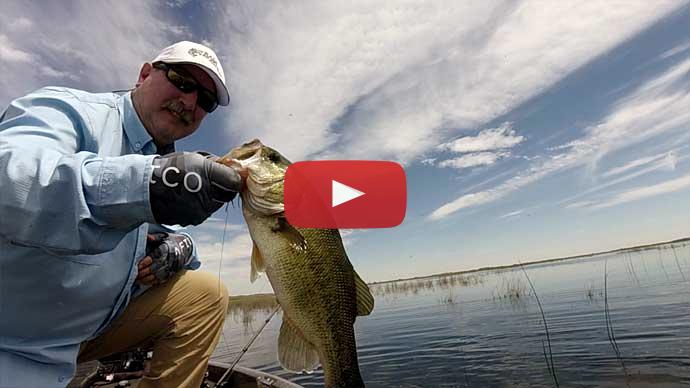
So a lot of times, they'll be up shallow. If there's shallow cover available, that can be super, super shallow. I mean, look at this bass that I caught. That cover is just some floating sticks that's in about 10 inches of water. But he was sitting right up underneath there. And as soon as I plopped the lure right by him, bam, he nailed it. Or if there isn't a cover available, think of it this way, a lot of bass will sit in two to three feet of water, and if something plops in the water, super shallow, they race up and nail it before it can get away. So they'll actually come from deeper water, even though they're not sitting in super shallow water.
Use, like, a Senko or a weightless plastic, something that falls real slow, real light jig, so it stays in the strike zones longer and gives the bass more opportunity to come up and nail it. You'd be surprised at how well that works. So don't ignore the shallows, guys, even though it doesn't seem like the bass should be there, except for these big barren areas where there's no weeds at all, like a giant sandy area that really doesn't have any weeds or cover available to you. Then, yeah, you can safely skip it because you don't see...there's no bass there. But if there's some weeds, docks, any kind of cover, like the sticks that have been pushed up on the shoreline from a storm, things like that, the bass will use it and ambush prey. So don't skip those shallow areas.
The next one is taking care of your gear. Now, I can do entire videos on this, which I have, but in a nutshell, don't go lax. And it's easy to do. It really is. You put off maintenance on your boat or on your engine. You put off servicing your reels, for example. Like, that should be done at least annually for both. The more you use them, the more often you should be doing that. But taking care of that, replacing the batteries if you've got a boat. If you have a boat, check your trailer, check your suspension, check your bearings, make sure the brakes are working.
Every time I launch my boat, I go out, I park the truck, I'd take a quick glance through my trailer, make sure everything's looking good. A lot of times, when I come back later in the day to put the boat back on the trailer, now it's dried a bit, it's a little bit easier to see everything. I'll wiggle the bunks, make sure there's nothing loose or missing, look at all the bolts, make sure nothing's missing or broken, just a quick visual check, especially inside the wheel wells to see if there's any oil.
And where you park it at home, take a look. If you've got seals that are leaking, you'll get little oil streaks down the side of either the outside or often on the inside of your wheels. Sometimes it'll form a small puddle right where your wheels are. Or in your engine too. Sometimes if you've got a seal that's broken, you'll get a little bit of oil that comes down the side of your engine, down the lower unit. Look for those things. Just pay attention to those little things. But more often, the point is the maintenance on them before any of that happens, for sure. You want to check that stuff out.
Do your reels, same thing. Clean your rods every year, making sure you have new line on it. You don't want it to break off on your possible PB. So make sure you got new line. Make sure your equipment, your lures, you got sharp hooks. At least once a year, go through and check all the hooks on all of your lures. You'd be surprised, even on the ones that you don't use, that they become dull just because you're jostling around all the time. And sometimes they get dull just by sitting in your tackle box. And jigs, trim the skirts down to the size you want, sharpen the hooks, everything. Even when they're brand new, get them ready to go. So all you got to do when you're fishing is pull them out of the tackle box, tie them on, and go. You don't want to waste your time trying to fix gear that's broken or trying to take care of equipment, sharpening it, getting it ready to fish, taking it out of the package, all that stuff. You don't want to waste time doing all that stuff while you're on the water. You can do those things at home and be ready to go so you can maximize the amount of time you have to fish when you're out there fishing. It's much more enjoyable too.
The last one is getting too serious about bass fishing. It can happen. We get so much into it because it's so exciting and so much fun. We really amp ourselves up during the week, getting ready to go fishing the next weekend. Oh, Lord knows I did this for a long time. And I still get excited to go fishing, but I mean, get really amped up, thinking, "Oh, man, I got to, every single weekend, man, get out there and go." Everything gets pushed aside for the weekend to go fishing every single weekend. And you get all excited about that, and you get out in the water, and the fishing isn't as good as you had anticipated. It almost never is. And that can bring you down. You're all excited when you're driving there at 0-dark-30 in the morning to go fishing, and then you drive back home, you can barely stay awake, and you're exhausted, and you're defeated. That's kind of a sign that you're getting a little bit overboard on it.
Same thing with tournaments. Tournaments, I fished about 20, 25 tournaments a year at one point. And if I wasn't fishing a tournament, I was pre-fishing for the next one, and that's it, and just did that for several years. Actually, my wife and I did that for several years. She got on the women's pro circuit. I mean, we were into it, locked in, right? And it's fun, don't get me wrong. Tournaments are fun. They're exhilarating. You get to meet a lot of friends. Competing against one another is great. Tournaments are a blast. I'm not knocking them at all. But when it gets to the point when all you're doing is tournament, tournament, tournament, everything you're thinking about and doing is tournament, tournament, tournament, I learned after a while, like, this is getting exhausting. I'm getting a little burned out on this. I want to go fun fish. I want to go just try some lures that I haven't tried before. Or I want to go to a lake that is just...it's not on the tournament trail, and it's known for a bunch of fish, and it's just fun to fish. Or take my friends out or my family, my dad fishing, my sister fishing, just to go out and enjoy it.
Yeah, it got to be a chore, and I lost some of the fun out of it. It's the same thing when you anticipate catching a bunch of fish that day, and you go out, and you get skunked. Like, the bass...the bite is off. The bass aren't biting. And we've all done it. We've all had days where we don't catch fish. And we've let that kind of ruin our day, if you will. I mean, really, it's a big letdown. Even if the fish aren't biting, if you can focus on, like, positive aspects of it, find a way to learn something on the water. I got a video right here. I'll link to it right here. It talks about what you can do even when the bite's off so that when you get off the water, you still feel like you've had a productive day. You still feel like, "I learned some stuff. I got something out of it today. Even though I didn't catch fish, it was still a good trip. I still enjoyed it."
Same thing with tournaments. If you really get into the point where, like, I told you I was at, you got to figure out some life balance in there. Maybe back off a little bit, which is what we did. We didn't fish as many tournaments, did more fun trips, brought friends out, and it became fun again. Just figure out what that balance is for you. And same thing with understanding when you go out in the water, coming out with a reasonable expectation of what you're going to get out of it that day. You know, maybe things aren't going to go your way. You got a ton of people at the boat launch that are idiots, or on the water, just being morons and dangerous, and whatever. You may encounter that angry landowner, or you're out there fishing a pond, you're on the shoreline, and someone comes out and tries to convince you you can't fish that pond, even though you know it's public water.
I mean, you can get into those situations where it can ruin the day, but you come out with an expectation that, "Hey, this might happen. How am I going to handle myself?" And then if it does happen, you can pat yourself on the back because, "Hey, I handled this really well. I did a good job with this. I didn't turn into a Crazy Ken. And the day was salvaged," right? There's all kinds of ways you can walk away with a win and have a great day without having the perfect day you've envisioned in your mind. And that's how you can avoid getting too serious into this sport and still have a blast while doing it.
Anyway, those are the five tips. I hope that helps you get a lot better as an angler and enjoy fishing a lot more. For more tips and tricks like this, visit bassresource.com.