You know, the Neko rig has really taken off in popularity in the past few years, and for good reason, man. It catches a lot of fish. The thing about it is it presents a different presentation than what you normally see from other baits and other rigs. First of all, what it does is when you throw your bait out there and it falls, it kind of does this spiral action as it falls down. When it hits the bottom, it sticks nose down, so the tail is sticking up off the bottom, and that increases visibility. And then, when you lift it up off the bottom, you kind of shake it a little bit with your rod, and it makes that tail just undulate and wiggle. And even the other part of it, you know, the lower part of it, it just wiggles a little bit, gives it a different look and feel. You let it drop, it spirals a bit, falls face down, tail sticking up, and rinses, lather, repeat.
It's a unique presentation that sometimes just drives the bass crazy. The key is how you rig it. It's really all about that. Now, what a lot of guys do, when you think about it, it's kind of like a wacky rig, first of all. You can put a hook right through the middle, and that's a wacky rig, right? Well, a Neko rig is similar, except you put the hook down towards the first third of the bait. And you can't put your hook right through the middle of it, and off you go. Problem with that is you tend to tear up a lot of baits doing that. So there are alternative methods of rigging it, one of which is using a collar. You can put your hook through that. That makes the bait last a bit longer. The hook isn't tearing up the bait, and that works really well. A lot of guys do that for wacky rigging, too.
But the problem with that is your hook is still exposed, and you can still get it hung up in the weeds or in the wood or whatever it is you're throwing in, and that can create problems. You can even use a weedless hook, and that helps with a wire guard or some kind of guard on it to help prevent hang-ups. And that helps a bit. That can reduce hang-ups. But for me, I like to use the Gamakatsu G-Finesse Cover Neko. That hook is designed to Texas rig the bait. Yeah. You do it just like this, and the hook ends up being embedded into the bait just like you would a Texas rig. And this makes it completely weedless, and you don't get hung up at all.
The other key thing about this hook, if you notice, it's got a swivel on the end of it. Remember I said earlier it kind of spirals as it comes down? Well, that tends to incorporate or add line twist. But the swivel helps reduce line twist, if not eliminate it completely. So this is the reason why I use this hook for rigging the Neko rig.
The other key component to make sure when you rig it is the hook needs to be pointed towards the tail of the bait, not the other way around. This helps. When you pull the bait up, it actually goes backwards. It lifts up off. You know, if it's pointed like this, it lifts backwards up off the bottom. But also, with the hook pointing upwards, it has less of a chance to get hung up again, even if you're using that open hook or what have you or if that hook happens to pop out. If it's pointed downwards, you have a much greater chance of getting it tangled in whatever is down there. So have the hook pointed up towards the tail, and that really helps with your presentation and reducing hang-ups.
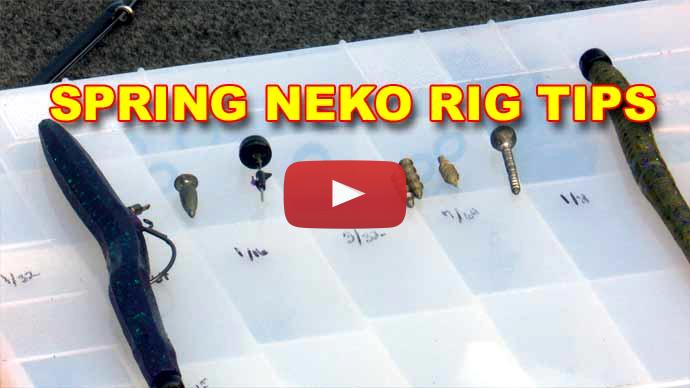
The other key component in rigging this is the nail weight. You put a nail weight on the short end or the front of the bait. Any size weight will do. You have to experiment. Sometimes the bass really want a real slow presentation, and other times they want a faster presentation. It also depends on the cover that you're fishing. The thicker the cover, the heavier weight you're going to need. But I always use a tungsten nail weight. That gives me a couple of options. First of all, it enables me. It's a slimmer profile. I can fit that in pretty much any bait. Plus, it gives me a little extra sensitivity. So I'm working across rock, and I'm going from pebble to sand, or I'm moving from hard chunk rock to maybe smaller rock, I can feel the difference, or through the weeds. I can feel that using a tungsten weight.
The key thing here with using any nail weight is that, well, if you cast it, after several casts, after a while, it works itself loose, and the next thing you know, you make a cast and there goes your nail weight. And tungsten is not cheap. So, to prevent that, I put a couple of drops of super glue on the tip of the nail weight before I insert it into the bait. That helps secure it. It keeps it in place, and I don't lose any nail weights that way. Just a quick little tip.
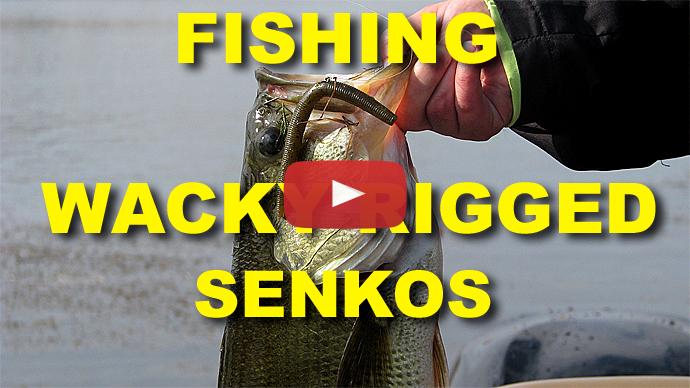
Here's the thing, guys. A lot of folks, they use a Senko-style bait for Neko rigging, and that's it. And that's fine. It works really well, just like wacky rigging. It's popular for a reason. A lot of people are very successful with that. However, expand your horizons. Think about other plastics. There's so many out there that you can Neko rig and get unique action out of it that perhaps the bass haven't seen because many anglers aren't Neko rigging them. So craw baits, for example, or I like to use large, long worms, like, 8-inch or longer worms, and Neko rig them. And throw them around different types of cover, and you can get different actions out of them. And you can use the straight tail. You can use ribbon tail. I like to use large brush hog-style baits. That also works well for Neko rigging, you'd be surprised. There's a lot of different baits. Just use your imagination.
Typically, the way you rig it is you use spinning tackle. Now, I like to use your typical finesse spinning setup, right, so your 7-foot, medium-power, fast-action rod, and I'll use 6-pound test. Yeah, 6-pound, real thin line. That enables that bait to undulate and move naturally, uninhibited. And I use fluorocarbon line. If I'm out there in the open, that works great. Fluorocarbon is nearly invisible. It kind of sinks with the bait, so it doesn't inhibit its fall. And it has a lot of strength and sensitivity, too, especially around rocks. Fluorocarbon is a little more durable and abrasion-resistant around rocks than braid. So I like to use fluorocarbon for that reason. So, with spinning, you can also skip it under things a lot easier. Usually, it's lightweight. Using light line. And skipping it under docks, under overhangs is easier with a spinning outfit than with a bait casting using that thin, wispy line. So keep that in mind.
However, if I'm throwing in cover, especially flooded bushes and timber and thick weeds, I'll go to bait casting. There's no law against it. So I'll use bait casting and braided. I'll use 30-pound to 50-pound braided line. And here, I'll flip and pitch it into the thicker cover and use that presentation. You don't get as much spiral action because it's falling through the cover now, so I don't have to worry so much about line twist. But it's that undulating fall and that nose-down presentation that really attracts the bass and gives them a different look and feel. With that weight in the front, it enables it to get through that cover a little bit better than a weightless bait. So a Neko rig works really well. Think about that for flipping and pitching, guys. That's a presentation that bass don't often see.
So, think about the different ways you can use this rig. I'm sure you're going to have a lot of success with it using these tips. I hope that helps. For more tips and tricks like this, visit bassresource.com.