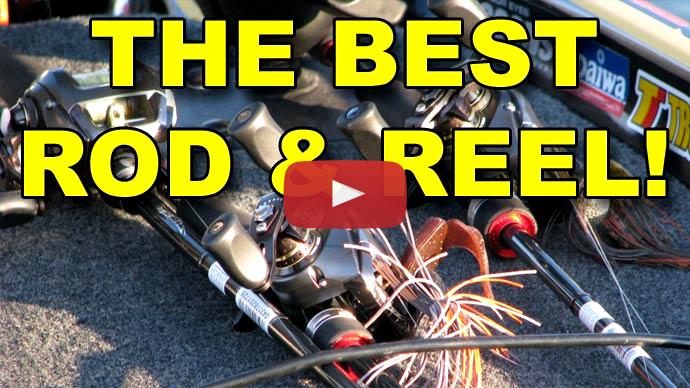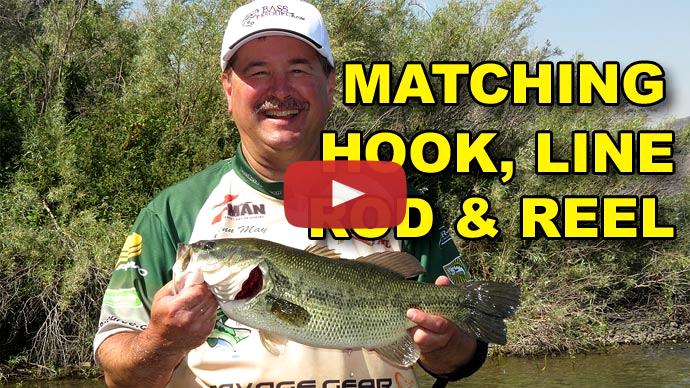


In this video, Glenn walks you through the exact rod, reel, and line setups he uses for the most productive pre-spawn lures.
Set your gear up like this before you hit the water and you’ll be ready to fish every key pre-spawn lure the way it was meant to be fished—without burning out your arm or losing fish.
The pre spawn action is starting to dial up right now and I know you guys are just itching to get out on the water. Hey, before you do make sure you're rigged up correctly. Let's talk about the rods that you're going to use for these pre spawn lures that work really well this time of year.
Let's start with the Alabama rig, right? That means right out of the gate. Let's let's get a gnarly type of rig that's a lot of guys don't throw because it wears you down. They're so heavy, they're kind of unwieldy. A lot of that's because the rod selection is wrong. With a big rig like that you want heavy duty gear, so a 7 foot 3, 7 foot 4 heavy power. Fast action rod is what you want. Or even extra fast action rod, something that doesn't have a lot of tip to it. And a lot of backbone that helps wing that bait out there and work it when you're working it down deeper and along those, those steeper edges, those steeper banks, those deeper dock pilings and bridge pilings, that's where you want to work the Alabama rig. You want to use a reel that's about a 7 to 1 gear ratio reel and you're using about 20 LB or 25 LB braid, something that's got some oomph to it, right? You've got some real power. And that type of setup is going to make it a little bit easier for you to work this bait and work it a little bit longer without, you know, giving you tendonitis in your arm. So make sure you've got the right rod and reel set up for that.
So the next one is for suspending baits like this, right? These suspending jerk baits will dive down anywhere from 8:00 to, say, 15 feet of water. And you can get the maximum amount of depth and maximum amount of action out of them by using the right gear. So for these, I'm using a 7 foot 1 to 7 foot 4 medium power fast action rod with 12 LB fluorocarbon line. Now the key with all this is that moderate power or medium power rod that helps fling that bait out there. The 12 LB fluorocarbon line sinks with it and helps get it down to the depth that wants to be at and then you want to use that parabolic bend when the fish bites those hooks, it's going to help keep it pinned because it's going to act as a shock absorber as the fish fights its way back to the boat.
Another key thing about it though is it's a relatively short rof, 7 foot 1 or so, not the big long one unwieldy rods that you might use for crank baiting for example. And the reason for that is right now you get the debate down to its suspending depth and then when you work it sometimes it's just. Subtle subtle twitch, just barely move the bait and let it sit again and bake for 10/15/30 seconds. And if you have a longer rod, that subtle movement sometimes is hard to do because it pulls up a lot of line when you twitch it. And some of you guys overwork those baits and you might want to even downsize to a 6 1/2 foot or 6-8 rod, something like that so you don't move the line as much. It might help you a bit. So think about that depending on if you know when you give it that little slight. Movement, it's just enough to make it look alive and then park in place. You're barely really even moving it forward. So think of it that way. So if you're overworking that little bit, shorten up on that rod, but still you want that medium power fast action rod with the 12 LB line, make sure it's fluorocarbon to help keep that bait to suspend.
Now for crankbaits this time of year, the tight wobbling flat sided crankbaits are ideal. You know these, like these ones here, you know the shad rap type of thing. They're light and they're small and they have lightweight hooks, so using your regular crankbait outfit that you use in the summertime is going to overpower them. So here, actually spinning gear works better. Again, a moderate power fast action rod, it's going to help fling that bait out further because there's a light lure. Some of them are made out of wood, balsa and cedar. They're super lightweight. It's going to help you fling it out there so you can get the maximum depth out of them. And again, when you're fighting them, same thing as the jerk baits. You want that rod to give and act as a shock absorber to help keep it pinned. When you're working it back to the boat because you're using spinning gear, you can lighten up and use 8 LB fluorocarbon line. Again, the fluorocarbon line is going to help get it down there. And also it's the 8 LB is going to help get it down there further too. And you can use that on the spinning gear just to get a make sure your reel has good drag on it, a good 2500 size reel with a pay a little extra for the reel because what you're paying for is that drag system, those wider, bigger discs that it's more area surface area than you would get on a bait caster. And the drag is smoother on a spinning outfit. So that helps again with this whole setup. So flat sided crankbaits. Think spinning gear.
Now for spinnerbaits, this time of year, there's really two different rides that I would use bait casting rods if you're fan casting and covering like a big point or a flat or a weed bed. A little bit longer rod to get those casts out there further like a 7 foot four rod. That's what we're looking for, a medium. Heavy, yeah, medium, heavy fast action rod is what I'll be using with that. With a reel that's around 6.5 to 7.1 gear ratio, that's what we're looking at, 15 LB fluorocarbon line. You don't need braid in this instance and because you're covering open water, so. A longer rods can enable those longer casts and to work those larger areas.
Now, on the other hand, if you're going along docks or along cover or shoreline, or you just pinpoint accuracy, kind of throwing short throws, short pitches, underhand casts, that sort of thing, then you want to shorten up the rod to about a six foot. I like a 6.9. I got an actual custom rod made for this. It's hard to find a six foot 9 rod, but you can get a six foot 8 or 6 foot 10. You're still there in the ballpark. Again, medium. Heavy power. Fast action rod, same thing, 15 LB line, the whole same setup. It's just a little bit shorter rod and that's going to help you be a little more accurate with your cast in shorter distances. So with those two setups, you'll be able to cover a lot of water with your spinner baits.
Now with finesse jigs, they're super popular this time of year. Those compact small jigs work really, really well. I've got 1 sitting right here, just a nice little finesse jig. Love these things. There's two different ways to fish them. One is with the spinning outfit lighter jigs. Here are your 8th oz to 3/8 ounce jigs. Smaller jigs here. You're throwing them out in rocky areas, rocky points, humps, rock piles. Points that's got maybe some scattered logs or stumps on them. It's open waters. What I'm referring to. You're using spinning outfit for that. So a medium heavy fast action spinning rod, 7 foot one using 8 to 12 LB fluorocarbon line. And again, a spinning reel with a really good smooth drag is what you want to do. And you know this is perfect for that setup. You can catch some big lunkers this time of year, and this setup's really going to help you catch them with that, with that finesse jig.
However, sometimes those fish get up into cover and a lot of guys go over to, they flip over to large flipping and casting jigs. And I like to keep with the smaller size finesse jigs this time of year. The bite's still strong, the large mouth love it, but I got to use different gear instead. Now we're going in, we're doing some a little bit heavier combat, right? I'm doing flooded bushes and things like that. So now I'm using a 7 foot 2, medium heavy fast action rod. I'm using quarter oz to 3/8 ounce jigs. I'm using 50 LB braid. Now we've switched over because of that heavy cover and bait casting outfit. Usually A 6.5 to one gear ratio. I don't want to go too fast, I want more torque. And you're going to get that torque with a lower gear ratio. So something to wrench those fish out of that cover is what I'm looking for. And man, a lot of guys don't flip and pitch and throw little finesse jigs into this cover. I'm telling you, it's dynamite this time of year. It works really well. So try that out with that bait casting outfit.
OK. And then finally the ever popular Ned rig, right? You've probably been fishing those already. You probably already have the outfit, but just in case you don't, Ned rigs are best thrown with a spinning outfit. Medium heavy, fast action, 7 foot 1 spinning outfit. And I'm using 10 LB even 6 LB line. A lot of times I'm fishing these out in open water and the more open water it is, I'm going to go all the way down to 6 LB line fluorocarbon line on this. As long as you got a good strong drag. On your spinning outfit, you can do this. You hook that fish a lot of times those Ned rigs, the jigs, the wire. Hook is really small and thin. It doesn't take much power at all to set the hook, you just lean into it. It's a slight hook set in reel and you got them. The problem is if you're using too strong of a setup, you can also rip the hook right out of his fish's face or even with some Ned jigs. The hook can bend, so you don't want to overpower it. Make sure you've got this lighter setup and your drag set relatively light.
OK, sometimes it takes a little bit longer to get a good sized fish in this way, but you get those bites and you can fish it deep, you know, And this time of year, sometimes those fish, you get a front come through, they'll move back down to deep water again. And the Ned rigs is exactly what you need to go and dig them, get them out. Out there on those long tapering points with scattered stumps, if you can find an area that's got hard bottom with rocks and maybe some wood around it in the right depth of water, that intersection right there. All three of those four of those things combined, you got yourself a sweet spot. And that's what a Ned rig does really well, especially if a front’s come through and the bite's off, you get that correct set up. And you can ensure they're going to get those fish right on the boat.
So with those setups, you're going to be well prepared to catch a lot of fish. This pre spawn season. Hope that helps. For more tips and tricks like this visit bassresource com.