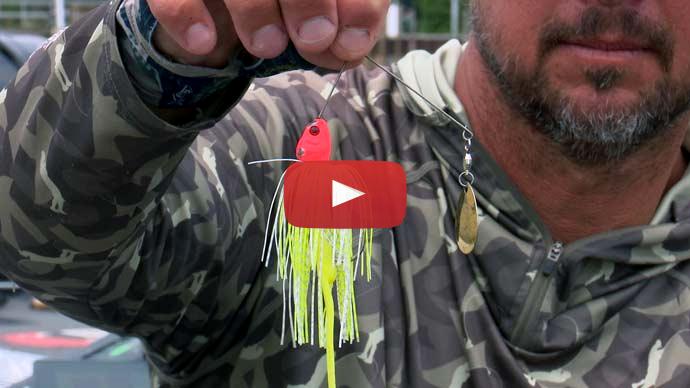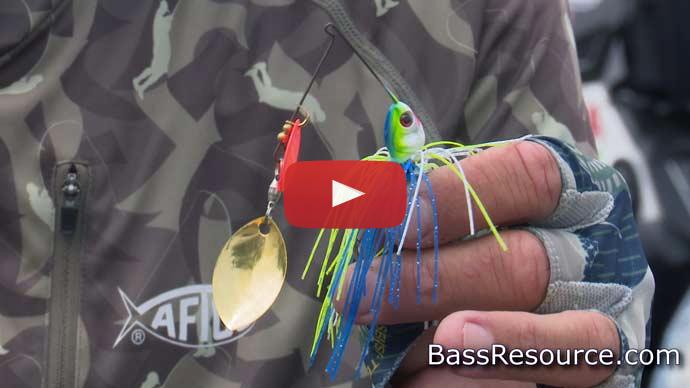


You’ll learn when to use single, tandem, and multi-blade spinnerbaits, how blade shape and color change vibration and flash, why skirt and trailer choices matter, and how casting angle, speed changes, and pauses trigger reaction strikes. If you’ve drifted away from spinnerbaits, this will bring them right back into your rotation.
Alright, let's talk spinner baits.
You know spinner baits have been catching bass for decades and it is one of my most productive lures and you guys have been watching me for a while. Know that I always have a spinner bait rigged on the deck of my boat and I'm ready to go year round. Matter of fact, I've caught fish over 9 pounds, many over 8 over 7 all on spinner baits.
Thing is, they've kind of gone out of out of favor for other baits like chatter baits and umbrella rigs and things like that. So I want to bring you back. In the world, the spinner baits because man, they are so Dang productive and I've used them so many different ways. There's so many different ways to tweak them that you can use them in just about any different circumstance.
So let's talk about first of all, you can break them down to basically three different categories and that's how many blades they have. There's the single spin and that's usually has a Colorado blade on it, big thumper blade. And those are best used for night fishing when you're fishing ledges.
Because when you throw them out there and you just let them fall on slackline, the body falls horizontally in the blade helicopters and so it just kind of falls down straight down and a lot of times man bass just whack it and it's great for winter time fishing. Again, those steep drops, those ledges, those creeks and then slow rolling it on the bottom. You can that blade has a lot of lift to it and you can just slowly reel it along the bottom when the fish are kind of slow and lethargic during the winter time. Great bait to use during that time.
The second category is the tandem spin and that tandem blade has, you know, 2 blades and that is the most popular kind, typically double Willow, double Indiana. But that works best for pretty much all the warmer months because it has a lot of lift to it. You can fish it fast, you can fish it slow, you can fish it shallow around different types of cover, different types, you know, lay downs, long docks, weed edges over the tops of weeds. Perfect for summertime and springtime. Fishing even in the fall.
And then the third category is the one that's not talked about very often, but that's the multiple blade has three or more blades on it. You don't see that as often anymore, but I'm telling you, they really do produce well, particularly right after the spawn because you've got a lot of fish right now that have spawned. There's a lot of fry and and fingerling out there. So the first month or two after the spawn, multi blade spinner bait works really well. And then again in the fall when the bass are chasing after baitfish, this resembles, you know, a bunch of baitfish all grouped together. And Bass are keying on that, so keep that in mind.
Now. With that in mind. Everyone of these spinner baits, they can be really good right out-of-the-box. Don't get me wrong, you can take him out-of-the-box, make sure the hook is sharp and go to town, start catching fish. But there's a lot of tweaks you can do to make them even better and catch even more fish.
So that's why we're talking about the blades. Let's talk about that. You've got three main types of blades, Colorado, Indiana, and Willow leaf.
The Colorado blades, as I mentioned, big thumper blades working well in the winter time, working well at night for that big vibration, but it also works in muddy conditions and in river conditions when you've got the water's all muddied up a lot of current. That I mean your rod tip just vibrates like that, you know, and it it those bass can he hone in on that and you can catch a lot of fish on that when other baits don't in those conditions. So Colorado blade.
Another one is the Willow leaf blade and that's a slender profile. If you've ever seen a Willow leaf, an actual one on a Willow tree, that's what it looks like and it puts off a lot of flash, not so much vibration. So it kind of gives off that profile of bait fish.
It gives that little fight, you know. Bait fish, they go all over the place and they dart and they dive and they give that little flash and that's what it gives off. So it looks like some bait fish. And typically those are tandem on a tandem spinner bait. And you can fish them pretty fast through the water column.
They don't have a lot of resistance to it. So you can fish them quick, you can fish them slow, and you can fish them through real weedy areas without the weeds wrapping up around the blades. So those work really well in those conditions.
And then in between those two blades is the Indiana blade that's kind of an elongated. Colorado blade, so it's kind of a mix between a Willow leaf and a Colorado blade. The Indiana blade is puts off a lot of flash and a lot of vibration. To me that is the all-purpose Jack of all trades spinner bait blade.
I use that the most tandem blade. And you can use that for burning across flats. You can, you can helicopter to a certain extent. So dropping off, you know, right along weed edges, along docks, in and around flooded bushes works really, really well for those type of things.
Blade color is another thing to think about. You need to consider this. Most spinner baits, you'll see they come in gold and silver. You know, Chrome type blades and metallic type blades. Works really well under sunny conditions like today.
The silver works best under bright blue and clear water conditions. Puts off a lot of flash and bass could see it from further distances when you've got a little bit of stain in the water, a little bit dirty and maybe a little bit on the muddy side. That's when you want that gold color or if you got bait fish predominantly that are like perch or other fish other than shad, that gold works really, really well for that.
There's also another one that doesn't people don't talk about too much, which is a copper color. That's a, again, a metallic color. Copper is like when I first started fishing spinner baits, I caught a ton of bass on with copper color blades, and those work really well when the water's muddy, is dingy. Maybe it's overcast and dark. That copper color really works well in those conditions, so keep that in mind.
The other side of the spectrum is painted blades. Now again, you don't see a lot of those out there, but man, they come into play. They definitely do.
The most common ones are the white and chartreuse ones. They work great when the when it's cloudy out or you got a little dingy in the water, a little bit dingy, a little bit of stain in the water, that's when the painted blades come in. White works I think is the most productive one in my opinion, unless I'm going after smallies, then that chartreuse color blade works really well.
But there are anglers that swear by orange and red color blades as well and I think those work best in the springtime when the bass are up shallow. I really don't have a lot of experience with those colors, but I do have them in my arsenal and I will use them if I have to.
So, you know, keep in mind those different blade colors and that's the type of thing that you can adjust and change according to the conditions that you're fishing in.
Another thing to consider is the trailer and a lot of them, they don't come with a trailer. There's just a hook back there, a trailer meaning like a plastic something on the back.
Now there's basically a couple different types. You can use the twin. Tail trailer is the most common, that's what comes with some spinner baits. Or you can buy them separately like the zoom. Has a twin tail trailer, I use that the most and it just has the legs and they just kick. And it gives it a little bit of more action, a little more vibration, makes it look a little more alive. I think it's more appealing to the bass and you get a lot more strikes that way.
But you can add like some more action to it too, like putting on a ribbon tail worm or a grub. It gets a lot more swimming action to it, a little more bulk to it. And that gives the bass something more to hone in on, gives them something to they can feel that vibration in the water. So it gives them an extra added sensory to, you know, in addition to the blades, particularly if you're using Willow leaf blades that don't have a lot of vibration, you put a 5 inch grub on the back of it and that adds a little vibration to it back into the mix. It's a good combination.
One other type that a lot of people don't use, but to add a paddle tail, you know like a three inch, 3 1/2 inch paddle tail swim bait as a trailer and that puts a kick in action tail in the back, makes it look alive, adds more bulk to it, makes it look like a bigger bait. Works especially well in the fall that I I would definitely be using that. When you've got muddier conditions, darker conditions, when it's cloudier out, that's the type that's when I would throw something like that.
Something else to consider is the skirt. Now, when Spinnerbase first came out and I started fishing them back in the 1970s, I was dating myself, but they were just had rubber skirts. That's it. There was just rubber skirts and those work fine. They flow, they look good, living rubber. It works really good. But they tend to, over time, kind of melt together and get gunky and just stick to everything.
Then came the strand, the rubber strand skirts. And those work actually better to kind of solve that problem. And they have a lot of movement and vibration. Come in a variety of colors and I don't think they're, you know, as popular these days. So it's something to think about. Give the bass something a little bit different.
The most common skirt that comes with most spinner baits is the silicone skirt and they have a whole variety of patterns and colors. You know, plethora, I mean a ton of them.
I would stick to just your whites, white and chartreuse and your shad colors. That would be like your basic ones. I've caught a lot of bass on crawdad color, like the brown colors. I haven't thrown any of the green pumpkin, but they have green pumpkin spinner baits. So if that gives you confidence, go ahead and throw that. And of course the red, that's always something to throw in the early spring, in the in the mid spring, have some red in that one.
Other skirt type though is my favorite and that is the Lumiflex skirt. Lumiflex is hard to find. Lumiflex skirts, there's not a lot of people that make them. And I find that when I buy Lumaflex skirts, I go through them after a while. And I need to buy more and whoever made them doesn't make them anymore, so I tend to bulk up.
If I find someone who makes them, if they can sell them in a 50 pack or 100 pack, I will do that and that way I'm set for a good long time before I need to order more. So if you're looking for Lumaflex, first of all Google it and you can find people that make it.
Lumaflex has a lot more action to it. It's just it just sways in the water. It's got more action to it and looks more alive and the colors are vibrant, they pop, they really stand out and I think that is what really makes the bass strike them. I mean it is. Aggressive.
There is a notable difference between a silicone skirt and a Lumiflex skirt in the way the bass strike them. When you got a Lumiflex skirt, you better have a good hold grip on your rod because they smack the tar out of it. They really do. It's a hard hit I what I do. Here's my little tip.
I buy white. And also white and chartreuse Lumaflex skirts. That's it. And I just talked about a bunch of different other colors. Well, guess what? They got a little thing called worm dye.
I buy worm dye dipping the dipping worm dye and I'll dip like that. I'll take a white skirt and I'll dip the tips in chartreuse. Now I got a little chartreuse or then red or I can put a little bit of red and chartreuse in them.
There's a whole bunch of colors. There's junebug out there. There's, there's green pumpkin, right? There's plum. There's a bunch of different colors out there.
I, I made a spinnerbait I call it the hippie spinner bait because that was it look like a tie dye shirt. I put so many different colors on it and man, the bass smack the crap out of it, right so. Experiment, play with that.
You can have a whole lot of fun designing your own different skirts with a bag of Lumaflex skirts and some warm dye. So something to think about.
And you can dye your trailers too. I buy white trailers and I dye them so that's, you know, it gives it's, I think it's more vibrant colors. They they just look better underwater than the stuff you can buy off the shelf. So something to think about.
Now another way that you can control spinner bays or modify them, change them is by the weight. Most people start off with 3/8 ounce spinnerbaits and that's kind of a standard staple used all over the country. They work fine. Nothing wrong with that. There's a reason why they're the most popular because they catch a lot of fish.
But don't be afraid to scale up or down. For example, right after the spawn, I'll scale down, I'll do quarter oz because again I mentioned they got the fry, there's the fingerling out there the. Fish are smaller, there's a whole bunch of different species that have just spawned and there's a whole bunch of fingerling out there, so smaller bait. For a brief period after the spawn works really well for me.
On the other hand, I tend to. Fish for the most part. A three quarter oz spinnerbait, Yeah, a heavy 1. I feel that's the most versatile.
Does several things. First of all, it's easier for me to cast. I get more casting accuracy out of it, but more importantly, I can control the depth and the speed at which it it I can retrieve.
You can bulge it right under the surface. What I mean by that is you're bringing it back so quick. The blades are just under the surface. It creates this bulge, but it doesn't break the surface. That's harder to do in a lighter spinnerbait because a lighter spinner bait, when you pulling it back that fast, will lean over to one side of the other. It's just due to the the torque, if you will, the resistance of the blades, it starts to twist that spinner bait over.
So a heavier spinner bait, it won't do that. It'll still track true. And also you can flutter it down along ledges, along drop offs, along outside weed lines. And get it down there and slow roll it on the bottom and keep it down there with that heavy weight. In All in all speeds and retrieves in between. It's a super versatile. So I use the three quarter oz the most.
So get a couple different ones in your arsenal. A three quarter also works really well in the wind. You don't have to worry about the wind catching it and you know you're casting here and you throw it and you win throws over here. A three quarter oz spinner bait tends to go where you throw it.
Speaking of throwing it, there's a couple different ways of casting that. Again, you can improve your odds of catching fish.
One of them is just the pitch catch cast just like you're pitching A jig. Just pitch it into little pockets and holes and next to bushes and long docks, just like you would a jig. A lot of people don't do that and you pitch it in there and you let it flutter a little bit and the amount of times it takes you to to reel the handle and and tighten down the lines fluttered a little bit. And a lot of times a bass has it by the time you. Tighten that line. They'll just smack it. Something's falling, the water looks alive, boom, and they hit it. So that pitch can be a really good type of cast.
The one I use the most is the sidearm and also the backhanded cast. And those are short accurate casts. I'm not looking for distance here. We're looking for accuracy.
And what we want to do is get a an Olympic 10 point diver entry into the water. Real soft entry. Even though I'm using a three quarter oz. It's all in the thumb, guys.
Sidearm you get it real low to the water and right before it gets to the water you thumb it. And just before it touches down, you let up on the thumb a little bit and it just eases right in the water barely without a ripple.
That is deadly because a lot of guys overhand cast and the spin rate comes down and goes splash!
And now you've, you know, like you're throwing rocks at A at a bass. They it just scares them off.
But that side arm underhand under under sidearm or backhanded cast with a real light entry. A lot of times you'll get nailed right within the first turn of the handle. So practice that.
I've got a video here on how to. To do the backhand of cast go up, check it out. It's not that hard to learn and it's going to up the odds, especially getting to areas where if you're fishing with a partner, you can get to targets where you can with a backhand cast. So try that out.
And the last one I did mention bomb casting and it does come into play and that works when you're fishing big flats, flats of, you know, grass, submerged grass, particularly a hydrilla milfoil.
And you just you can't you think about like a clock, right? Like one side's 9:00 the other. 3:00 And the front of you is is noon and you just cast to 1:00 and just you know. 3,2,1, noon 11,10,9 right each cast and just cover water and bomb cast it out there and bring it across the tops of these weeds and a lot of times those bass that are up underneath those weeds will come out and blast it.
That's how I caught my 9 no, my 8 1/2 pounder, a couple of 8 1/2 pounders was fan casting large weed beds.
That 9, 9.1 I caught was the bass was sitting next to a stump and I cast past the stump. And then bring it by the stump. That's another thing with spinner baits. Cast past your object and then bring it by it.
Don't cast to the object because the bass will be right there and you might spook them. So cast past it, bring it by them.
Another thing is also when you retrieve, I mentioned bringing it back fast and slow, but one more is when you're bringing it back, say along a dock, bringing it back and then give it a pause for a second. Just reel reel, reel reel pause and then resume your reeling.
A lot of times the bass are following it and they're right behind it and suddenly it. Say have the two choices, they either bite it or swim away, and most of the time it's a reaction bite. They'll bite it, so try that out also when you're fishing it.
So try all these different things with a spinner bait. You're going to find there are a blast. You can get really creative with them and you can catch a ton of fish while you're doing it.
For more tips and tricks like this, visit bassresource com.