Hey everyone, Mike Mclelland here, to talk summertime cranking. I know with the changes that we've seen in fishing over the last three or four years, a lot of people are kind of thinking, "Oh man, that really doesn't play anymore." But I'm going to tell you, if you're just out to have a good time, you're out to catch a lot of fish in a lot of different situations and you don't want to just get out and chase them around with forward-facing sonar all the time, summertime cranking still has a lot to be said for. There's a lot of lakes across the country that vary a lot. And I mean, it really depends on what part of the country that you're talking.
But really, I mean, with these four different style crankbaits that I'm getting ready to show you, I feel like you can pretty well accomplish any of the summertime cranking that you really want to do. I mean, it's one of those situations that when I start thinking summertime cranking, there's two or three things that I'm really wanting to focus on and key on. Number one is probably going to be finding a good population of baitfish. And depending on what part of the country, like I said, that you're in, that can vary from 0 to 5-foot of water out to 15, 18, 20-foot of water. And those are really the keys to me that I'm going to use to determine what style of crankbait that I need to be throwing.
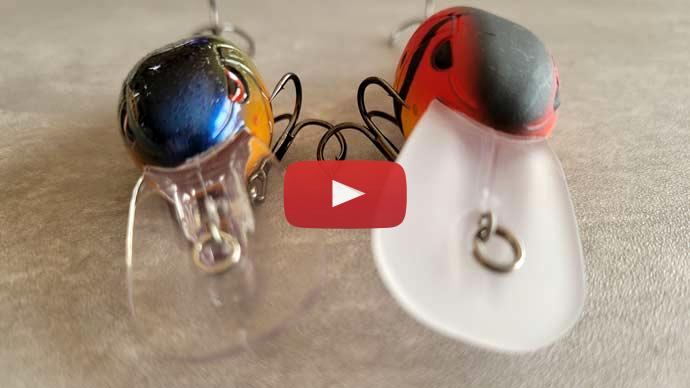
One of the things that you always got to keep in mind about summertime cranking is the brim spawn. And when you start talking about brim spawn and maybe even a shad spawn. I mean, depending on when you really feel like summer starts, the shad spawn is kind of right there on the end of spring and getting into the beginning of summer. But those are two key things that you really need to be focused on. Anytime you're running around a lake in the early summer months and you see a bunch of birds of some kind, fish-eating birds, blue herrings, egrets, any seagulls, things like that, sitting along a bank, that is a pretty good key and indication that there's a lot of baitfish activity up in that shallow water region. That is when I'm going to rely on probably two, maybe three of these crankbaits, depending on the water conditions, to get the job done. Number one is going to be a square bill. I mean, a square bill like a Spro Fat Papa, whether they're feeding on shad or whether there is a brim spawn going on and they're feeding on the brim. I mean, a fat papa square bill is going to be a crankbait that I really rely on in those summertime months. You've got the bigger 3-inch version, you've got the smaller version for those situations where, I mean, if you're on a lake that's got a lot of big fish, a lot of big brim, big shad, that's what you want to use to determine which size of bait that you want to throw.
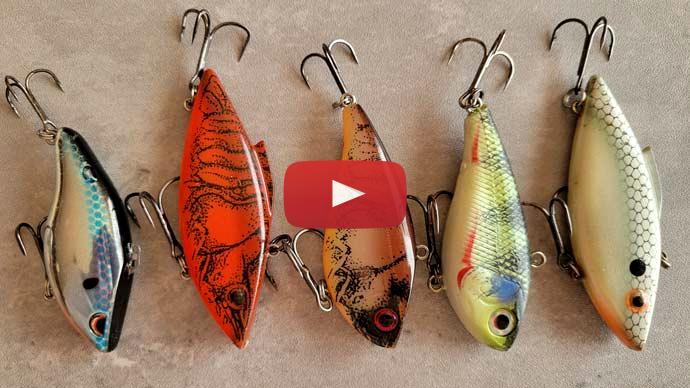
But that is probably one of the key baits that I'm going to throw pretty much across the country, anywhere I go during those periods of time. Another bait that I'm really going to use a lot during that shad spawn or brim spawn is going to be the Spro Little John series. Probably the original Little John in Chrome Olive is my number one go-to, and you can see that one's got the paint ate off of it because I've caught so many during the shad spawn on it. That is the number one go-to bait when those shad are up super shallow spawning and I know those fish are up there with them and that is my key shad spawn bait.
If they're out there a little bit deeper on those gravel points or clay points, that's when a Spro Little John MD, that bait, the original Little John, that's probably a 2 to 5-foot bait. This bait right here is like a 5 to 8-foot bait and this is a bait that when the shad are starting to back off in the mornings and they're getting done with their spawning activities or if they're spawning out there a little bit deeper on clay points, that MD version is going to be the one that I look to use in that situation.
Another bait, especially when you get into areas of the country where you've got a lot dirtier water but the fish are still up relatively shallow is going to be an Aruku shad or a Gomoku shad and it's generally always going to be in shad pattern colors, shad or brim pattern colors.
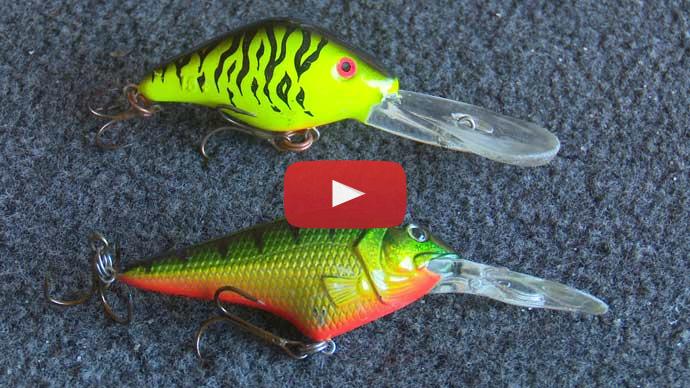
Something that I can throw up there in super shallow water and especially in dirty water and I can create a lot of noise, a lot of vibration and trigger those fish to bite. This is a bait that I'm going to fish up there in that 0 to 5-foot water area as well but anytime you've got those dirtier water, dingier water situations or vegetation, if there's fish or shad spawning in vegetation, a rattling bait is a really key bait in those situations because it's probably the easiest bait to fish in and around vegetation when that's where the bait fish are spawning. So, those are really the key, key baits that I'm looking at for that shad spawn portion of the early summer. Now, as the summer progresses and you start getting into those dog days of summer when the water temperatures really push up there into the 80s, the upper 80s, the lower 90s, that's when you've really got to start thinking about that deep cranking period. And when it comes to deep cranking, I really feel like in my opinion, I try to keep my cranking pretty simple. There's a lot of good medium to deep-running crankbaits but one of my favorites is the Spro Little John DD and the 70. If I'm trying to fish that, let's say, 7 to 12-foot area, the Little John 70 DD is going to be the bait that I choose. If I'm fishing for the fish that are deeper out there in that 15 to 20-foot area, then I'm going to go to the Spro Little John DD 90 and that's a bait that I can get down to those deeper zones.
I still feel like there's a great opportunity to catch big schools of fish out there in those deeper regions, especially if you're fishing lakes that don't get a lot of tournament pressure. I mean, so much of what people base their thought process on is all around tournaments and what you see happening. And the lakes that we spend a lot of time on, the lakes that have a lot of tournament pressure, it does seem like maybe it's getting a little bit tougher to catch them on plugs like this. But if you're fishing lakes that don't get a lot of tournament pressure, I'm telling you, you can still have some incredible days on a crankbait in the summer months of the year. Another real, key factor when you start talking summertime cranking is the equipment that you're going to use. Generally, when I'm cranking in the summer, I'm going to use a high-speed 6,3:1, 7:1, 8:1 gear ratio. Generally always going to be a Bass Pro Shop signature series. As far as line size, again, that is one of those situations that you've got to let the depth that you want to get your bait tell you what line size you're using. Generally, when I'm throwing deeper diving crankbaits, my line size is going to vary between 12 and 16 Sunline FC Crank. It's going to be, I'm trying to get the best depth that I can out of that bait, but I want to be throwing heavy enough line that I can grind that bait down there in the cover of the structure on those ledges and not worry about throwing too light a line.
So, typically, summertime cranking is going to require a little bit heavier line on those deeper diving plugs. Rod choice, I'm generally going to be throwing a bigger rod than I would throw in the spring. I'm throwing a 7'3", 7'6", Falcon Cranker. We've got the original Deep Runner, we've got the Falcon Cranker, the Falcon Cranker 2. I want a rod that I can really rear back, get extremely long casts on, cover a lot of any time I'm throwing a deeper diving crankbait in the summer months. When we talk about the equipment for square bills and shallow baits, that kind of varies a little bit. Generally, when I'm throwing a bigger square bill in super shallow water, that size square bill, I'm going to upsize my line, 16 to 20-pound line. I mean, especially if you're throwing that bait up there on flats that have a lot of stumps, that have a lot of laydowns, things like that, I want to be able to know with confidence that I'm throwing the right line. So, if I'm throwing 16, it's going to be Sunline FC Crank. If I go to 18 or 20, it's generally going to be Sunline Sniper in 18 and 20-pound tests. If I'm throwing my smaller square bills and my Little Johns and things like that, I feel like action becomes a little bit more important. So, I'm going to downsize my line generally anywhere from about a 12 to 14-pound test. And again, I like that FC Crank for all of my cranking because it's got more stretch than Sniper.
So, anytime I can throw crank, I'm going to throw crank because it's just got a little bit more stretch. It throws extremely well and it just really works well with smaller square bills and Little Johns-style baits. So, summertime cranking, the key again is bait. Whether you're catching them up super shallow or you're catching them out deep, you've got to use your electronics to look for bait, whether it be out on ledges, out on points, channel bins, anything like that, where the bait is going to get congregated for the deeper diving crankbait stuff. As far as the shallow stuff, you're visibly looking for bait up there showing itself. You're looking for birds on the bank or you're using your electronics to show you where those potential brim beds and things like that might be. And the other thing you've got to use is you've got to use your nose. You can smell them brim when they're spawning. And I mean, I always pay really close attention to that. If I'm fishing through an area and I start smelling a lot of that fishy smell, generally you can count on the fact that there's some brim bedding somewhere in that general region and that's when you want to pick up those brim-colored baits when you're fishing for those shallow summertime bass. Hope what I've told you today helps you out the next time you get out to do some summertime cranking.