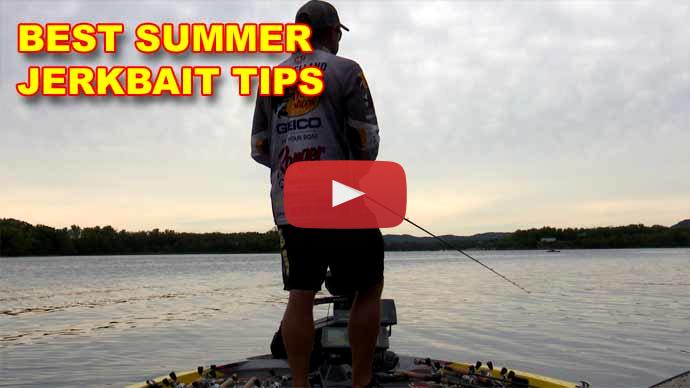
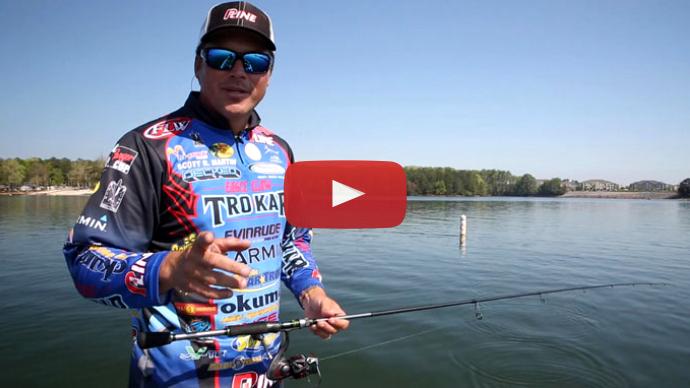
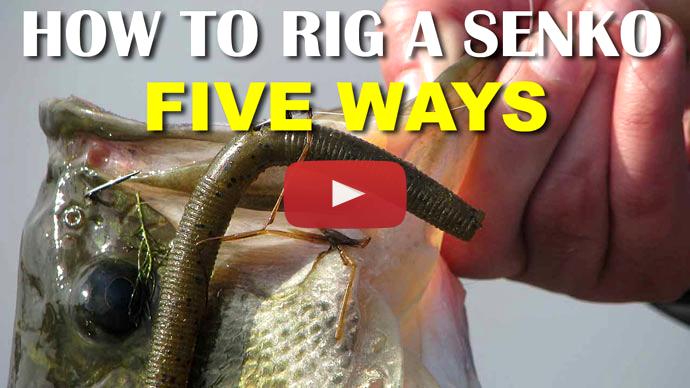
Michael Neal here with BassResource! Let’s talk summertime bass fishing with soft plastic jerk baits. Bass live and breathe around baitfish, so wherever the bait goes, the bass follow. Soft plastic jerk baits are incredibly effective for mimicking those baitfish, and today, I'll walk you through my favorite setups for summer. By using these soft plastic jerk bait techniques in summer, you’ll be prepared to catch more bass, no matter where they’re hiding!
What's up, guys? Michael Neal here with BassResource. Summertime is one of those transition periods where the fish are coming off of the spawn, going out to deeper water, and they're going to typically stay there somewhat offshore, until they start coming back in the fall, when the bait starts migrating back. And you know, a bass's life really revolves just around bait fish. If they're not around bait fish, they're not gonna be able to survive, and that's all they have on their mind, is where the bait is, and that's where they're gonna be following, and that's when the fish transition out deeper, when the bait goes out deeper.
And there's really no better imitator of a bait fish than a soft plastic jerk bait of some sort, whether it's, you know, a 3-inch to mimic those really small shad, or when the fish in the summer time, they typically get on the bigger shad, and the 5, 6, 7-inch baits seem to work the best. And you know, this is just a 5-inch jerk bait from Big Bite, just in a white ice color, clear back with a little bit of silver glitter, and white sides. I just like to stay somewhat of a shad imitator when I'm fishing baits that are moving quickly, it seems like the more natural, the better anymore.
You know, everybody has always caught fish on a fluke, just weightless, a single hook, throwing it out there, twitching it, whether it's working it above the surface, you still catch some fish schooling that way, sometimes in the summer time, but typically you want to get the bait down there a little bit deeper. Weighted hooks work as well, but I like to just Texas rig a soft, plastic jerk bait to fish it down there in those depths where the fish are typically hanging out at.
Now, you can really customize this weight. You could go with a 32nd if you wanna fish it just, you know, 3, 4 feet down, you can go with a 16th. I've got an 8th right here and this is typically what I go with when I'm off fishing in that 10 to 20-foot range. And it's really just the same action. It's a little bit different action than, say, a jerkbait, and it's more natural to me. This looks way more natural in the water. The darting action it's never the same. Most jerkbaits, when you're twitching them hard jerkbaits, they're going to be kind of the same cadence, walking back and forth. With a soft, plastic jerkbait, sometimes it'll go up, sometimes it'll go down sideways, spinning a circle. You really never know what you're gonna get. But when you can fish this bait deeper, it's something they don't see a lot in the summer time.
And it's really been one of my secret baits that I haven't talked a lot about. But you definitely wanna peg your sinker, and you don't want that bait really free falling around. You want your weight to be close to your bait, to where it's gonna fall nose first, but when you twitch it, you don't want too much weight to where it's gonna overpower it and not get that big natural action that the soft plastic jerk bait, or a fluke style bait, has always been known for.
For my hook, the Gamakatsu G-Finesse series is what I really wanna rely on. Hooking of bass on a soft plastic jerk bait is not always the easiest thing, especially when you can't see it, because it's not like a Texas rig, or a Carolina rig, where you're just dragging it slowly along and you're going to feel that bite. You're moving it, you're twitching it, you're creating all the action with your rod tip.
So I like this G-finesse. It's very slick coating. It's got a smaller barb, so it doesn't take near as much to be able to hook that fish. So when you've got that, you've got to have some line that is strong enough to where, when you do feel that bite, you can't just pull into him. You've got to be able to really set the hook. You need a little bit longer rod to where you can take up that slack, because a lot of times you'll just be going to make your next twitch, and all of a sudden it'll be heavy because you can't see it.
Now, if you've got lime scope, that makes things a little bit easier. You can tell when a fish is tracking your bait. You can actually tell a lot of times when you're getting that bite. But the problem with it is you can't slow it down, or it's going to get out of that strike zone. So being able to match your weight to the depth that you're wanting to fish with that strike zone. It's very important.
Another key advantage over this, over a jerkbait, is being able to fish it in cover, if the fish are in lay downs, if they're in deeper grass, if they're in brush piles, things like that. This bait, all you have to do is stick the hook point right in the back, like that, and you can pull it over and in between any kind of limbs or any kind of grass you've got around. So that's just a great way to fish deeper points, deeper structure, deeper cover, give the fish a little bit something that they haven't seen, especially that time of year.
For the rod setup, I'm gonna go with a Denali Kovert, 7' 2", medium heavy. And the reason being is I like something that's gonna be a little bit shorter than I do if I'm gonna throw it more without a weight, because I'm gonna be twitching this bait more down towards the water, but I don't wanna go all the way down to that 6' 10", to 7-foot range, because I want still enough of a rod where I can make some long, sweeping hook sets and get that hook penetrated.
Medium heavy is just kind of a good all around. You don't wanna broomstick for this, but you don't want a noodle either. I like a higher speed ratio reel. This is the Denali Novus elite. It's a 7 to 1. That's kind of my go to for anything that I'm moving the bait with my rod is going to be a 7 to 1. If I'm moving the bait with my reel, most of the time I like a slower one. But I want something that I can take up the slack very quickly and be able to get a good hook set on the fish. Sixteen-pound Sunline shooter is kind of my in between go to, that's what I throw a lot of stuff on, but especially these things where I need smaller line to where I can still make good, long cast and have good action out of my bait. But I know I've got enough strength to do whatever I need to do, whether it's a round cover or open water, either one.
The second way to fish a soft plastic jerk bait in the summer time, and this one's going to seem really weird to a lot of people, but is on the Carolina rig. And with a Carolina rig, it's really unique, because the fish is never actually gonna feel this weight right here. So this is a one ounce weight, and that's...I typically go between a 3/4 or 1-ounce, just depending on how deep I'm fishing, because the fish is not going to feel this. When he picks it up, this weight is going to be on the bottom. And he picks this up, he's just gonna be pulling this slack away. So he's never going to feel your weight.
That's where it's different than a Texas rig, especially if you've got it pegged, he is gonna feel the weight. But you can get away with something that's going to get to the bottom really quick, and you're gonna be able to maintain bottom contact, no matter how deep, no matter how rough, or how windy it is. But I like the Tilapia Magic color.
This is, again, the 5-inch jerk bait. I like a green pumpkin base color that time of year. You can throw shad imitators on it. It's just something I haven't experienced a whole ton of success, but more natural colors like this, I think they really like the action of it. There's not gonna be a big tail kicking action, there's not gonna be a whole lot of commotion caused. It's just gonna kind of follow your weight and just kind of glide around. There's not gonna be any kind of big disturbance caused. It's just really natural to those fish. And I think they just can't stand it, because this is a lighter bait. You're not going to find very many of them on the market that are loaded down with salt. Most of them are gonna be fairly light, not a whole lot of plastic. They've got open gaps here. So all this is lacking the plastic, kind of helps it float up a little bit more, not sink near as fast. And that's a bait that I like on a Carolina rig, is something that's going to stay more up off the bottom.
If I want my bait on the bottom, I'll go more with a Texas rig. But again, same hook on this one as with the peg Texas rig for actually twitching it, the Gamakatsu G-Finesse hybrid. I go a little bit bigger on this one. This is a 5/0, just because it is on the Carolina rig. And I'm not trying to create that twitching action with it on this specific setup. Places to throw this are gonna be anywhere from, you know, long tapering points, channel swing humps, creek channel bins, channel mouths, even up north, just isolated rock piles, things like that. Anywhere where you would normally throw a Carolina rig at all just gives the fish a little bit different spin, just like they don't see that soft plastic jerk bait twitched out very deep. They're not gonna see a soft plastic jerkbait drug around with that real, natural gliding action out on a Carolina rig very often, unless, of course, you take the BassResource tips and show it to them.
For the rod, I like a long rod on a Carolina rig, I kind of like, you know, a 3 to 4-foot leader, nothing super long. A lot of guys back in the past used to use 6 and 8-foot leaders. I don't think that's really necessary. I just like a 3 to 4 seems to be my sweet spot. The heavier the weight, the longer the leader you can actually get away with, because this is where all you're really throwing, and the bait is just going to tumble behind it. So if that's a thing you're having a problem with, as longer leaders on the Carolina rig go up on your weight size, I think that'll help you out a little bit as far as being able to cast it. This is the Lithium Pro from Denali. It's a 7' 4" medium heavy. It's just a great all around worm rod, and that's what it's actually labeled at, as if you look right here on the back, worm and jig.
And you could throw just about anything on this, whether it's a swing head or a Texas rig, but a Carolina rig, this is a great rod for it. I don't like one that's super long. I don't like going over a 7' 4". It just kind of feels awkward in my hand when I'm dragging something around on anything longer than a 7' 4". But that 7' 2" to 7' 4" is the sweet spot. You want a little bit of a tip for being able to cast and being able to fill the bites, and you don't want a broom stick. You don't wanna be breaking fish off on a hook set. When you think about it, you're gonna have a little bit of slack a lot of times when you are setting the hook because your line tie is so far away from the actual hook.
So you wanna make sure when you reel down you do feel that fish good. You got your line good and tight, and you're going to get a good hook set. Same reel as the other setup, the Novus Elite in the 7 to 1 not gonna be moving the bait, just with the reel. I like shorter drags, you know, 3 to 4 feet at a time. A lot of time in the summertime, those fish are really lethargic. They want something just kind of meandering around in their face. And that's what this is gonna allow that to do. It's not gonna sink very sink very fast, and not wanna move it very fast. Just kind of hang out in the strike zone at a 3 or a 4 foot at a time pace.
Last but not least, you got to have a spinning rod set up for every sting you do, every season. And you know, that's no different. We've seen this emerge a lot in the last few years. And that's just a drop shot with a soft plastic or fluke style jerk bait. And this is a Scentsation Slim Minnow and a 4 inch. The color is going to vary depending on where you're at in the country.
And you can even throw, you know, your green pumpkins, your tilapias, your things like that, if you're wanting to mimic a bluegill say, around some grass lines or things like that. But I like to try and mimic those bait fish when I'm out fishing deeper in the summertime, if I'm up shallower around the grass, I like the bluegill's type colors. But just a standard drop shot setup, I prefer to thread my bait on the hook if I can. If I'm throwing something like this, I either like the Texas rig it or with a regular worm, or thread it with a fluke style bait. I feel like you've got much better hookups.
And same principle as a Wacky Worm, you know, on a drop shot, a lot of people say they lose a lot of fish. They using smaller hooks. Yes, they're great. A lot of people really think that when you're fishing this slow with a drop shot, they're gonna swim up there and see your hook. And that could be the case. But in my experience, I feel like this is absolutely a great way to go. You're gonna have much better hook up ratios and much better landing percentage. This is the Gamakatsu G-Finesse light wire worm with a tin keeper and a 1/0. It's kind of an all-around size. If you're gonna go with a bigger soft plastic jerk bait, say a 5 or a 6 inch, you might wanna go up to say a 2/0 but for a 4 inch, like this right here, I just like a 1/0. Drop shot weight is, again, it's going to depend on where you're fishing in the water column. This is a tear drop. I like the tear drop if I'm either just live scoping, it shows up better on your sonar return compared to a cylinder, because it's just a little bit bigger surface area for that return to hit. Or if I'm fishing around a lot of cover, that's when I go with a cylinder.
So you know, brush piles, rocks, grass, things like that. That's when I wanna go with a cylinder, something that's gonna be more streamlined, but I feel like you get better bottom contact with the teardrop, because it has more surface area when you're dragging it across the bottom to actually hit than just a real small, skinny, pencil style drop shot weight. Places to fish this are gonna be anywhere from, you know, bass fishing sitting around bait fish balls out suspended. You can certainly throw a drop shot to fishing and out in schools, out on ledges. That's something that has really come out in the last couple years, just throwing it out there, just like you would a Carolina rig, a Texas rig, a football jig, anything like that, just making long casts with it, slowly fishing it back to the boat. And they think it's one of those bait fish just hanging out down there kind of by itself.
Another way to fish, just like I said, pitching grass lines, that's great. Fishing deep shade around docks is another way I like to fish this. Summer time they're gonna be finding some sort of shade, if they're up shallower, super clear water, or typically out a little deeper. So again, mash the hatch with your soft plastic jerk baits, weight it down, get it a little bit deeper, fish it on a Carolina rig, try it on a drop shot. This is a 7' 6", again, fishing offshore you wanna longer rod, 7' 6" medium, multipurpose Kovert from Denali. I like that long rod, you can make long casts. You can make good hook sets on those long casts. Three thousand size reel is always my go to. This is 10 pound SX-1 to an 8-pound sunline shooter leader. You're fishing this pretty slow. It's going to be in those fish's face for a minute before they decide to bite or not.
So I like to really go as finesses as I feel comfortable with. And when you do that, you gotta have a really forgiving rod with a lot of tip. And this rod is just absolutely a perfect drop shot rod, perfect setup. Three thousand size reel is gonna allow you to make longer casts. The less time your line has to spool off of your reel, the further you're gonna be able to cast. So that's why that bigger diameter of a real is important to me.
So hopefully these tips for fishing a soft plastic jerk bait in the summertime will help you out. For more information, check out bassresource.com