Hey guys, Cliff Pirch here with bassresource.com. I want to give you a few techniques that I really like to throw in the winter. Now I'm I'm going to give you only three and that that doesn't mean that's the only things to be throwing. There's lots of other things to try, but I want to give you 3 of my favorites.
And I live in the southwest, so remember you got to kind of remember different types of bodies of water are going to have a little bit different winter type conditions. Where I live it's rare that the the water temperature gets below 50. You know, occasionally 48, 49, but generally it's in the low fifties. So keep that in mind when I'm talking about winter time fishing.
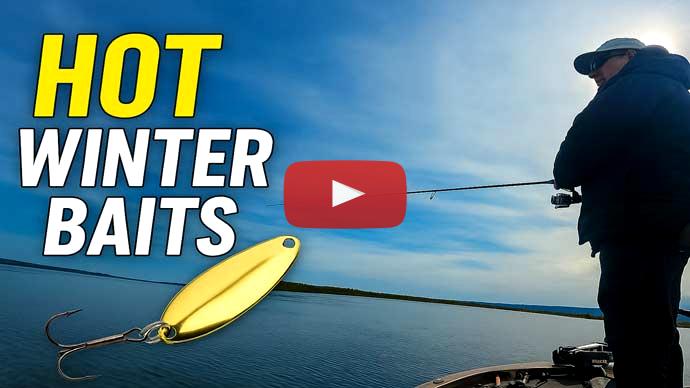
Where I live, there's mainly deep, clear or generally clear reservoirs, a lot of a lot of rock, sand, clay and flooded desert brush. So one of the things I really love to do in the wintertime, we have a lot of river rock where I'm where I live, if you've got good chunk rock banks or chunk rock breaks, points, ledges, things like that. If you live on a lake that's got channel swings where where it gets bluffed up on the end and you get that little transition area where you got all the broken chunk rock before it comes back to your pea gravel or your sand, a football jig is a great way to catch them.
It's going to mimic mainly a crawdad. You know, the bass eat lots of crawfish in the winter time and coming into that early spawn that early, that pre spawn era. They eat a lot of crawdads and a football jig is just one of the best ways to imitate them again, and I'm using it around rock cover.
The shape of the head obviously is why you call it a football jig. That's one of the best designs to get in and out of rock. And really fish that without getting hung up. Make a little noise, a little bit of commotion, get the bass's attention. And that football jig is a great way to target those wintertime fish.
Early spring, you know, late fall. I'm, I'm going to be thinking of this all the way, you know, late October, some places all the way to all the way to early March, early mid-March in some places. So that whole time frame, it's a great time to throw a football jig.
I try to keep it pretty, pretty natural. I'm going to be choosing mainly greens and browns, my good natural crawfish colors. If you're in some real off-color water, you might try some black, you know, black, blue combinations. But generally my football jig, I'm in the green brown shades because I'm imitating crawdads and like sunfish that live in the rocks. You know those, those like green sunfish, the type that would, you know, if you pull the rocks over, you might see a crawdad shoot out of one, you might see a green sunfish shoot out of another. But that is a good way to mimic those those those things that the bass like to eat when they hang out on on that rocky cover in the winter time.
As far as my gear goes, I like a heavy-action rod for my football jig. You're throwing a lot of weight, you know, probably 90%, not maybe not 90, maybe 75% of the time. I like about a three quarter oz football jig. It just it's it's very effective and long cast. It's efficient and getting to the bottom, keeping your line tight and it and you know where you're in connection with your line. You can feel those bites well and it makes them commotion. There's something to that knocking against the rocks and kind of kicking up that dirt really gets their attention. And the speed, you know, kind of allows you to to trigger some bites as well.
Sometimes you might get it unhung from a rock and shoots out and you get a bite and you figure out, oh, I need to hop it a little bit more. You know, the bass will tell you sometimes you got to drag it slow and they'll bite it. But you know, those little things you got to figure out while you're fishing. But the football jig is one of my favorites.
I'm throwing it again, heavy action rod. This is Phenix. K2 heavy action. I want heavy because I'm moving a lot of bait. I'm moving a lot of bait. It's a big head and generally I'm using heavier line. It's going to be anywhere from 12 to 20 LB test. I really like the 15lb range, so 15, 16 LB test is generally what I'd go to the most and making long casts. Like I said, doing some dragging, some hopping. You've got to let the fish tell you what to do.
It's a heavy hook set. You don't want to give them long when when you feel. You hammer them instantly, a hard hook set, bow your rod and reel like mad. So that'd be a couple of my tips for fishing a football jig in the wintertime and and just some of the equipment I'd use them on.
Again, I talk about it in almost every video. A drop shot is never going to not be on the front deck of my boat. Drop shots another way I can, I can target, target those fish when I see them up in the rocks, when I see them on the breaks, when I see specific fish I'm throwing at. And a lot of times, you know, they're not eating as much in the wintertime.
So you've got to give them a little subtle approach sometimes that you put that bait in the strike zone and it stays there a while. You might have to just kind of shake it a little bit, keep it. Front of them to where they just can't take it any longer and they bite it. So it's a slower technique.
I'm fishing a specific target, like rock ledge-specific fish that I see on my electronics, but a drop shot is going to be always on my front deck. And that includes the winter. Sometimes I like to go a little bit darker colors in the winter because you've got a lot of Gray skies that, you know, typically. You've got a little bit more weather coming through, so my purples, my dark greens, this one's called Double Purple and the Cliffhanger. That tends to be a really good fish catcher in the winter.
If you've got really, really Clearwater, you might go with a dark watermelon, like the tilapia color. But that double purple worm, for some reason, it's really a good fish catcher in the winter. So I always keep that one around on my drop shot. And that's the Cliffhanger from Big Bite Baits.
My third one, guys, this is becoming one of the most popular ways to fish. And seasonally it doesn't really matter either. It's a lot like my drop shot. You know fish are always going to feed a little bit on bait and this is the minnow technique.
I've caught a few fish on it today, so it's a little bit it's a little bit torn up already. I've got it on the Gamakatsu Horizon Head. This one's got the wide gap and it's plenty strong. Guys this morning I caught a 21 LB striper on it took me almost an hour to catch it so but it you know the jig head is still in great shape. It's still the same one. I've got a bunch of bass on it since so the horizon jig head from.
I tie a little loop knot on here and it allows me to give it a little more rocking action as I shake it. But this technique is something we've seen. If you've been watching competitive bass fishing in the last year, 2–3, a lot of minnow shaking, you know, it's shaking a minnow has become a major technique that really knows no seasonal boundaries.
But in the wintertime, it's a good way to put it in front of fish that you see suspended out there in the water column. Where you can just throw it out there on your electronics. Watch it fall. And I'm going to get it over the top of them and just kind of shake it back past them. You've got to watch their reaction.
And sometimes you might have to pull it away from them a little bit to get them to commit and bite it. And sometimes just shaking it a long time right over the top of them, you know, just might just make them just swim up and eat it.
So that's shaking a minnow, guys. And it's it's a it's a common technique now. Everybody in the tournament world is doing it and it catches them, it just flat out catches them and, and it's it's just become one of the best ways to get bites. And win tournaments you can catch, you can target the biggest fish you can find on your electronics and put it in front of them.
I caught an 11 pounder early this spring doing that and I looked out and and saw a group of fish swimming towards me on my electronics pitched it out in front of them. And there was like 10 to 15 really big fish in the school. I hooked up. I thought maybe it looked too big. I thought maybe one maybe they were catfish and caught one of them and there was like. Like I said, 10 to 15 more with it just like it, it was it went 10lb 15oz right under 11 lbs.
And so it does catch really big fish and it's a good way to target specific fish. So guys, that's another technique that I would try and. Hope those tips help you to catch them in the winter, the colder months and again you can you can use that from from October all the way to March and and hopefully those things will help you catch more fish.