


Pond turnover is a natural process that we all need to learn about. Understanding the science behind it, especially for northern ponds, can help with managing your water quality and fish health.
In summer and winter, you can bet most northern ponds form temperature layers. That's called "Thermal Stratification".
Here's how it happens. At the beginning of Spring, ice melts, and water starts to revive from its winter season. As days grow longer and the sun provides heat, your water begins to warm. Keep in mind that water is densest around 39 degrees. As it cools or warms from that temperature, it expands. Water at 39 degrees is as heavy as it will be. Think about it like this—ice floats, right? But we know that when water reaches 32 degrees, it freezes. It must weigh less than water in its liquid form.
As Spring moves toward summer, the sun's heat warms the water. As the water warms, heat wants to escape. Since ponds have no natural vertical currents, nature provides wind action to mix water as it warms up. Here's the biological fun, if you will.
Heat only penetrates so far down, most of the time about halfway. If your pond is sixteen feet deep, warm water happens in the top eight feet.
Picture an underwater layer cake. Just for scientific giggles, learn the names your biologist might throw out in geeky normal conversations:
- Epilimnion: The warm surface layer, rich in oxygen from wind and photosynthesis. This top layer is where biological productivity happens. The magic of nature uses this top layer of the pond cake to grow plants, produce plankton, create the food chain, and grow your target fish species.
- Metalimnion (or thermocline): The middle layer where temperature drops rapidly. In new ponds with clearer water, or in some areas above the Mason-Dixon line where glaciers carved their way through hard rock 10,000 years ago, this layer may be several feet thick. For all the rest of us around most of the nation, the thermocline is less than a foot thick. It's the transition between the warm, oxygenated top layer and the much cooler, even cold, layer at the bottom, where there's zero chance of fish or plants surviving.
- Hypolimnion: The cold, dense bottom layer, often low in oxygen because it's cut off from air and light. It doesn't take long for healthy, natural bacteria to consume all the oxygen from this layer. Since that water has no source of oxygen replenishment, it runs out. Fish suffocate.
These layers don't mix on their own- think of it like a favorite healthy salad dressing: oil and vinegar. That stuff settles when sitting still in a bottle. To mix, we have to shake it up.
For these layers to mix in your pond, nature shakes it up by cooling the warm top layer enough that its density changes and matches that of the lower layers. When that happens, your pond "turns over".
It can happen before winter and after winter.
When the weather shifts during Spring and fall, surface temperatures approach those of the deeper layers:
Remember, water is most dense at 4°C (39°F), so as the surface cools or warms to that point, it becomes heavier and begins to sink.
Turnover mixes the layers, evening out temperature and oxygen levels through the entire water column. Pond turnover can also be triggered by heavy rainfall or strong winds that disrupt stratification and mix the water column.
When turnover happens, that healthy water at the surface mixes with the less-than-healthy water beneath it. There can be chemical and/or biological problems. Here's what happens when those isolated layers stir together:
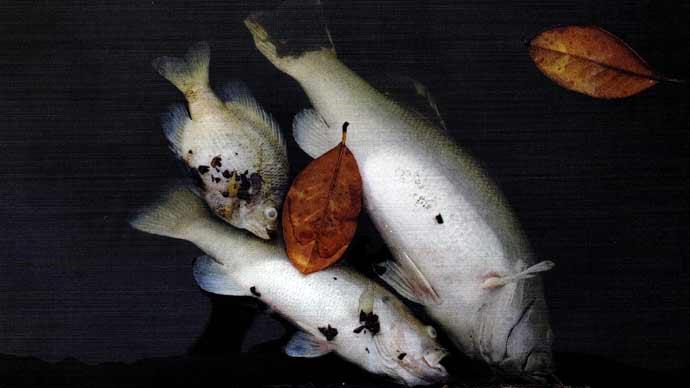
- Oxygen levels drop as the oxygen-poor bottom water blends with the surface. If your vibrant water on top is healthy and oxygen-rich, it shares with the oxygen-starved bottom layer. If that bottom layer consumes too much oxygen from the healthy layers, oxygen concentrations can drop below lethal levels for your aquatic animals. Think fish kill.
- Nutrients (like nitrogen and phosphorus) from sediment stir up—regurgitated enough to fuel algae blooms. This is common after the winter in northern ponds.
- Toxic gases, like hydrogen sulfide, can be released from decomposed organic matter on the pond floor. That's why turnover can lead to murky water, strange smells, and even fish kills. Remember when you waded out a few feet to disentangle that grandbaby's fishing line and that black mucky stuff kicked off an odor that smells like rotten eggs? That's what we're talking about here.
In a healthy ecosystem, turnover is natural and beneficial, refreshing oxygen and redistributing nutrients. But in man-made or shallow ponds, the effects can be disruptive without proper planning.
That's a major reason professional pond managers recommend bottom-diffused aeration or water circulators during the spring and summer months. Aeration in northern ponds is a good way to keep your water healthy from top to bottom.
While stratification is normal, aeration can be an excellent tool to mitigate issues.
After all, we love our fish, and keeping the water healthy goes a long way to keeping a pond healthy.
Reprinted with permission from Pond Boss Magazine