

Our small ponds are dynamic, meaning things are often changing. Predator/Prey relationships demand it. Include nutrient cycling, feeding programs, and fertile water in the equation as well.
That means angler harvest decisions directly shape fish populations. Since many of us have Largemouth bass with bluegill, let's use this classic predator-prey pair. Managing their populations requires more than stocking and feeding—it demands a nuanced approach to selective harvest, guided by body condition and the plasticity of both species.
I know, you've heard all about selective harvest, based on relative weights and overall body condition, but what about that "plasticity" thing?
Let's say you have an overcrowded bass pond. You know you need to be culling fish in the 12-14" size range. Granted, most fish you catch just don't look chunky, like they should. But on occasion, you'll catch a fish that fights harder, is aggressive to bite, and its body shape is really pretty good. Compared to all the other 13-inch fish you've been catching, that one fish is different...better
Do you release it...or eat it?
Judgment call, but that fish is an example of "plasticity". It's figuring out how to make a living in that system, your pond.
Body condition is definitely one of your management tools. Drilling into that:
- Relative Weight (Wr): A widely used index comparing a fish's actual weight to the expected weight for its length. Bass or Bluegills with Wr below 90 often indicate food limitation or overcrowding.
- Thin Bass: Suggest insufficient forage, often due to a lack of small Bluegills or competition among bass, usually both.
- Thin Bluegills: Signals overcrowding, poor recruitment balance, or inadequate predation pressure from bass. While this happens frequently in northern waters, it's less typical in the south.
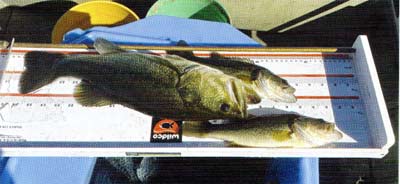
By monitoring body condition, managers can identify whether to harvest bass or bluegills to restore balance.
Plasticity affects both growth and reproduction. Both species exhibit phenotypic plasticity, adjusting growth rates, reproductive effort, and behavior in response to pond conditions:
- Largemouth Bass Plasticity:
- Will shift diets from insects and small fish to larger prey as they grow. Mouth size dictates food preference. For example, big bass prefer bigger meals. It takes too much energy to chase morsels when a six-pound bass can eat a one-pound cousin.
- In crowded ponds, bass may remain stunted, maturing at smaller sizes and exerting heavy predation on young bluegills. Ironically, in seriously overcrowded bass ponds, the bass are often so severely undernourished that they don't have enough energy stores or food to develop eggs. That's one of nature's ways to throw the brakes on a fish population.
- Bluegill Plasticity:
- Flexible spawning strategies, often producing multiple broods per season. At most latitudes, bluegills can spawn at least twice, often three times. The further south we go, the longer the rolling bluegill spawning season goes. I've seen up to five bluegill spawns in far south Texas in a year.
- In predator-poor ponds, Bluegills overpopulate, leading to stunted growth and poor body condition. That's definitely an issue in northern-tier ponds and lakes. It's because bluegills don't start spawning until well into summer, and they have a short window for growth. ° Under strong bass predation, bluegills grow faster and larger, improving angling opportunity. After all, how many of us can pass when we have a legit chance at a two-pound bluegill on light tackle? ° Another interesting factoid about bluegill plasticity is how well some of them adapt to your pond, while others just seem to fade away...or just get eaten. A percentage of each spawn can adjust to your situation, water quality, available food chain, and habitat.
This plasticity and dynamics of your fishery means that selective harvest decisions must adapt to the pond's current ecological feedback loop.
Selective Harvest Strategies
1. When Bass Are Thin:
- Harvest smaller bass. Weigh, measure, and keep good records.
- Protect larger bass to maintain predation pressure on smaller bass. Big bass help culling.
- Supplement forage (e.g., minnows) if feasible. Diversifying your food chain is often a good idea.
2. When Bluegills Are Thin:
- Increase the harvest of small Bluegills to reduce density.
- Limit bass harvest to maintain predation pressure. If you don't have bass, stock some to improve bluegill sizes and quality.
- Consider fertilization or habitat improvements to boost plankton and invertebrate food sources...if you are in a part of the nation where that practice is safe.
- If you haven't started a feeding program, consider it. I've seen lots of bluegill ponds jump up and thrive, even with a small amount of supplement feed.
3. Balanced Pond Indicators:
- Bass Wr consistently between 90-100. And, you'll see a variety of size classes.
- Bluegill populations with a mix of sizes, including harvestable adults.
- Anglers regularly catch both quality bass and pan-sized bluegills.
Practical Monitoring
- Annual Sampling: Use angler catch records, seine surveys, or electrofishing to assess size structure and condition.
- Adaptive Management: Adjust harvest rules yearly based on observed trends. Study those relative weights as you go. When you are close to harvesting enough bass, remaining fish and recruits will be bigger and healthier.
- Community Engagement: Educate your anglers about why harvesting certain sizes improves overall fishing quality.
Selective harvest in small ponds is not necessarily about removing the most fish—it's about removing the right fish. By paying attention to body condition and recognizing the plasticity of Largemouth bass and bluegills, managers can guide ponds toward balanced, productive fisheries. This approach ensures healthier ecosystems and better angling experiences.