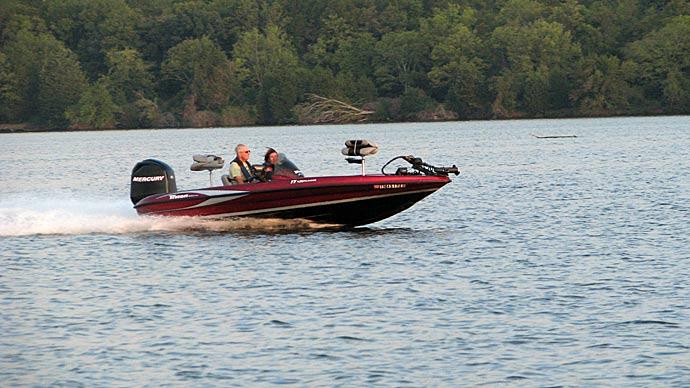



The evolution of bass boat rigs in the last 30 years has increased anglers’ efficiency at catching bass.
In honor of BassResource’s 30th anniversary, I have been assigned a four-part article on the evolution of bass fishing since the media company’s inception in 1996. The first two parts covered the introduction of new lures and techniques, and rods and reels since 1996. This part will focus on innovations in bass boats over the last 30 years, and the final part will cover the evolution of electronics over the last three decades.
Earl Bentz introduced a major innovation in bass boats when he founded Triton Boats in 1996 and sought to eliminate marine plywood from the construction process. During his research, he discovered bonded fiberglass was 30 percent lighter and twice as strong as plywood at the same thickness. The introduction of the Triton 21 Pro in 1997 gave Triton the honor of becoming the first manufacturer to build a fully composite bass boat without using wood. The company also developed a Zero Flex Stringer System and full-width transom construction, which increased rigidity and reduced hull flexing to improve speed and handling. Triton was also the first company to flush-mount large-screen electronics into the console of its bass boats.
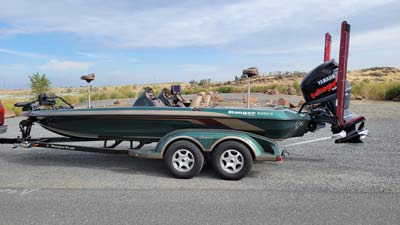
Introduced in the late 1990s, the Ranger Boats Z-Comanche lineup included innovations such as custom-built soft-ride seating for better comfort, power-ventilation rod storage to protect gear from moisture, and more.
Skeeter developed a Torque Transfer Transom and Stringer System for its ZX series of bass boats in 2001. The system transferred torque from the boat's engine to the hull's stringers to reduce stress and increase lift. Skeeter is credited with a first in bass boats with its digital touch keypads featured in its 2006 i-Class series.
Phoenix Bass Boats added some innovative features when the company entered the market in 2008. The new company made insets for large graphs in the bow and console and introduced the first fully enclosed driver's console and a passenger console that could be easily installed or removed.
Bass boat manufacturers began adding reboarding ladders to their boats between 2008 and 2015 due to rising awareness of overboard drownings and tournament organizations and insurance carriers encouraging or requiring reboarding devices for safety.
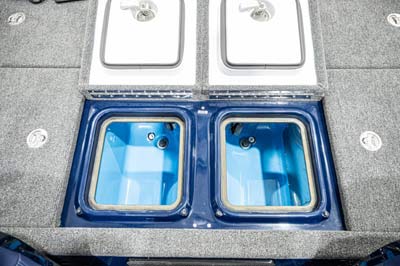
Since 1996, bass boat livewell technology has evolved from displacement pumps to multifunction systems designed to reduce fish mortality. The most recent innovation is the iKon L2 livewell system, introduced in 2023. The system features autofill, auto-maintain-fill, auto-circulate, auto-oxygenation, auto-inject fish additives, and auto-temperature control functions.
The evolution of bass boats over the last 30 years includes improvements to the rig's outboard engine and trolling motor. Mercury launched its OptiMax line of direct-fuel-injection outboards in 1996. The new engines increased fuel economy while reducing emissions and improving oil lubrication in critical points of the motor. In 2004, Mercury introduced the Verado, its first 4-stroke outboard. Four-stroke models were available in V4 and V6 engines starting at 175 horsepower. Yamaha launched its first 4-stroke in 2010 with the 4.2-liter VMAX SHO outboard. The engine was available in models up to 250 horsepower.
The MotorGuide 500 was the first 36-volt, cable-steer trolling motor in the late 1990s. The motor produced a high thrust and longer running time than 24-volt motors, which was essential for the larger bass boats being built at that time. Minn Kota introduced its Maxxum, the company's first 36-volt cable-steer trolling motor, in 2000. The Maxxum featured 101 pounds of thrust and a 360-degree breakaway mount.
Minn Kota introduced the first brushless trolling motor as part of its QUEST series in the early 2000s. The innovation replaced the motor’s carbon brushes with a permanent magnet design that eliminated brush wear and produced a quieter motor by reducing noise and vibration. The brushless motor was also more efficient, providing longer battery run times and greater power and torque.
Minn Kota developed the first wireless, GPS-based trolling motor navigation system in 2010 with the launch of i-Pilot, which included the Spot-Lock anchor feature. MotorGuide introduced the Tour Pro, the first trolling motor with an integrated anchor system, at ICAST in July 2019. The Tour Pro combined PinPoint GPS technology with traditional stainless-steel cables to deliver smooth, responsive steering, allowing anglers to steer and anchor their bass boat precisely via GPS. The Garmin Force trolling motor with its GPS anchor lock feature entered the market in 2019. Lowrance also introduced the Ghost, its first trolling motor) with an anchor system, in 2019.
Mechanical anchors mounted on the stern of bass boats became popular in the 2000s. Power-Pole debuted its hydraulic 8-foot mechanical angler in 2008. Minn Kota introduced its first generation of 6- and 8-foot electric-mechanical Talon shallow-water anchors in 2011.