

BassResource celebrates a special birthday this year.
The grassroots bass fishing media company has been producing high-quality fishing-related content, including articles, videos, tackle reviews, giveaways, and the world's most popular bass fishing forums since 1996.
Celebrating its 30th anniversary, BassResource came on the bass fishing scene about the same time I started writing fishing articles full-time. I began my full-time freelance writing career in 1993, covering Central Pro-Am and B.A.S.S. tournaments, and started writing for BassResource in 2013.
In honor of BassResource’s 30th anniversary, I have been assigned a four-part article on the evolution of bass fishing since the media company’s inception in 1996. This first part will focus on the introduction of new lures and techniques since 1996. The other three parts will cover the evolution of rods and reels, bass boats, and electronics over the last 30 years.
Tournaments have always played a key role in advancing bass fishing tactics and lures. Although the pros try to keep certain lures and techniques a secret for as long as they can, their secrecy is usually revealed when a major tournament is won with that lure or tactic.
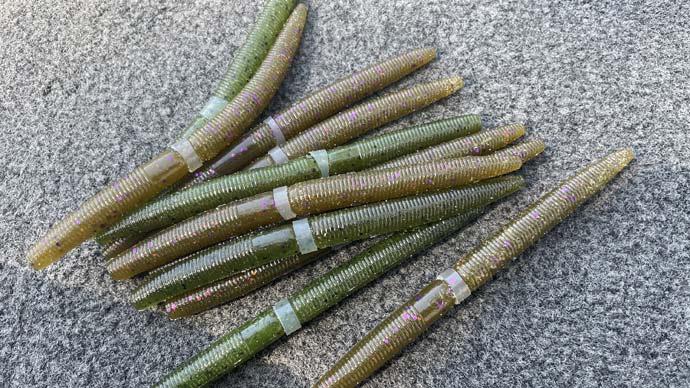
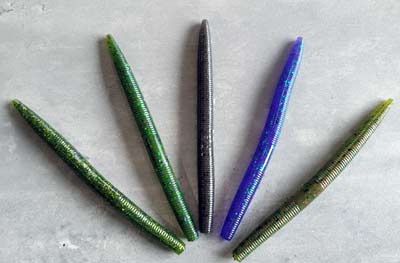
One of the most significant introductions to the bass fishing world in 1996 was the Yamamoto Senko. While trying to create a finesse bait similar to the popular Slug-Go, Gary Yamamoto experimented with a pen-shaped soft plastic and developed the prototypes of the Senko in 1996. The new lure gained a cult following in the western states that expanded eastward by the late 1990s. The stick worm became the primary bait for finesse techniques such as the wacky rig (early to mid-1990s), Neko rig (early to mid-2000s), and the Ned rig (early to mid-2000s).
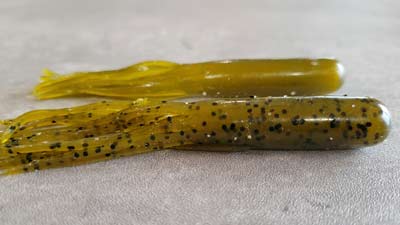
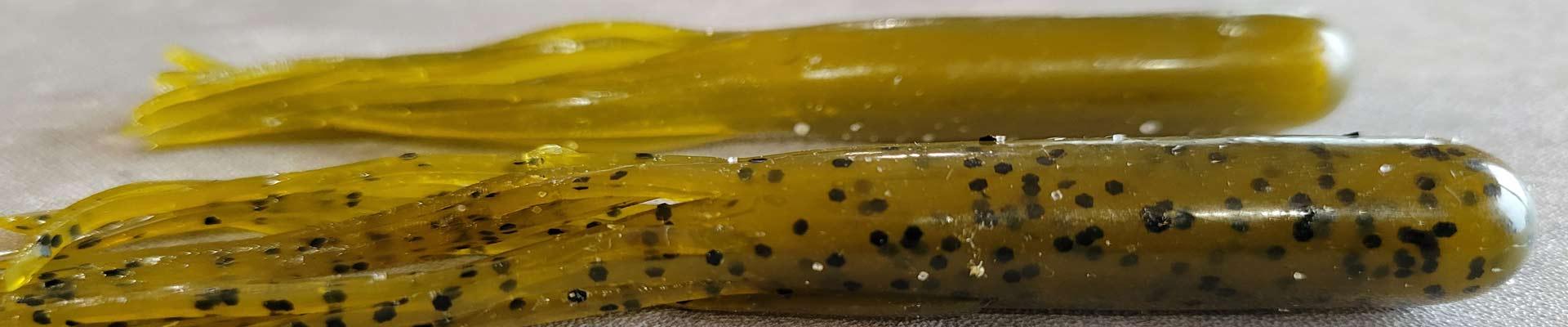
The tube bait was initially a finesse lure when Bobby and Garry Garland invented the Gitzit in 1982. Still, the lure became a popular power bait when Doug Garrett won the 1997 Bassmaster MegaBucks tournament by flipping it with heavy line into thick cover. Denny Brauer then won the 1998 Bassmaster Classic on a tube bait, further establishing the lure's effectiveness as a flipping bait.
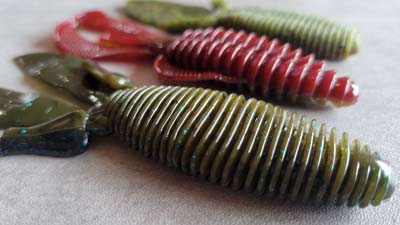
The creation of the Zoom Brush Hog sparked the creature baits craze in the late 1990s to early 2000s. Creature baits became essential tournament lures for targeting large bass during the pre- and post-spawn periods.
The hard-plastic big swimbait craze on the West Coast started in the early 1990s, but the smaller soft-plastic versions began in 1996, when Optimum Baits introduced hand-poured swimbaits. Now soft plastic swimbaits are used on jigheads or as trailers for buzz baits, Chatterbaits, and skirted jigs.
The drop-shot rig originated in Japan, but touring pro Aaron Martens is credited with introducing it to American anglers in the mid-1990s. The rig became a well-known technique in the early 2000s when guides and articles on BassResource.com revealed it was an effective tactic for finicky bass.
The ChatterBait bladed jig was invented around 1998 by Ron Davis Jr., and he sold his first baits in 2004. The lure gained popularity when Bryan Thrift relied on the ChatterBait to win a 2006 FLW Tour tournament.
Guido and Dion Hibdon and Denny Brauer relied on the technique of skipping jigs under docks at their home waters of Lake of the Ozarks in the late 1990s. The tactic gained nationwide popularity when touring pros such as Gerald Swindle shared it with the outdoor media.
Beaver-style baits were introduced in April 2002 when touring pro Andre Moore used a prototype Sweet Beaver to win an FLW Tour event at Beaver Lake. The founder of Reaction Innovations Baits won another FLW Tour tournament at Beaver Lake in 2005 with the Sweet Beaver, giving it a huge boost in sales.
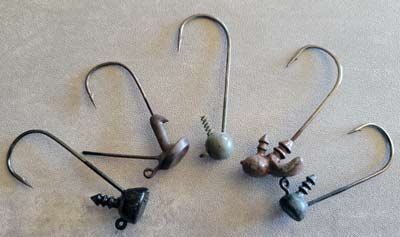
The shaky head tactic probably originated with Coosa River anglers fishing for spotted bass. Fred “Taco” Bland and Wiliam Davis developed the shaky jigheads from modifying crappie jigs in the 1980s but the concept didn’t become a mainstream technique until Aaron Martens refined and showcased the tactic in major bass tournaments from 2003 to 2005. Bait companies such as Zoom then started producing the jigheads and worms specifically designed for the finesse tactic by the late 2000s.
Glide baits originated in Japan with the introduction of the Gancraft Jointed Claw around 2004. The boom in glide bait interest began around the mid-2000s, when Gancraft and Megabass glide baits were introduced to the United States, and the lures became a major trend in the 2010s.
Working hollow belly frogs over grass mats became popular when anglers started winning tournaments on the lures at Clear Lake and the California Delta from around 2000 to 2005. Introduced in 2005, the Zoom Horny Toad became another effective frog bait for skimming over or through vegetation. Anglers also discovered the Horny Toad was effective as a subtle buzz bait when fishing around docks, timber, and in open water.
Swimming a jig was a popular technique in southern waters throughout the 1980s. After 2008, the tactic’s popularity spread when winners of some major tournaments disclosed the swim jig was their key to victory.
Football jigs were used by Western anglers as early as the 1960s, but the lure only started gaining popularity across the rest of the country when FLW Tour competitor Jim Moynagh had success with the jigs in the early 2000s. The football jig achieved significant attention when Alton Jones used it to win the 2008 Bassmaster Classic.
Larry Dahlberg and Simon Chan of River2Sea developed the Whopper Plopper around 2008. James Watson sparked the plopper topwater craze across the country when he disclosed that the Whopper Plopper helped him win the Bassmaster Central Open on Table Rock Lake in October 2015.
Andy Poss invented a castable version of the umbrella rig, which he called the Alabama rig, in 2009. Paul Elias used the rig for a dominating victory in a 2011 FLW Tour event on Lake Guntersville that created an immediate demand for the A-rig.
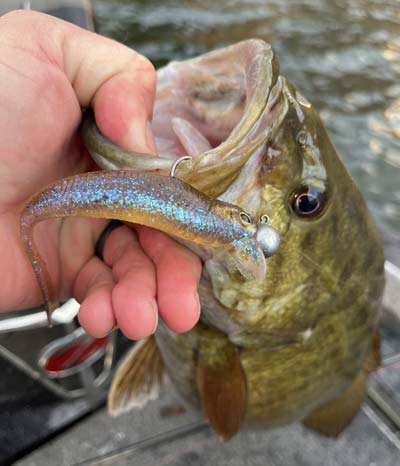
Techniques similar to the Damiki rig using jigheads with a Fluke or minnow-type bait were used by the Lindner brothers and Tennessee anglers as early as 2003. However, the rig became nationally popular when competitors prominently used it during the 2017 Bassmaster Elite Series tournament at Cherokee Lake.
Check out tips on using these lures and tactics in the following Bassresource.com articles I have written over the years.
2013
Flipping Tube Baits for Bass with Glenn Browne
2015
Shaky Head Fishing (Jig Worm Fishing)
Stickworm Fishing with Stephen Browning
2016
Fishing Finesse Worms with John Murray
2017
Finesse Jig Fishing with Brian Maloney
2018
Fishing the A-rig in the Winter
Winter Paddletail Swimbait Tactics
Fishing Swim Jigs with Gerald Swindle
Swimbait Clinic with Jay Yelas
2019
Shaky Head Fishing with Marty Robinson
2020
The Ned Rig: Playing Numbers Game
2021
Stick Worm Fishing in the Fall
2022
2023
Gliding with the Wind for Bass
2024