

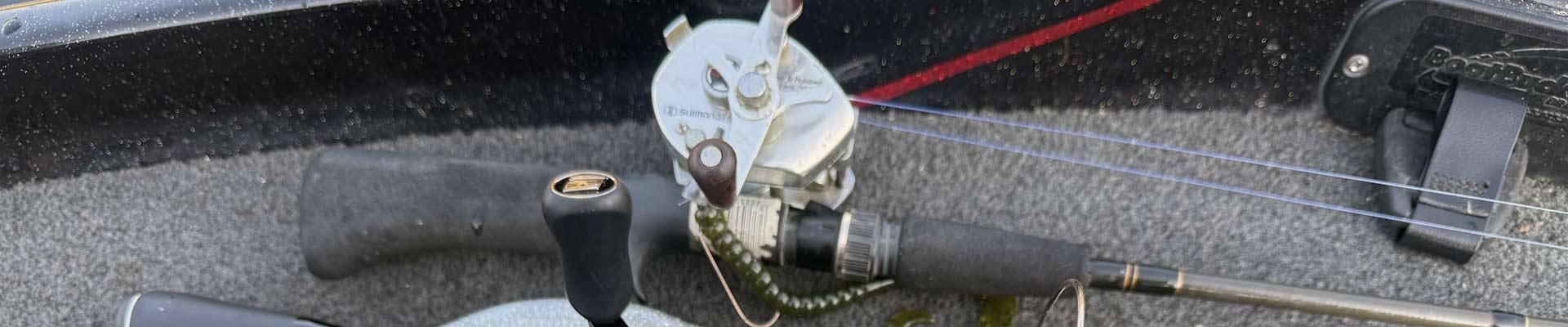
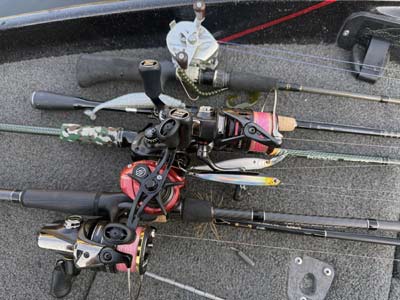
2026 is the 30th Anniversary of BassResource, a website founded by Glenn May. When it started in 1996, bass fishing information online was almost nonexistent and even harder to find. Since then, the digital world has changed, as has the technology and gear used in bass fishing, but BassResource remains a leading source of information.
Throughout the year, we are looking at trends, changes, and advancements in fishing gear. For this edition, we are talking about the innovations in rods, reels, and fishing lines over the past three decades.
Fishing Rods
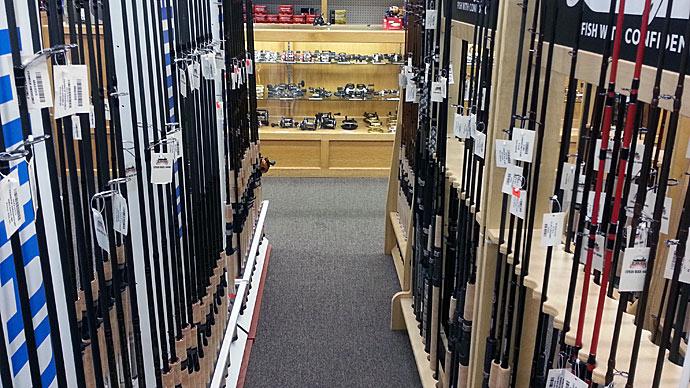
As a whole, fishing rods have become much better in the last 30 years. Not only are they stronger, more sensitive, and more detailed, but they keep getting better. Among the innovations of the last three decades are split grips, micro guides, budget-friendly options, and technique-specific rods.
Split Grips
For years, bass fishing rods had a one-piece cork handle. Many are still made like this, but one trend that began roughly 15 years ago is the split-grip design. The design allowed for reduced weight, a trend that continues today. Another difference for some of these rods built this way is the increased use of high-density EVA foam instead of cork, though many split-grip rods still use cork.
Technique Specific Rods
Most fishing rods can handle a variety of different bass fishing lures and techniques, but rods built specifically for certain techniques have become the norm now. While this may lead to anglers overthinking things at times, having a rod specifically designed for certain fishing lures is also a major benefit. Like golf clubs or tools, you can get it done with more than one option, but it might not always be perfect unless you are using the right one for the job.
Micro Guides
Another trend that emerged was smaller guides, which help reduce the weight on a rod. While true micro guides are not the only thing used now, there is no doubt that rod guides have gotten much smaller, and "semi-micro" guides are now fairly common and still help reduce weight.
Quality "Budget" Rods
Around 2010, there was a big explosion of fishing rods released that had good features, quality components, and didn't break the bank. For around $100, you could buy a very good rod that could do it all. Among these were the bright yellow Skeet Reese rods released in 2009 and the all-white Abu Garcia Veritas. These two stood out for their stark look but were priced fairly and became favorites for how well they performed on the water.
Reels
Fishing reels have also come a long way, and they are as smooth and built to last as ever. Many of the same reel manufacturers from 1996 are still around today, and they've made significant technological improvements over the years.
DC Reels
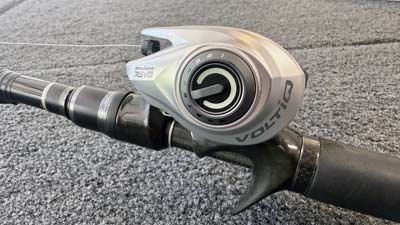
Digital controls on baitcast reels allow an angler to dial down the electronic braking system to aid casting. When set properly, it becomes nearly impossible to backlash a reel. The first mainstream reel with this was the Shimano Curado DC, released in 2018, but Shimano has since added it to other reels in its lineup. More recently, Abu Garcia developed the VoltiQ, which uses the same principle to help with casting.
Daiwa T-Wing
Daiwa has been in the reel game for many years, and, like other brands, it continues to push the envelope with new technology. One of those first hit the scene around 2013: the T-Wing system for the Tatula lineup, a line guide shaped like a "T" that engages and raises during the cast. This reduces friction from the line and gives the angler better distance and smoother casting performance. It's still used to this day and has expanded to many of Daiwa's reels.
Fishing Lines
In 1996, monofilament line was the king of fishing, and while it's still very relevant, braided and fluorocarbon lines have become much more popular. They were both around back then, but they have continued to get better, and there are now many options to choose from.
Fluorocarbon Explosion
The first fluorocarbon fishing line was developed by Seaguar in Japan in 1971. The line was primarily used by saltwater anglers and as a leader material for many years, but now it has become the standard for bass anglers as a mainline.
Fluorocarbons have also become much better and more reliable over the years. Instead of just being tough and having little stretch, anglers today benefit from the manageability of modern fluorocarbon lines that cast well, while still offering plenty of strength and less stretch than monofilament lines.
Better Braided Line
The first noted use of braided line for bass fishing was Randy Dearman at a 1993 Bassmaster event. It became much more popular in the late 1990s with products like the first generations of SpiderWire and Berkley Fireline hitting the market. Those were groundbreaking products, but pale in comparison to today's lines, which are smoother, thinner, and much better overall.
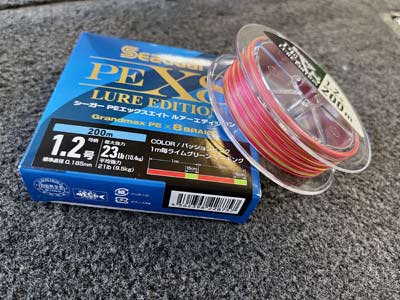
Among the advancements are "micro braids" like Seaguar PE-X8, which is substantially thinner than other braids on the market. This thinner, stronger trend is repeated across many different braids on the market.
One more difference in today's braids is the options available: anglers can use high-visibility lines in some situations and stealthier colors like gray and green when needed. There are also choices with braids using 4, 8, or even more strands of fibers. Today's anglers are lucky to have so many choices when it comes to fishing line.
The last 30 years have been good for the bass angler, as our gear has become much better, more reliable, and often better for the price. The rods, reels, and lines we use now are lightyears ahead of what we were using in the 1990s.