

If you ever watch the SyFy Channel (formerly SciFi), you have probably seen advertisements for their made-for-TV movies on monster fish that will eat you without a second thought. Movies like Snakehead Terror or Snakehead Swamp paint a visual of a mutant fish or one from space that wreaks havoc on unsuspecting communities. These plotlines are exaggerated but "loosely based" on a real-world invasion by a non-native species. However, your kids and pets are probably safe.
In a recent episode of my podcast Fish University, I discussed the invasion of snakeheads with the fisheries biologist, Mr. John Oden-Kirk, who was at ground zero when they were first discovered in the early 2000s in Virginia. It is a fascinating story, and I encourage you to listen to the podcast. However, this article is focused on the real and perceived impacts of the invasion and the growing popularity of the species among anglers.
Snakeheads (in the genus Channa) are a HIGHLY valued food fish in Asia. I eat many of the local snakehead species when I travel to Southeast Asia. They are delicious - possibly one of the best fish to eat. Their flesh is very firm, white, mild, and takes any marinade. It is more like chicken breast than fish to me. So, it is no surprise that the fish finds its way to new areas with the help of its culinary enthusiasts.
Most snakehead species are tropical. Several have been established in Florida and Hawaii, but the rest of the U.S. is too cold for them. The exception to this rule is the northern snakehead (Channa argus), which is native to the temperate climates of China, North Korea, and southern Siberia. When this species was first introduced to the coastal rivers of the East Coast, it found them quite inviting and thrived.
Then panic ensued. The movies didn't help. They're going to destroy everything! Don't let your dogs or kids swim in the water. It was even the topic of one of David Letterman's Top 10 list. For sure, it was the end of the world. People were legitimately afraid to approach the water's edge.
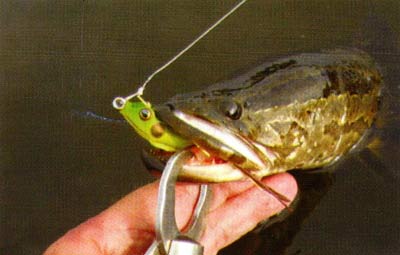
But those doomsday scenarios have not materialized. For the most part, the species has simply assimilated into the community with no evident adverse effects. With the introduction of a novel piscivore, the most likely effects will be through direct predation or competitive interactions. Snakeheads will eat anything that swims in front of their mouths - they are the ultimate opportunist. But they seem to prefer fish, so they may eat other fish species or compete with native piscivores.
The primary prey in the tidal Potomac system is the banded killifish (a.k.a. bull minnows). Surprisingly, the banded killifish population has increased following the snakehead invasion. Snakeheads also really like sunfish, like bluegill. No changes in sunfish numbers have been found where snakeheads have become established. So, at least so far, predation does not appear to be an issue. Further, there cannot be competition if the prey populations are not limited. There certainly is dietary overlap, but since prey numbers have not decreased, there appears to be plenty of prey to go around.
Sure, there could be a specific situation where snakeheads get into the perfect coastal habitat with an endangered species like blackbanded sunfish. In that case, it might be the straw that breaks the camel's back. However, the initial concerns about the ecosystem collapse due to snakehead invasion have not been realized.
Another concern was that bowfin, which have very similar habitats and prey, would suffer from snakehead invasion. But that hasn't been the case. In fact, after snakeheads colonized the Rappahannock River, bowfin numbers increased! So did largemouth bass numbers, a rather essential species to the fishery. Although we do not attribute these increases to the snakehead invasion (the increases are likely due to the expansion of aquatic plants in the river), bowfin and largemouth bass populations certainly weren't negatively affected by snakeheads.
Snakeheads appear to reach maximum population size within the first 20 years of introduction. We may have reached the peak population in the Potomac River, and the ecosystem still appears to be relatively stable. We just are not seeing the effects that were expected. Part of the reason populations don't continue to grow is that snakehead annual mortality approaches 50% in many populations. It turns out that everything native to the system likes to eat snakeheads, and those juveniles that survive the predation to become adults are heavily exploited by anglers and bow fishers. People absolutely love this fish.
They are legal for commercial sale in most jurisdictions, and prices for whole fish and filets are high, often equivalent to fresh red snapper or grouper. And there are no size or bag limits. Thus, the incentive to target this species for harvest and sale is excellent. A good bow fisher might take 30 fish in a night and sell those fish for upwards of $500. That's a pretty good night.
In fact, anglers are complaining that they cannot find enough northern snakeheads to catch. During open comment periods with management agencies, anglers comment more often on snakehead conservation than any other topic. More than largemouth bass, crappie, and catfish. They want restrictions placed on harvest, especially by bow fishers. They want populations managed in a sustainable way.
Think about that for a second. Anglers want to make sure that this invasive species, this monster fish that once threatened their children and pets, is protected so that there's always a bunch out there for harvesting. What's next, hatchery production and stocking of invasive snakeheads?
The real issue is people moving these fish around. Sure, they are migrating on their own - they are very good at it. They are tolerant of poor water quality, strong and athletic, and can breathe air. They prefer to be sedentary, except when they migrate upstream to spawn. But they will also move downstream during floods and enter the Chesapeake Bay when salinity is lower, finding new river mouths when salinity increases again.
But when they appear upstream of a large dam or in an unconnected waterbody 300 miles from the last known population, they clearly had some help. It is just like the feral pig problem. People travel to hunt pigs, enjoy hunting pigs, and then wish pigs were closer to home for hunting. Next thing you know, they are hauling a truckload of pigs in the middle of the night. Snakeheads are like pigs, just easier to conceal. They do not even need water as long as they are kept moist. It is illegal, but that doesn't stop some people.
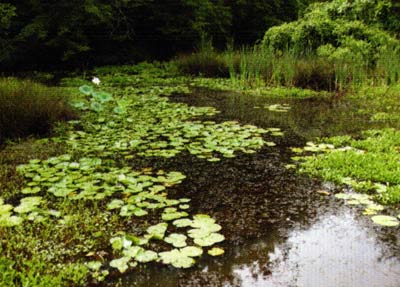
These fish are now found along much of the central-eastern seaboard, in Arkansas, Mississippi, Tennessee, Missouri, Louisiana, Florida, North Carolina, and California. At least one individual was collected in Chicago from Lake Michigan, although a breeding population does not appear to be present... yet. Hopefully, people will stop at that, but I wouldn't hold my breath. Anywhere there is a weedy, swampy habitat, this species will thrive.
I hope not, but you might be thinking, "I have shallow, weedy habitat in my pond, maybe I can release snakeheads and harvest them from time to time. After all, Wes Neal said they are the best fish in the world to eat, and bluegill are a preferred prey item. I have overabundant bream because of the weeds, so win-win, right?"
This is a bad idea on several levels.
It is almost certainly illegal in your state; if not, just don't do it. Never introduce any species that is not native or naturalized to an area, especially something as adaptable as a snakehead. These fish breathe air, tolerate inferior water quality, and slither across land when conditions are right, so they will get out and into surrounding water bodies. According to the SyFy channel, they represent a clear and present danger to you and your loved ones.
Dr. Wes Neal, Extension Professor at Mississippi State, serves as State Extension Fisheries Specialist and is passionate about educating the public on small lake and pond management. He is an avid researcher on farm pond management and sport fish genetics. Wes is the lead editor of Small Impoundment Management in North America, the only textbook on the subject. He loves to hunt and fish, wes.neal@msstate.edu.
Reprinted with permission from Pond Boss Magazine