

It took almost two decades to really begin to understand the relationships between our ponds and their surroundings. As a fisheries biologist, my focus was on growing the best fish in the best ponds, for clients and friends — and for my own ponds.
Early on, I dialed into fish production and soon began to see fish responding to what they were offered. Depending on the type of underwater habitat, this scenario occurred. Depending on different types of habitats, something else happened. I started seeing the consequences.
For example, I analyzed countless numbers of ponds that were totally overcrowded with bass. Early in my career, I correlated that to big numbers of small fish overeating the food chain.
I simply thought it was a "too many bass, too little food" condition—which it is.
It took some time to figure out that over-crowded bass was a deeper consequence than simply removing enough bass and managing the food chain better.
As I continued to digest those situations and many fish tacos, it began to register on a deeper level. What if we dove deeper into the life cycles of all these species of fish and start figuring out what we might do to improve the survival rates of baby fish or encourage growth rates of those intermediate fish with more than just a shot of food and culling a lot of bass?
People building new lakes, we started adding more purposeful spawning beds, surrounded by escape cover for baby fish, even habitat that serves as substrate for periphyton for food for baby fish.
We'd always depend exclusively on fertile water, a bloom, to feed those babies. By giving some thought to habitat as a key element, changes occurred.
It didn't negate the need to harvest bass or add forage fish from time to time, but it added a niche for productivity.
Altering and adding habitat also had an unexpected effect.
I first started seeing things changing at
That's when I began paying closer attention to things beyond the most obvious.
Richmond Mill Lake in North Carolina in 2005, which I'd not really seen anywhere else. It wasn't that these things weren't occurring; I just didn't pay attention until then.
The 125-acre lake had been drained, and several habitat changes had been made. The lake was refilled, and we started an aggressive stocking and feeding program. The water quality was poor, the flow rate was consistently high, and there was no way to improve the water to benefit fish production.
With the new habitat and the fishery propped up feedlot style with feeders and high-protein fish food from Purina, I started noticing changes.
The first observation was around mosquitos. In that part of the country, we had to be inside by dusk or be covered with those nasty little insects. A few months later, I noticed we could stay out later. The upper reaches of that lake were marshy, with airborne, water-based insects such as mosquitoes and midges.
There was no doubt that the incidence of those bugs was declining.
That's when I started noticing big numbers of dragonflies. Dragonflies eat mosquitos. There were dragonflies and damselflies by the thousands, having their way with that lake.
Then, I started noticing way more songbirds than I'd seen.
Water birds began to arrive in greater numbers as the fishery expanded. When bird numbers went up, so did predators of those birds, especially the songbirds.
A pair of ospreys built a nest on the top of a tall pond cypress tree, a tree more than 150 years old. We watched those ospreys grab fish that dared show up at the feeders...which was a lot of fish.
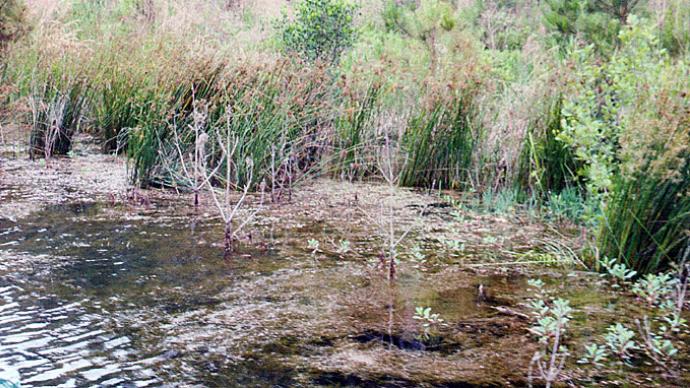
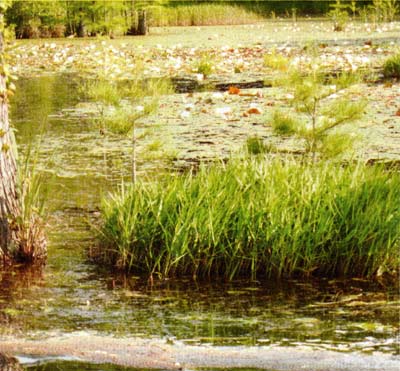
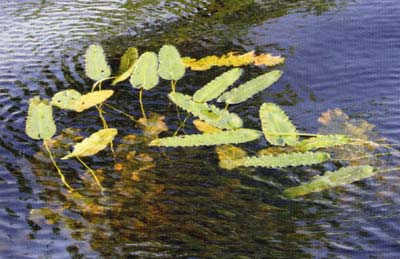
As I looked further into the dragonfly hatches, I began to see their husks attached to floating mats of grass that had grown in shallow, sandy areas, dislodged, and were now floating around. I pulled a long dip net that we used on the electrofishing boat and dragged it under those floating islands. There were literally hundreds of different creatures using that island habitat, some of which were dragonfly nymphs. There were also tiny grass shrimp, too.
Some of the added habitat, especially wood piles, still serve as dragonfly habitat.
It was that lake, which I observed for about five years, that taught me that what we do below the waterline affects what happens above it.
Now, for every lake or pond I study, that consideration is put into practice. Not only do we want to create the very best habitat possible for all the target fish species, but we also want to consider some of those small details for insects.
Look at it this way—fish love to eat insects. We'd like to produce dragonflies. The juvenile dragonfly nymphs need escape cover and food. Rock piles near the shore are a good idea. I started noticing that ponds and lakes with riprap also tend to have more dragonflies.
Aquatic insects are a key component in healthy ponds and also provide a living bridge between what happens below the waterline and what goes on above it.
As you think through your pond management strategy, give some thought to things you can do to help above the water line.
While figuring that out, observe. Look past the obvious, and you'll likely see something that triggers a deeper thought and entices you to offer something to your pond it could use to help you.
Reprinted with permission from Pond Boss Magazine