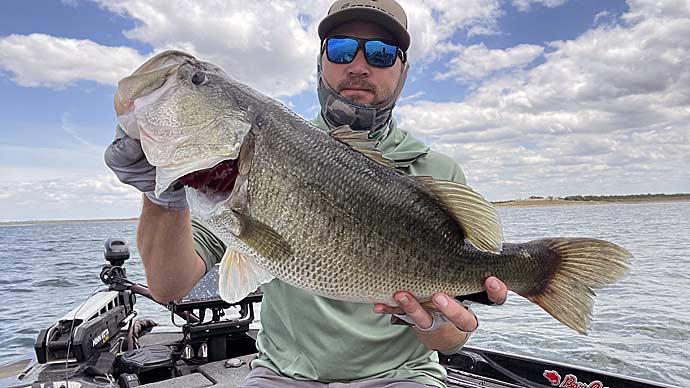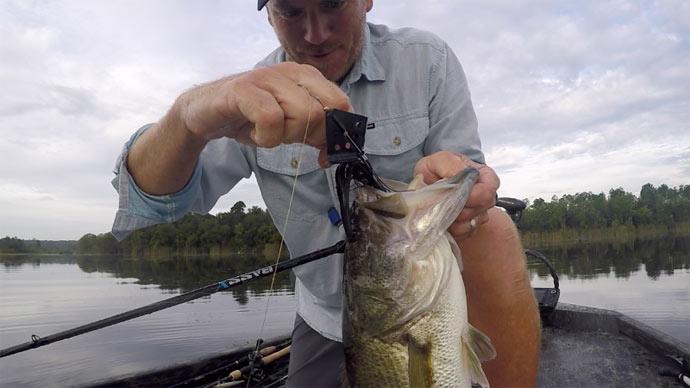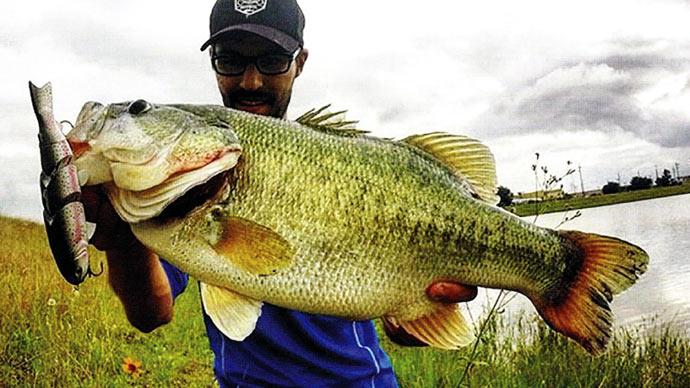


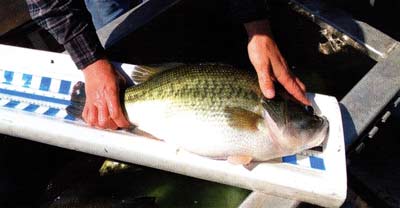
If one of your goals is to catch your biggest bass ever, or if you're looking to catch big fish regularly, here are a few tips that I've learned over the years.
Timing: When planning a trip well in advance, try to schedule your trophy trips for times when big fish are most accessible while also matching your fishing style. Prespawn is the undisputed best time on most lakes to catch the year's biggest bass. Running from January through March in the most southern states such as Florida and Texas, through April and May, and even June in northern states, not only are bass at their highest weights for the year, but almost all of the fish in the lake are concentrated in ten feet of water or less. This combination of heavy fish in small lake areas makes it the shallow water fisherman's dream, with jigs, spinnerbaits, and swimbaits being top producers.
The spawn is also a great option if you prefer sight fishing or fishing with weightless soft plastics like Senkos in the shallows. The summer months are an ideal time for deep-water fishermen to catch schools of monster bass on deep structures.
When scheduling trips to nearby lakes on short notice, try to pick the days with ideal conditions. The day of a big front can result in incredible fishing. I've had many of my best lunker days on the cold, rainy, and windy days after severe cold fronts. Although windy conditions can be unpleasant for anglers after a front, the water usually takes a day to cool considerably, resulting in a good bite until the skies finally clear and the wind lies down.
Speaking of sunny and calm, those are comfortable days to be in the boat, but I usually find the bite to be a lot better on windy and cloudy days.

Finally, the best scenario for a bass fisherman is stable conditions. If the water and the weather conditions stay the same for several days, the best pattern will typically stay the same. As a result, once you figure out the fish, you can duplicate your results until the conditions change. Big fronts make for great fishing for a few hours, while stable conditions can make for great fishing for days.
Fishing Style: The best advice I can give you when hunting lunkers is to come early and stay late. It sounds rather simplistic, but there is usually a particular time each day when the fish seem to be "on." Some days the active period lasts for a long time. Other days, it is a short window. Regardless, if you're not fishing when the bass are actively biting, you've missed your best window of opportunity.
During your time on the lake, focus on slightly deeper water and thoroughly fish key areas. Even when I catch big bass in the very backs of creeks, they're typically near quick access to deep water or holding slightly deeper than most of the bass in the area. Especially in the springtime, your odds of catching a true lunker go up dramatically if you remain two casts away from shore, throwing into the area where most of the boats fishing the shore are setting. Once you find an area holding big fish, work it over very thoroughly.
Productive big fish areas produce consistently each season. Check them several times a day with different lures in key spots, making repeated casts to likely areas. It never ceases to amaze me that big fish will often bite after you've already made thirty or forty casts in the area. I don't know what eventually triggers those fish to bite, but if you keep your lure in front of big fish long enough, good things happen.
How long should you commit to a single spot? There's a fine line in fishing between persistence and stubbornness. Throwing a big swimbait or pitching a jig all day for a few big bites is being persistent; not getting a single bump all day tells me that I'm being stubborn and not giving the fish what they want.
Lures: While many lures and techniques will catch big bass, there are a few basic lures that catch the lion's share of lunker bass. First and foremost, a jig with a matching Rage Craw trailer produces big fish, both shallow and deep, year-round. Big bass love the heavy cover, and you can bring a jig through the nastiest wood or grass where the lunkers are hiding. On those post-frontal days, I often find bass pulling back from the flats and forming tight schools in creek channel bends or on points. Thoroughly work a jig in these areas. You can catch multiple big fish from a tiny area.
When bass are up on the flats and chasing, a big spinnerbait slow-rolled around grass and wood allows you to cover more water than a jig while still appealing to big bass. I prefer big 3/4 spinnerbaits for lunkers, with a full-sized trailer like a four-and-a-half-inch Ragetail Swimmer. Spinnerbaits are usually the first bait I'll grab if it's rainy or windy in the spring.
In recent years, big swimbaits have become major lunker producers due to their lifelike swimming motion and large size. Whether shallow or deep, I'll always give large soft plastic swimbaits a try when I'm shooting for monster bass. My current favorite is the 5 3/4-inch Ragetail Swimmer. By simply adding weight to a large, wide gap hook, I can fish these swimbaits at a range of speeds from one to thirty feet of water.
The common denominator among all these lures is that I can fish all of them very slowly and bring them through heavy cover. While the occasional erratic stop-and-go can trigger a bass to strike, slow retrieves and even leaving a bait motionless are the best retrieves for big fish.
Hopefully, these few tips stack the odds in your favor for catching a lot of big fish this season.