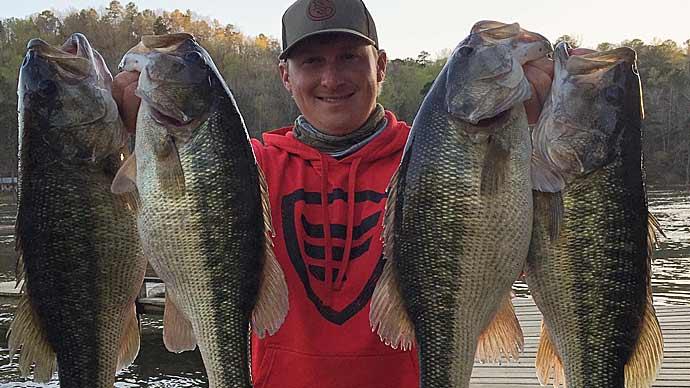


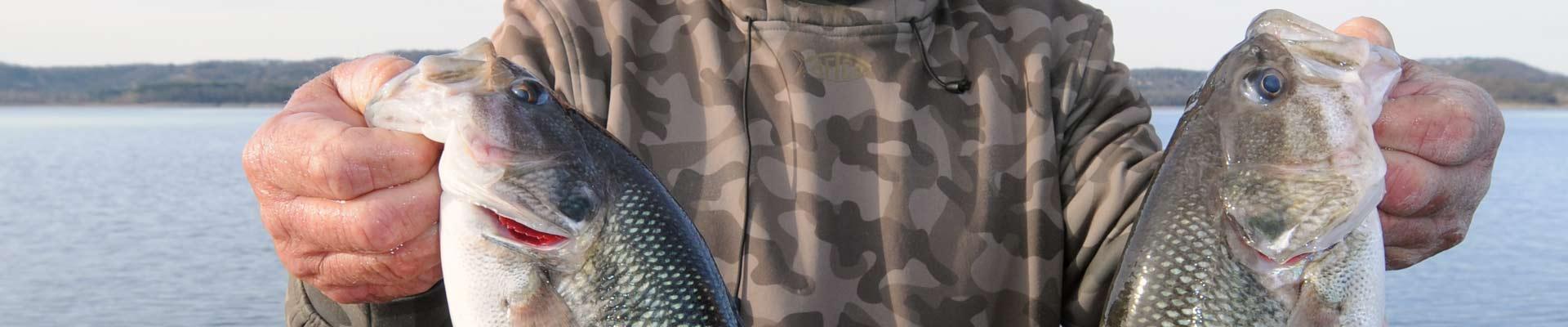
Spotted bass have a mean streak due to their slower growth rate, shorter life expectancy, and constant competition for food.
Unlike their largemouth cousins, a spotted bass grows more slowly, lives a shorter life, and frequently schools with other spotted bass, so it develops a mean disposition and attacks anything before the fish’s schoolmates get to it.
“The spotted bass seem to school up a lot more,” says Table Rock Lake Guide Pete Wenners. “They run more in groups, and when you get around them, you usually catch several."
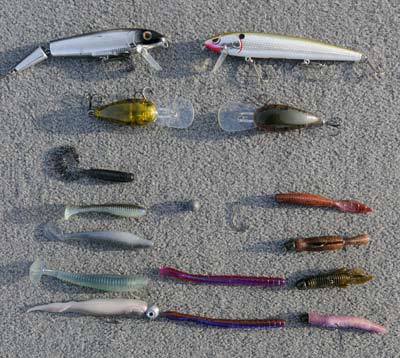
When guiding on his home waters, Wenners relies on the following five rigs or lures to catch spotted bass throughout the year.
Ned Rig
Throughout his years of guiding, Wenners has discovered that spotted bass prefer eating small crawfish, which contain more protein than baitfish. He suggests the Ned rig is a good small crawfish imitator that spotted bass savor like a protein bar. “When they are on a good crawdad bite, the Ned rig is really hard to beat,” Wenners says.
Lure choices: Wenners favorite baits for the Ned rig are a 5-inch Yamamoto Senko cut in half and Missile Baits Micro D Bomb.
Lure colors: Green pumpkin, peanut butter, and jelly in clear lakes and Bama craw (dark brown/orange) in dirty water.
Jig sizes: 1/16-, 3/16-, and 1/8-ounce for fishing less than 20 feet deep; 1/4-ounce for more than 20 feet deep.
Structure and cover: “It is a really good bait in the spawn when the spotted bass are up on the gravel banks moving into spawn,” Wenners says. “In the wintertime, the bass are on 45-degree banks with a lot of ledge and chunk rocks." Most of the time, he likes to fish the rig around what he calls “crawdad rocks” (football-sized rocks).
Retrieve: Wenners describes the Ned rig retrieve as similar to a jig presentation, with the rig dragged and hopped along the bottom. “A lot of times I have people just cast it out towards the bank, keep the boat moving really slow, and when the bait gets behind the boat, I have them make another cast,” he says.
Tackle: 6-foot, 8-inch to 7-foot medium action spinning reel, 2000 or 2500 spinning reel, and 16-pound Sunline sinking braid main line and 8-pound fluorocarbon leader.
Drop Shot Rig
Wenners favors the drop-shot rig for vertical fishing in deep water with Garmin LiveScope forward-facing sonar (FFS), or dragging it along the bottom when spotted bass are shallow.
When he has to contend with a lot of moss on the bottom in the spring, Wenners prefers the drop shot rig over the Ned rig because the drop shot lure stays off the bottom better. "In the summertime, when we start to get a thermocline, those spotted bass really get grouped up in that 25-to-35-foot range, and then we will do a lot of vertical fishing (with the drop shot).”
Lure choices: Missile Baits Mini Magic Worm.
Lure colors: Missile morning (purple) and John’s juice (peanut butter and jelly).
Rig components: He threads the worm onto a 2/0 Gamakatsu drop-shot hook and drops a 1/8- or 1/4-ounce ball weight 12 to 16 inches below the hook.
Structure and cover: In the springtime, Wenners employs the drop shot along transition rocky banks near the spawning pockets. In the summer, he fishes it over brush piles and the tops of standing timber.
Retrieve: When vertical fishing, Wenners drops it straight down to the fish he sees on LiveScope and shakes it in front of them. He will also cast to the bass, let it fall to the school, and then shake it.
Tackle: 7-foot medium-light action spinning rod, 2000 or 2500 spinning reel, and 16-pound Sunline Almight sinking braid main line with an 8-pound fluorocarbon leader.
Swimbaits/Minnow Baits
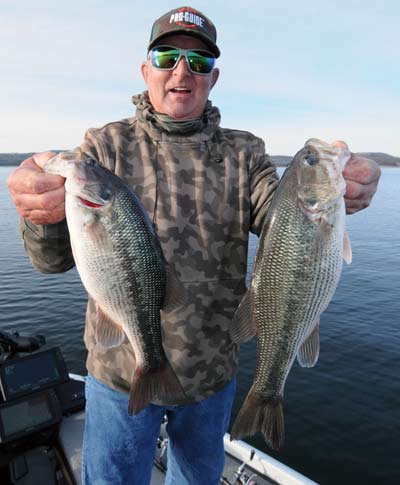
Before paddletail swimbaits became popular, Wenners used to throw 4-inch curly tail plastic grubs for spotted bass, but now he prefers the livelier action of the paddletail bait. He notes that the plastic grub and swimbait are among the easiest baits for his clients to throw because they can just cast them out and reel them in to catch spotted bass. The Missouri guide favors the straight-tail minnow bait or fluke-style bait in cold water when bass are lethargic and switches to the paddletail and curly tail when the water warms and bass become more aggressive.
Lure choices: 3.5-inch Missile Baits Shockwave swimbait and 4.25-inch Missile Baits Freedom Flyer minnow bait.
Lure colors: Bombshell and Fisholicious for the swimbait; Live minnow and Arkansas Shiner for the minnow bait.
Jighead sizes: Wenners opts for 3/4- and 1-ounce heads in the winter when spotted bass are 60 to 70 feet deep. When fishing shallower, Wenners hooks his swimbaits on a 1/8-ounce Missile Baits Eye Roll jig head.
Structure and cover: In late winter and early spring, Wenners works his baits over submerged timber in deep water close to the spawning banks. The spotted bass are usually suspending 10 to 20 feet deep, possibly over depths of 50 to 60 feet. He also likes to throw the paddletail swimbait as a follow-up lure when spotted bass miss his topwater lures during the postspawn and throughout the summer.
Retrieves: While watching spotted bass on LiveScope, Wenners tries to keep the paddletail lure above the fish as he steadily swims it over the school. When fishing with the minnow bait, Wenners keeps the lure above the bass and shakes it more.
Tackle: Same setup as his Ned rig.
Crankbaits
Wenners relies on medium-diving crankbaits when bass are feeding on crawfish in the 8- to 14-foot range during the spring and fall.
Lure choice: Spro Rk Crawler.
Lure colors: Reds and browns in the springtime. In clear water on sunny days, Wenners likes a translucent bait; on cloudy days and in off-color water, he opts for a solid color.
Structure and cover: Gravel mixed with hunks of ledge rock along channel swing banks in creeks or on the main channel.
Retrieve: Wenners cranks the lure slowly in the early spring and then speeds it up once the water starts warming. He tries to make the lure deflect off the bottom or some cover. “Any time that bait hits something is when you will get a lot of your bites.”
If the crankbait fails to hit anything, Wenners will pause the lure occasionally and then crank it again. “A lot of times a bass will be following that bait, and when you stop it and start it back up, it changes the action of that bait, and it triggers the fish into biting.”
Tackle: 7-or 7-foot, 2-inch light action graphite casting rod and 7.5 gear ratio baitcast reel with 10-pound fluorocarbon line.
Topwater Wake Bait
When the water temperature reaches 55 degrees, Wenners always has a topwater bait on his boat deck. Spotted bass start grouping up and chasing shad to the surface, then. The topwater wake bait becomes an effective lure for spotted bass, especially in clear water and calm days when the water surface is slick as glass from early summer to late fall.
Lure choices: Spro Zero Minnow and Berkley Surge Shad.
Lure colors: Bone for cloudy days and chrome/black for sunny weather.
Structure and cover: Main and secondary points, bluff ends, channel swings, tops of standing timber, brush piles, and docks. During the postspawn, spotted bass start suspending 10 to 15 feet deep and pick off shad that are spawning higher in the water column.
Retrieve: Wenners has his clients keep their rod tip high and reel slowly and steadily to make the lure wake on the surface. Cranking the lure too fast will cause it to dive.
Tackle: 7- or 7-foot, 2-inch light action casting rod and 7.5 gear ratio baitcast reel with 12- to14-pound Sunline Supernatural monofilament.