

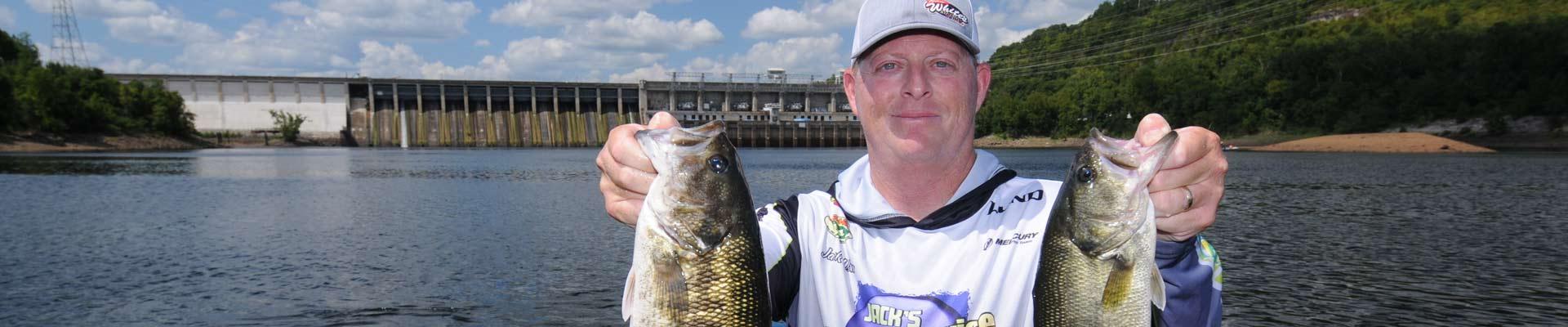
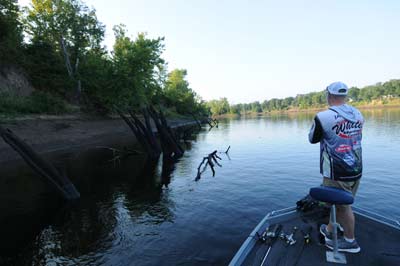
During late summer, Jack Uxa tries an alternative to bass fishing on his home reservoir.
Uxa guides on Missouri's Lake of the Ozarks most of the time, but when late summer arrives, he prefers taking his clients below the reservoir’s Bagnell Dam to fish for bass on the Osage River. The hot water on the lake creates oxygen depletion problems, making fishing difficult, so Uxa favors the river because it has more favorable water conditions for bass. “A manmade disturbance coming through the dam creates some oxygen, plus the water is cooler down below the dam, and anywhere you have moving water, you will have cooler water,” Uxa says. “Bass in the river have a lot more energy because that water is cooler. They are feistier and the bass are shallower (than on the lake).”
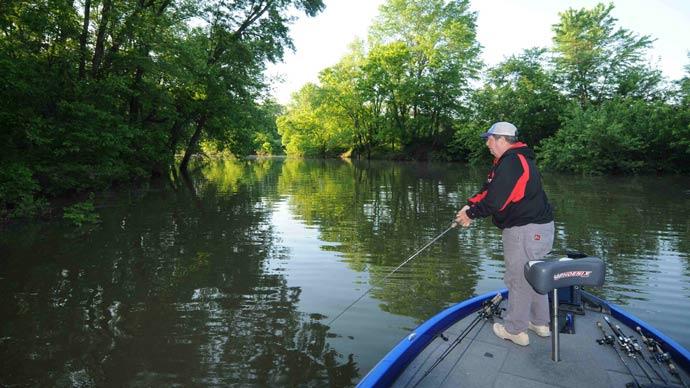
The shallow water of the river makes it easier for Uxa's clients to catch bass. “Twenty feet is considered deep on this river,” he says. “I have caught bass at times down that deep, but generally I don't fish that deep, even though I am very comfortable with my electronics. I just don't find the active bass in the really deep water." Most of the time, Uxa positions his boat in 5 feet of water and casts to depths of 2 feet.
The Missouri angler suggests fishing on rivers influenced by dams can be tricky due to fluctuations in water releases from the dam. “It can definitely mess with you and make things harder, or it can make things better,” he says. “It is hard to predict. One thing I don’t like is when it has been high water for a long time. I try to fish on the river when the water level is more consistent.” During a late summer trip I had with Uxa on the river, fishing was slow in the morning, but we noticed the bite turned on when water started flowing from the dam, and bass continued to smash our topwater offerings even in the afternoon.
Best Locations
The Osage River Uxa has all three species of bass--largemouth, smallmouth, and spotted—so he keys on different areas of the river to catch each type of bass. Uxa finds largemouth hanging around more clay banks where erosion from the fluctuating water flows has caused trees to fall into the river to create ideal cover. Some largemouth can also be caught along the rocky banks, but the wood cover is best for targeting quality fish.
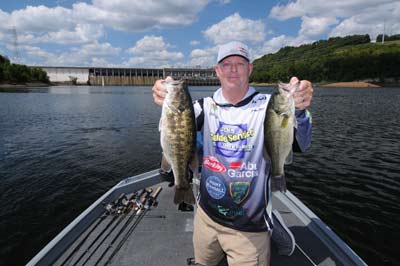
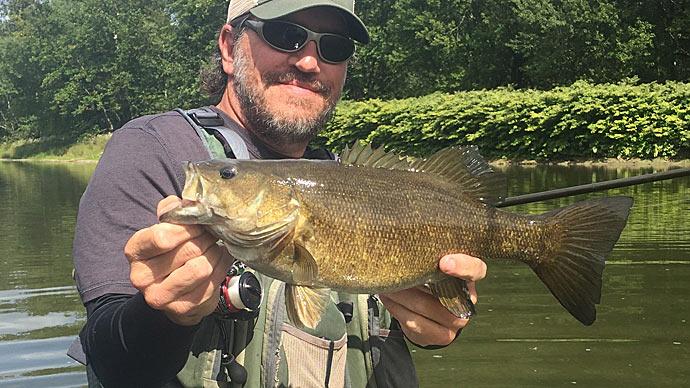
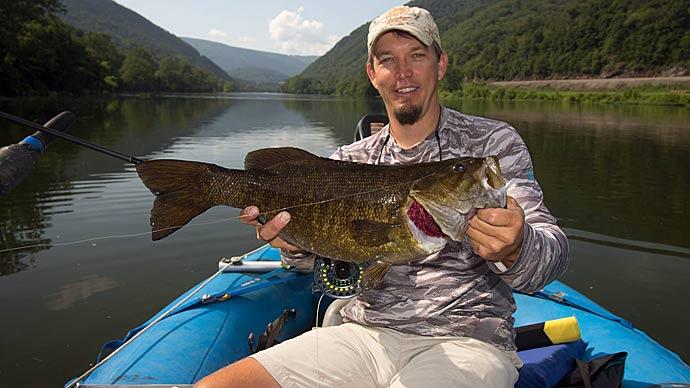
Smallmouth tend to hang around shallow rocky banks or boulders in deeper pools. The brown bass also prefer a faster current than the largemouth, which tend to hang in slower water and eddies.
Uxa notices he can find spotted bass nearly everywhere on the river, whether it's in wood, rocks, current, or slack water.
When he wants his clients to catch numbers of bass, Uxa keys on the channel swings where there is plenty of rock and current. If he wants to catch quality bass, Uxa looks more for isolated cover. The day Uxa and I fished, we caught the majority of our bass around little areas close to fast-moving water that was creating eddies near the slack water.
Best Lures
The Berkley Choppo 90 topwater lure in a bone hue is one of Uxa’s favorite lures for late summer bass on the river. “You can cover a lot of water with it,” Uxa says. “Most of the time, I am buzzing it like a buzz bait, but you can experiment with the retrieves. There are definitely times when you can stop it when you get it next to a sweet spot and try to call up the bass a little bit.”
Another good topwater option for Uxa to cover water quicker on the river is a 3/8-ounce buzz bait. “The buzz bait can go into the nastier cover better than a topwater bait that has treble hooks,” says Uxa, who presents the buzzer with a moderate-speed steady retrieve. The guide throws the Choppo and buzz bait on baitcasting gear with 17-pound test line.
A tube bait is Uxa’s favorite lure for pitching to river bass in thick cover. He favors a 4-inch green pumpkin Chompers Tube Ultra matched with a 3/8-ounce Chompers Weedless Tube Jig Head that he pitches on baitcasting gear with 15-pound fluorocarbon line.
During tough fishing conditions, such as calm, sunny days on the river, Uxa sets up his clients with a Ned rig consisting of a green pumpkin or brown Z-Man Finesse TRD or Berkley PowerBait MaxScent Lil’ General worm with a 1/16 or 1/8-ounce weedless jighead. “It is a heck of a bass catcher,” Uxa says. “It’s definitely a bait you have to have when you go fishing any kind of river.” The guide casts the Ned rig on spinning gear with a 10-pound braid main line and a 5-foot-long leader of 12-pound fluorocarbon.
The river bass Uxa’s clients catch tend to be smaller than their reservoir cousins. Most of the bass his clients catch are in the 1- to 3-pound range, but they provide a lot more action than the reservoir bass on those hot late summer days. Uxa notes they can catch 35 bass or more on even the hottest dog days of summer.