

The Baits
Medium-Diving Crankbaits -- https://bit.ly/3CDH4DL
Seaguar Tatsu -- https://bit.ly/3lHBVi3
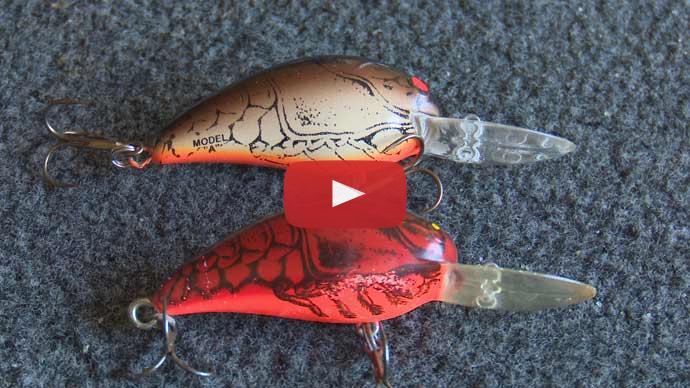
It's September, which means crankbait season is upon us. It is time to break out those crankbaits. But not any crankbait will do. You gotta figure out the right crankbaits. You got to figure out how to fish them correctly and then where to fish them. So, let's start right away here with the right kind of crankbait. Those medium-diving crankbaits is what you want. They have the perfect bait size, they're smaller bait size, which is what the bass are feeding on right now. And they got the right kind of action, and they get down to the correct depth,that 5 to 12-foot zone, that's where the majority of the bass are gonna be heading to here in September. Now, how do you choose the right one? Because there's a lot of medium-diving crankbaits out there. So, let's narrow this down. How do you figure out what are the right ones to get?
First of all, it's the bill. The bill is gonna be about as long as the body, give or take a little. That's the first thing. The second thing is the bill is gonna either point straight out or a little bit down and have a wider nose to a more rounded nose to that bill. That does several things. The bait itself will run like this through the water. Some people think they run like this, but no, they run like this through the water. And that makes a big difference because the hooks will trail behind it. This way, the body actually blocks obstructions. It keeps the hook relatively weedless. This is why you need a round body and not those flat-sided crankbaits, but a rounded-body crankbait does that for you. It protects those crankbait hooks. The other thing it does is it provides a wider wobble. And this is key right now. This time of year, that wider wobble, that more aggressive action, that is what attracts the bass. That's what they're going after. They're more aggressive themselves. So that type of action really attracts them and you're gonna generate a lot more bites. Those thinner bills and thinner body crankbaits, those don't come into play here in September. So put those down.
Now, just because it says it dives 8 feet deep, for example, doesn't mean it does it on every cast. There's some things that you need to do in order to make sure that it gets the maximum depth every time. First is long casts. And to do that you gotta have the proper rod, which is about a 7-foot-4 to 7-foot-6, moderate power, medium-action rod. And then what that does is it gives it that flexibility. It acts more like a slingshot. When you cast, it flings that lure way out there. The farther out you can get it out there, the more you can get it down to the right depth and keep it at that depth before the crankbait starts to come back up to you as you do your retrieve. So that's number one.
Number two, you need a thinner diameter line, maximum 12-pound fluorocarbon line. Get it down to 10 or even 8-pound, even better. I like to use fluorocarbon for a couple of reasons. Fluorocarbon, number one, it sinks, it doesn't float. Braid is buoyant. So, braid is gonna lift up on your crankbait, and it's gonna prevent you from getting the maximum depth. So, fluorocarbon, no braid to fluorocarbon line or anything like that. It's all straight fluorocarbon. Fluorocarbon also has a little bit of give to it, a little bit of stretch. And some guys over-exaggerate how much stretch they have, but they have a little bit of stretch, which is great. You know, the treble hooks on them, they have a small bite to them. And if you've got a line that doesn't have any stretch in it, like braid, bass can use that as leverage to rip free of the hooks, or you might pull too hard and rip the hooks right out of the fish's face. So, fluorocarbon has a little bit of a give to it and helps keep the fish pinned. So those are the reasons I use that, again, a 12-pound, 10-pound line, that helps you get maximum depth.
Another thing that you always do is keep your rod tip pointed down towards the water. If you got your rod tip pointed up in the air, the difference between where your rod tip is when it's pointed in the air versus when it's pointed down to the water is a good 5 to 7 feet, depending on your height and the rod. That's a huge difference when it's a crankbait that dives 8-foot maximum depth, right? I mean, that's a big difference. So, keep your rod tip down towards the water. And there's nothing that says you can't stick your rod tip in the water. Paul Elias actually invented the technique called kneel and reel. He would literally kneel on the deck of his boat and jam his crankbait rod as far into the water as it could go. And he'd get an extra 6 feet or so of depth out of his crankbait. Now back then he was trying to reach depths of 20 feet or so with crankbaits that weren't designed to reach that depth. They didn't have crankbaits back then that could reach that deep, so that's what he did. And he won a lot of tournaments doing that. Nowadays, you know, you've got crankbaits that will go 25, 30 feet deep, even deeper. So, you don't necessarily have to kneel and reel. But the point is, get that rod tip down to enable your bait to get to its maximum depth.
The other thing is slow down your retrieve. If you're burning it back too fast, your crankbait will drag through the water. You're pulling it through the water, the bill isn't doing the job anymore. The bill catches resistance and helps dive. But if you're pulling it too fast, it just yanks it through the water. And in fact, if you really burn it back, it starts to do this. It can even do loop-de-loos and do some crazy stuff. Not always a bad thing. I have caught some good-sized fish doing that. That's an oddball technique, but it can work because it really introduces some irregularity into your retrieve. You think the crankbait's broken, but bass will annihilate it, sometimes. So that's a little trick you can try. But for the most part, you wanna get depth, cast it out there, reel it down fast a couple of times for it to start to dive, and then slow down your retrieve and let the bill do the job. The bill will get it down to the proper depth and keep it down there if you keep it at a moderate retrieve.
Now, next, you have to be throwing the crankbait in the right places in order to get bit. So, you have to identify the best places to fish. Now, those can vary between reservoirs, rivers, and lakes, and I'll get into that in a second. But all three of those bodies of water, there's three characteristics that you wanna look for. They all share the same thing. Number one is the depth. A couple of things about that. Now, the fish have been pretty much deep all summer long. Now they're moving up shallower, chasing baitfish. So, they're not gonna be so deep. And also in the summertime, they were mostly focused on vertical structure, steep banks, steep points, even ledges. Those are the type of things that bass were hanging out here in summer. Well, now they're starting to head up into the coves, end up into protected bays, and those steep banks aren't a factor anymore.
So, now you're looking for more gradual slopes, but within those you're still looking for these depth changes. They're just not gonna be as dramatic. So, a 2-foot depth change in a short period of time within those areas, that's gonna hold a bass. They'll use that as ambush points, especially if there's cover nearby, like weed line or maybe some boulders or something they can snug up against. Within that little drop, that's a perfect ambush spot for a bass. So, look for those little, smaller drops, or maybe it's a shallow creek going towards the back of a cove, they might get in next to that. So those are the areas you wanna key on.
Another thing you want to look for is hard cover. The bass, a lot of times, they've been up in the vegetation right now. They've been buried up in those weeds. They've been using them, patrolling the weeds, looking for baitfish. Well, nowadays are getting shorter, air temperatures are starting to drop, the water temperatures are starting to drop. Those vast areas of vegetation are starting to generate less oxygen. And the baitfish, they need abundant oxygen. So, they're gonna start pulling out of those weeds, and so will the bass. They will instead shift their location to hardcover, like rocks, logs, stumps, dock pilings, bridge pilings, riprap, you know, stuff like that. Now, they're not gonna pull completely out of those weeds. So, if you find areas of vegetation that have these things in them, the bass are just gonna move more towards those hard objects within those weeds. This time of year, in September, that's what they're gonna be doing. Now, as fall progresses, they're gonna really start pulling out of those weeds and getting more and more of those hard cover areas. But right now, just find those areas, start to target those. You'll see that the bass will start to gravitate toward those areas.
The other thing you wanna look for in these bodies of water is some form of current. Now, I'm not talking about wind blowing current because that comes and goes and changes and is not very reliable. But obviously, in a river, okay, you've got your back eddies, you've got your current breaks. If you fish rivers a lot, you know what I'm talking about, there's anything that breaks the current, like a wing dam or what have you, the bass will sit there and those current seams where they'll set up on and you can target those current seams in the fall and catch a lot of bass. If you're in a body of water that doesn't have that abundant current, like a reservoir, or maybe you're in a lake, you still have an inlet and an outlet, and there's some current going through them. And with September, you start to see more floodfronts come through with rain. And that increased rainfall increases the waterflow coming through these areas, and you're gonna get some amount of current. So, look for areas that, again, bass can set up on using this current as nutrients wash down the body of water. So, points, humps, again, docks, anything that can block current where they can set up behind it. Bridge pilings are excellent places to fish, things like that, that's the places you want to target in these bodies of water.
So, let's talk about those three bodies of water and get a little bit more specific, starting with reservoirs. Now, as we're in the early part of fall, bass are gonna start moving up shallow, chasing that baitfish. And they're gonna start off by going in those shallow, or, you know, small main lake coves, those little protected pockets that are right off the main lake. And the ones that are near tributaries, bigger coves, those places where the bass are gonna be later in the fall, those can be hot spots if it's near those areas. You know, a big point that comes out, and there's a little cove right next to it, that could be a hot spot. Also, as you start to go back in those larger coves, if you got secondary points right there near the entrance, those are gonna be hot spots right now. Those bass are start going to begin staging in on those secondary points and the main points leading into the backs of those coves and tributaries. If it sounds like I'm talking about pre-spawn fishing, well, guess what, it's very similar to that. The bass are migrating shallower just like they do in the pre-spawn and they're gonna use those same migration paths and those same stopping points to set up as they make their way shallow. So, if you know of areas that you fish in the pre-spawn and they're productive, they're probably gonna be productive about this time of year too.
Now, another area that you want to explore in reservoirs is where the river comes in. Not necessarily go up the river and actually into the river. But where the river comes in, there's still a channel there in a little bit deeper water, and it's pretty defined. And on each side of that channel there's flats. Now, those flats are going to be really productive, especially if you got isolated hard cover, like a tree that's getting flat, or bushes, or a stump, or rocks, something like that that's gonna hold them. Even just a stub, a stick. You know, it used to be a tree and a beaver came and cut it down. You got a little stub of a stick. It can hold a 4-pounder sitting right next to it in an otherwise vast and featureless bank. Just something like that doesn't take much to hold fish. Make multiple casts because it's not uncommon for you to catch three, four, maybe more bass off of one spot this time of year. They will congregate up on those areas. So, those are some areas I would fish for reservoirs.
Now, if you're fishing a natural lake, sometimes you get a little tired of people talking about creek channels and tributaries because you really don't have those in a natural lake. What you have is a lake that's ringed with vegetation and oftentimes docks. Well, here's how you go after them in September. First of all, in early September, in particular, the bass will be up there in the vegetation. They will be chasing down those baitfish. But just like I mentioned previously, they'll start to move to the hardcover. So, yeah, it's always good to cast around the outside edges and inside edges of those weed lines, but also look for those isolated hard cover areas, either in the vegetation or by themselves. Again, dock pilings, isolated boulders, brush pile, stumps, anything like that, definitely areas I would target this time of year.
Another thing you wanna target are structure areas. So, first of all, a point, okay, that does the whole water column. So, fishing points is always a good idea, but especially true on natural lakes in the fall. Sometimes you can just go point to point to point, and that's your day of fishing. You can just catch fish all day long on them, especially if there's a deeper weed line on them or some other type of cover. But also humps or ridges, you can find them in natural lakes. And when they come up shallow out away from the main shoreline, that can be an area where the bass will congregate, especially if there's, like, a patch of weeds on top. You can fish that outer weed line and on the edges and drops of those humps or those ridges or shoals, as some people call them. Those type of types of cover and structure is what's gonna attract the bass. So definitely target those areas in a natural lake.
Now, if you're in a river system, one of my favorite places to fish is riprap because riprap contains all kinds of forage, not just baitfish, but even crawdads and whatnot and the bass will get in there and start feeding on them. Now, if you got a long expanse of stretch of riprap, I wouldn't fish just from end to end. That can be, you know, hit or miss. What you wanna do is target things like irregularities in the riprap, you know, a little point that juts out or a little indentation, anything that's got a little bit of regularity, especially with the current going over it. Those are the things you want to target. Culverts also can be very productive. Where there's a depth change along that riprap and comes back up. You wanna target those depth changes and definitely target the outer ends of it where it transitions to a different form of bank. Those transition areas can be hot spots. So definitely target those areas as well. But if you do that, you can cherry-pick your way down a long stretch of riprap and be a lot more productive than covering the entire stretch. So that's definitely one of the things I would target.
Now, lay downs can also be a big deal. You know, a tree that's laying down in the current can attract all kinds of fish. Make sure you work on the outside edges of it first and then work your way in. I would do the outside edges with faster horizontal baits, like a spinnerbait bait or crankbait. And then when I get towards the inner part of that tree, flip and pitch it with plastic baits would be a very productive way of doing it. Also, if you got some islands or bridge pilings, definitely fish the back eddy areas of those. Fish the current seams where that bridge piling breaks the water and the water comes around, and you've got the seam. Definitely fish along those seam areas.
Same with the islands. You can fish on each side of the island where the water meets the slack water areas. Those can be really, really productive areas. Backwater areas, little eddies, and backwater, a lot of times fish will set up there for the wintertime, and they'll start making their way there at this time of year. So, fishing those back...just towards the entrance of those, don't go all the way. If it's a large back cove, you know, don't go all the way back there right now, but towards the mouth of the river, those little backwater areas where the current meets that slack water and then you got that ripple, that seam, those are areas you need to target.
So, with all that in mind, you're gonna catch a lot more fish this time of year. Hope that helps. For more tips and tricks like this, visit bassresource.com.