All right, it's early spring. I mean, really early spring. It's just starting to get around the corner here, just turning the corner from winter. What I mean by that is when the water temperatures just breach that 50° mark, right, get up in that upper 40s, right around 50°, we're talking early spring. That's an inflection point where the bass start to get more active. That's because the bait fish and the forage start to get more active too. So your tactics change a little bit. All all this winter you've been dragging baits. Fishing really slow and fishing deep.
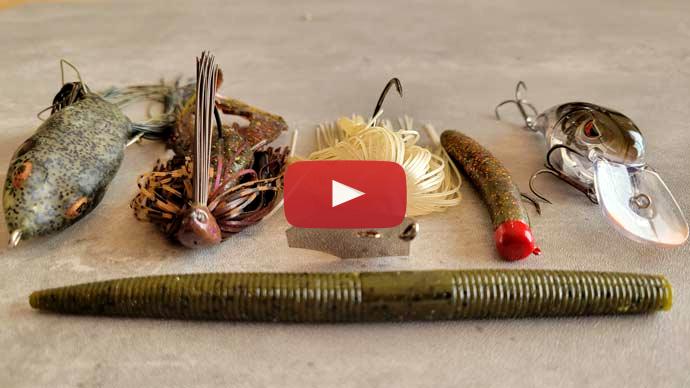
Now you change it up a little bit here, what we're doing is we're trying to a couple of different baits, a couple different tactics. We're going to start with Alabama Rig.
Yeah, Alabama rig, You know, it's a real producer during the winter time. And it still produces here in the early spring. The key difference here is, first of all, you're fishing in. Steep rocky banks, steep rocky areas and the deeper points that are, you know, right on the edge of going into a spawning flat, maybe even a secondary point. But those are the areas that you want to target with the Alabama rig. And here you're just slow rolling it, just cranking it real slow along the bottom. So in order to do that, you can't use real heavy weights because you have to crank faster. So use no more than 8 oz jig heads on your Alabama rig. Use those 3 inch, 3 1/2 inch minnows on them. You can slowly roll it right along those rocky areas with those bass or staging, getting ready to move up shallow as the spring presses and you get into the mid 50s. You can now transition a little bit more to the. Gravel bank areas that aren't as steep, more of a slope and get a little bit further back to those docks and such. As those fish move up shallower, you can follow them with that Alabama ring. So definitely use an Alabama rig this time of year.
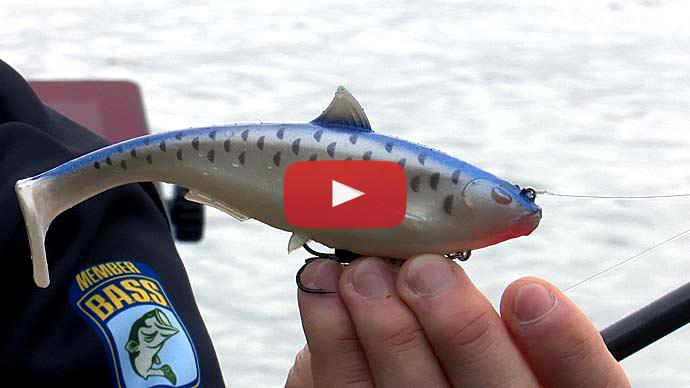
The next bait that I that's I like to use and across the country is very, very popular right now, which is a suspending jerkbait. Suspending jerkbaits are killer this time of year. This is arguably the best time to be throwing a suspending jerkbait. So what we do with those? Again, you want to target those rocky banks. Also those deep weed lines brush piles. Those uh rock piles, things like that, that are still deep. I'm talking, you know, 5 to 20 foot deep. In those entrances going into those coves, you work that jerkbait up to that, let's say a brush pile. Work it up to that brush pile and then let it sit, let it suspend, just let it hang out. Wait a while and give it a little nudge, just a little twitch with the rod tip and let it sit again. And if there's any bass sitting on that brush pile, you got their attention. And those little twitches, those little nudges, that's usually also it takes for them to come up and just and take it. And usually the body isn't super vicious. So you got to be a line watcher and pay close attention. Typically when you go to move it again, you're going to feel that weight or you see a lion swimming off. So pay attention for that. And it could be a great way to catch a bunch of fish right now. This. Time of year. This is fantastic. Just use shad colors, perch colors, bluegill colors and you'll be fine.
The next bait that I like to use a lot is crankbaits. Yeah. Now that seems like, oh, fishing really fast. Like in the fall and in the summertime. We're fishing. It's still not fishing it fast, but. You fish a little bit different.
First of all, I like to target riprap areas and rocky banks. The primary reason is the water is warming up and as it starts to warm up, those crawdads get more active. And so I like to use a crawdad pattern crankbait and the fish will start feeding on those crawdads. And one way to tell is if you're using those jerkbaits. And the bite starts to wane. You're, you're catching a bunch one week or two weeks, 3 weeks in a row. And pretty soon you're not catching as many as you were. Well, they're shifting their diet now to those crawdads that are getting more active. That's when that crankbait pattern crawdad comes into play. So rip rap banks, steep rocky banks, rocky points, secondary rocky points, and then as the water warms up. Look for those sloping gravel banks that are leading back into those spawning coves docks, particularly the ones that are on pilings, but the ones that are the floating docks too, If they're under deeper water, those are the areas to target between that 48 to 55° range.
The next bait that I like to use a lot is a spinner bait. If you all been watching my videos, you know I love spinner baits. I probably caught more fish on spinner baits than any other bait, including the jig, but it is a fantastic bait for me and I've used it. Throughout the year. So there's no difference this time of year. I've got one tied on and the one that I like to use the most this time of year is a three quarter oz. Spinnerbait with double Indiana blades. I like to use the gold blades right now because the water is a little bit dingy, a little bit stained, is still low light. Typically you got all fronts coming through or cloudy conditions. So those gold blades work best. They've got to still a good amount of thumping blades on them and what I do is I slow roll that. Just like the Alabama rig, same areas, slow rolling it, but I include weed lines and brush piles and flooded brush, flooded timber because a spinner bait is quite weedless and so you can fish it in those areas and not worry about getting hung up. Just slow rolling along, especially when you're still just a little bit below 50° or 51-52. Those steep banks or ledges, throw it out and let it flutter straight down. Just helicopter it. It'll fall horizontally like that. You know a horizontal position falls vertically. The blades helicoptering. If you don't quite get that action, you can use a single Colorado blade and that works really well. But I like the double Indiana blades because it just puts off a little more flash and vibration. But a single Colorado blade can get that thump, thump, thump, thump, thump, and that can really work well too.
So white is all you need. That's kind of that shad bait fish color. Works great. I'd like to use a trailer on them. And no trailer hook, just a trailer. If you're getting follows or you're getting nips and they're just nipping out, they're not taking the bait. That's usually a color issue. So I might go to a white and chartreuse. Skirt or maybe change the gold blades to a silver and that typically gets them to commit.
The last bait that's super effective works all year round. I alluded to it a little bit earlier, but that's the jig. The jig is like the number one producer for most guys. It's my second most popular bait. For me, I use it all around throughout the whole year. And so again this time of year, no different the best way to use it. I like to again, those steep banks, those transition banks in that 10 to 20 foot water again in that 48-47° up to about 52°. If you can find an edge where it's got some flooded brush or timber and then it drops off to 10-12 feet, maybe 7 foot that they'll, they'll bass will get up right inside there and they'll hang out right on the edges. And you can flip that even though you're in a little bit shallow water say. 4 feet, but it's right next to that big drop. They'll hang out right on that edge. Typically I'm using a 3/8 to 1/2 ounce jig primarily the Browns and green pumpkins I'm using at trail. It's got some action to it, like a rage crowd to slow down the fall. And if I'm in real dingy water, then I'll use a black or black and blue, maybe a black and chartreuse color that's like a staple around the country really, if you you can't go wrong with those colors at all.
The thing about it is in the spring, you're getting some fluctuating water levels. You're getting some fronts come through. So with all these baits, one of the things to keep in mind is that the water level is going to position these bass. When you've got a lot of rain and a lot of water coming up, when the water is rising, it's going to push those bass a little bit shallower. Than they normally would be. So they might be in the backs of the docks. They might be a little bit higher up in the other tops of those flooded bushes or the tops of the flooded timber, maybe on the inside weed line. But if the water levels dropping or it's low, then this they're going to come out to the outside edge of those weed lines. They're going to come out of the outside edge of those docks. They might be at the bottom of the the bush and the timber like like I mentioned, they're they're on a ridge or a little hump and it drops straight down. They'll be at the base of those of those bushes. That's the kind of thing that you want to pay attention to when you're out there fishing these baits. And if you do, you're going to catch a lot of fish and have a lot of fun. Hope that helps. For more tips and tricks like this, visit bassresource.com.