Postspawn fishing, that's what we're talking about.
Sometimes it can be difficult. Guys, you're like where did all the bass go? They were all up shallow last week and now they're gone. Well, they're still around and they're easy to catch. You just got to know what lures to use.
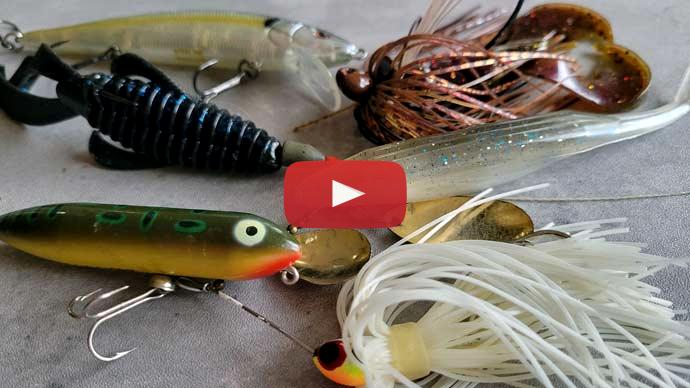
So I'm going to talk about 5 lures that work really well during the post spawn.
Let's start with walking baits. Top water walking baits. I'm talking like the Zara Spook or the Sammy. These baits are dynamite in the post spawn. I particularly over weeds, grassy areas. Or near docks.
The bass will get up under docks during the post spawn. You know, in anywhere where there's a drop right adjacent to a spawning area, say for example, a point or a little ledge or just a drop off those areas, I would be throwing that top water bait and just do a walk the dog retrieve very slowly and some with pauses in between.
And you can often get a lot of bites if you don't know how to walk the dog. I've got a video right here that'll show you exactly how to walk the dog. So teach you how to do that. It's fun to master it. And sometimes when you're learning it, you get hit and it scares the begeebeeze out of ya. But that's that's the fun part.
Water for colors. If the water is a bit stained or murky, then I would use an opaque color, usually something with a white belly, like a frog pattern with a white belly. That works really well in in that stained water.
If it's clear water, then I would go with a translucent color bait. Not clear, not transparent, but translucent. What I mean by that is you can take it and hold it up to the light and you can kind of see through it. You maybe see the BBS in it if it's got that. That's looks a little bit better. It's more of a silhouette and that clear water and the bass don't see it as readily and then so the more apt to bite it.
But that's, you know, there's a plethora of colors out there. Don't get too crazy. I just go for something like a bait fish color or frog pattern and it works really well.
The next kind of bait that works really well is a wake bait.
Now wake bait is, you know when you're fishing that Zara Spook and the water slicks out and there's really no wind. That's when a wake bait really comes into play. That's an ideal conditions and you know the water is that stained to clear works even better, but it can work even in that really dingy water too.
The key thing with fishing a awake bait is you know a lot of guys fish them too fast and they dive down too deep under the water you. Wake bait to be just under the surface. Actually, if you can cause a little bulge in the surface of the water, then you're fishing it, right.
Just a real slow, steady retrieve. You don't give it extra pops or extra action to it, just an easygoing retrieve. You do that over the tops of those milfoil weed beds alongside docks.
If you can find, you know, like a point. Fish that or some roadbeds, ledges, any kind of rocky areas. Those work really well.
If you got shad in your lake and you got a shad spawn going on, that'll happen early, early in the morning. Get out there super early right at the crack of dawn and get that glide bait out there. All right, sorry, get that, that wake bait.
Get out there early, early in the morning and whip out that wake bait right across those hard rocky bottom areas where the shad are spawning. You can catch a bunch of largemouth on that wake bait, so make sure you got one of those handy.
The next bait to throw is a glide bait.
Now I know a lot of you guys don't like the throw glide baits. They're they're they're bulky, they're like 5 to 7 inches long. They weigh a bit and they're kind of hard to work. It takes some practice because you're doing like a real turn that's about 1/4 to 1/2. Turn with a pause and then another real turn, another real turn.
You're not using the rod to work it per se, and so it takes a little bit of a cadence to get going for it to sashay side to side. And if you do it really quick, you can do real snap, snap, snap, snap, snap, snap, snap like that and it will zigzag like this.
That really goes after those aggressive bass, especially the ones that are fry guarders. That works really well.
You can see balls of fry with bass that are guarding them. Taking a glide. Made over through that ball of fry usually elicits a strike. I shouldn't say usually you do get a lot of followers with it. You do get a lot of followers.
A lot of bass will come up and follow, but they won't bite it. But they show that they're aggressive enough. And once you get that beta far enough away from the ball of fry, they turn around and go back to guard it again.
With that, I would back it up. I'd go throw that glide bait back over there or yeah, I throw that, that wake bait. That I just mentioned, throw that wake bait back over there and see if that get him to strike.
Sometimes tossing a Senko, if they're gonna follow it once they're, they're heading back over to that fry, grab that Senko and throw it and land it right back of that ball of fry. And sometimes they'll they'll nail it.
But that, that glide bait is going to help you locate those bass. And usually it the, the bites that you get during the post spawn are from the bigger bass.
So I tend not. I mean you, you can, you can fish those fry and the fry guarders. But if you're really getting frustrated with that, go over a little bit deeper. Find the next drop, the drop off, find a, you know, a weed line and fish it along there.
And sometimes those big females they've they finished spawning, they're sitting there in the weeds picking off bait fish and that glide bait comes along and that's a good meal to them and wap they’ll hit it.
Color wise, just stick with the bait fish in your in your lake. If you got a lot of shad, then go with shad color. If you got perch and bluegill, then there you go. Go with a perch or bluegill, particularly bluegill.
Bluegill are spawning this time of year. So a lot of bats are feeding on the blue. So a bluegill glidebait can be very productive.
Now, I'd be remiss if I didn't mention the spinner bait. A spinnerbait can be dynamite right now and I this is the time of year when I downsize on the spinner bait.
A lot of guys throw 3/8 ounce spinner baits. I throw three quarter oz throughout the year except for this period. This post spawn period, I'll downsize to about 1/4 ounce spinnerbait with Willow leaf blades.
There's a lot of species that have spawned right now. Right beside you got the bass of course, but then you got walleye. There's bluegill spawning the shad and catfish and several others that are all. So there's lots of fry out there.
So the smaller bait fish is what the bass are keying on. So that smaller profile spinner bait works really well.
Again, throw that over the tops of those weed beds or go along the weed edges like along Lily pad fields, along docks. If you can find rock piles, those are really good points. Tapering points. Just start from shallow and work your way out.
Deep brush piles work really good. Any kind of woody cover. You know, you can fish it around anything. That's the thing about spinner baits is that they're weedless.
So the color wise, I just stick with white with gold blades that pretty much covers everything. Any kind of bait fish that you've got in your lake, no matter what the species is that's like predominant, you might throw a little bit of chartreuse in there.
Or sometimes I'll take a little bit of chartreuse dye and tip the end of the white skirt with it to give that little bluegill flash. And that sometimes gets a lot more bites especially if you got a lot smallies and you're like, they like that chartreuse a bit and it bam, they they'll attack that. So quick little tip.
The next bait is a deep diving crankbait. And I do mean deep diving. These are the ones that go that's like up to 18 feet deep.
The reason is that a lot of these bigger females, they've pulled back off the shallows now and they're they, they're not in their deep summer areas, but they've pulled out in that 12 to 18 foot zone and they're feeding and they're feeding aggressively and you get a crankbait down in that area, you're going to get bit.
Points again, those rock piles. Ledges, shell beds, humps, any kind of Ridge in in those steep banks, almost like a bluff. Those are the areas that I'd be targeting with deep diving crankbaits.
And you know, again, stick with your shad colors, your perch colors, your bluegill colors. Those are the things that I'd be focusing on the experiment with rattles or not rattles.
This is, you know, you can throw. Lipless crankbaits over the top of weed beds that can work really well but this time of year. The wider wobble, it works really well.
Get it down in that depth and crank it about as slow as you can while keeping it at that depth. Is it just kind of wobbles down at that depth the diving depth is supposed to be at and that tends to get more bites on a real fast retrieve.
Give those a shot guys. Those baits right there. In those areas, you're going to find those fish and you're going to catch them.
Don't be frustrated in the post spawn. This is the time of year to really capitalize on where they're at and that feeding frenzy that they have. You're going to have yourself a ball.
For more tips and tricks like this, visit bassresource.com.