Alright, if you're fishing the post spawn and maybe you've gone on vacation or something like that, or you just haven't fished a lake too often, you're trying to figure out where the bass are basically a new body of water that's new to you. Where do you find them?
So I'm going to break it down in like four different types of lakes or reservoirs and that'll help you find them.
Let's start with a highland reservoirs. These ones are typically characterized by, you know, they're deep clear water, maybe even gin clear water. They're really rocky. They typically have shad in them, crawdads. It's like that's like their main forage.
Thing about the post spawn guys. Immediately after fish spawn, they're not really going to eat for about a week or two and they just kind of recover. They get lethargic, they don't really eat much. But after that the feed bags on and right about that time is when you're going to get the shad spawning and the bluegill start spawning.
So the shad, they really like that hard rocky bottom and the shad they actually spawn at at night. A little bit into the morning and bass know this they get up on them and they just feed heavily. So you got to get up bright and early. I mean you got to be on them right at the crack of dawn, but you get about an hour or two window where it can be dynamite.
If you find those hard bottom areas, that's where the shads are going to be and that is where the bass will be. So here you're looking for sharp points, rocky points, islands. Islands are great because you've got basically they're oval shape and you've got 2 ends to them and depending on the. Wind current or more importantly, if you got any current going through your reservoir, it's going to position that shad and you're going to be able to, you know, either fish one end or the other and that's where they're going to be stacked up on.
You're looking for rock piles, humps, those type of things, those rocky, harder bottom areas. That's where the bluegill also going to be. You know, the bluegill are spawning. You're going to find that easy. You find like a little flat and you can find it looks like little craters everywhere all over the place. And that's what the bluegill are spawning and the bluegill up are up there. You can bet that's where the bass are going to be feeding. They're going to be feeding heavily on those bluegills.
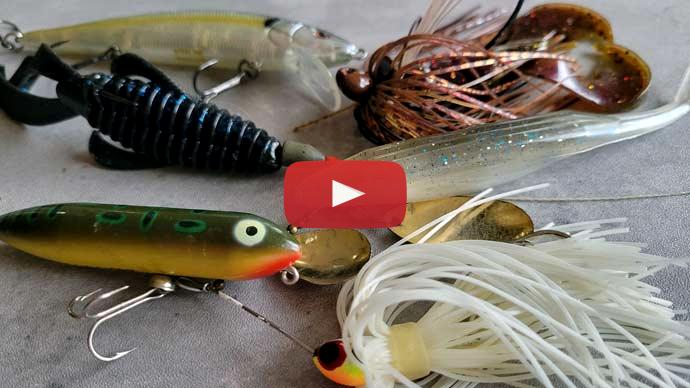
So that's a good area to go fish. I would be using like Flukes, for example, any kind of shad imitating bait like a crankbait, even tubes work really well. They imitate a baitfish. Those are the type of things that be focusing on for this type of reservoir.
Now, lowland reservoirs are a little bit different because, well, first of all, they're a lot more shallower than those highland reservoirs. The water is a bit dingy and stained, and you've got mostly weeds. It's really known for a lot of weeds. The bottom is usually a little bit soft, somewhat muddy. So you're going to fish a bit different here.
You're going to look at long tapering points of the areas you want to fish. Again, shad's going to be abundant in there. So is your bluegill. Crawdads and those long tapering points you. You can just, you can crisscross them from top to bottom and find what depth the fish are holding at. And then you can look for those weedy areas at that depth.
That's kind of how I take that apart because typically those reservoirs have a lot of weeds and it's kind of hard to figure out where they're at. So start with a a point and find that depth they’re that really narrows down your, your where you're going to fish.
And then again, go with the shad imitating baits. A smaller spinner bait works really good in the post spawn. Just there's been a lot of species that have spawned. This time there's a lot of smaller bait fish out there, so 1/4 ounce spinner bait with a Willow leaf blades on them works really well. This like for 3-4 weeks after the spawn. That's a really good time to downsize on your spinner bait.
Throwing again your flukes, crank baits, top water. Top water can be absolutely dynamite. This is one of the best time of the years to be throwing top water, especially over those weed beds where at that depth I was telling you about throwing a Zara Spook over it is this is probably the best time of the year to throw a Zara Spook.
I'd definitely be throwing one of those, buzz baits work really well. Frogs. This is giving a lot of guys talk about exceptional the frog bite is right now and that's there's there's no joke. You've got those weedy lakes. That's a good time to throw frogs over the top of that. So keep all that in mind. Those are. Areas to fish and great baits to throw.
All right, let's stop talking about the South. Let's talk about these northern natural lakes. It could be anything like the, you know, the Lake Erie and, and you know, Saginaw Bay. And these things are just, you know, up in Michigan or even out West, you know, these these natural lakes are kind of bowl shaped.
They've got a soft sandy bottom to them. Not much structure to them, maybe you got some points here and there and it's usually ringed by weeds and there's some hard bottom out there you can find it. Typically in like Lake Erie and these others where you'll find hard bottom areas with some rock piles and stuff out there, the forage there is different. You don't really have the shad.
Now you're talking gobies, perch, bluegill. Again, those hard bottom areas, if you can find those, if you can find rock piles, those things are going to be a magnet for a specific especially gobies, but other bait fish as well.
Again, those bluegill are going to find areas to to to spawn. And some of these lakes, it's shallow for miles. You know, the only in 6 to 8 feet of water maybe and you'll be feel like you're out in the middle of the ocean. But you find those hard bottom areas and those rock piles and boom, that's what they'd be now.
Another area to go. Is the weeds. The reeds are real. You know reeds. They grow in hard bottoms and. I typically that's where the bass want to spawn is on hard bottom areas. So those reeds are kind of bass magnets. They'll hang out around there after the post spawn until they make their way out. And then there's probably milfoil out outside those reeds where those bass will go into.
So start fishing those reeds and then move your way out into the milfoil because a lot of times sometimes you're fishing, you're those reeds and you're, you're standing in eight foot of water, maybe like those bowl shaped lakes I was telling you about and you could be standing. On top of the bass.
So a couple of ways to fish these. Small spinner baits, again, like I mentioned, top waters over the top of the weeds. Again, those work really, really well. So you make sure you be throwing those Senko.
Senko style bait can be deadly right now. Even the other lakes I mentioned definitely have a Senko handy. But here's one of the things. If you're in milfoil and you're standing up 6 feet of water, what have you, and you look down, if you got some openings in there, take a tube. Texas rig tube and drop it straight down and the water's usually clear enough you can see. Pretty deep and. Just drop it and jig it.
And you'd be surprised. Sometimes those bass suddenly just come out. They just kind of look at that and they go and then drop it. And you'll find one of those bass will chase it down and when it hits the bottom, they've got it. As soon as it stops, as soon it hits the bottom, they grab it.
You don't even have to see them, but hit it. You just hit the bottom, give it slack, and then reel up and set the hook. You've got them. It's a great way of fishing. I won a tournament that way. Most of the guys are fishing shallow. They're standing on top of the bass with their boats. So keep that in mind when you're fishing these natural lakes. That can be a real deadly way to catch a lot of fish in a hurry and and catch a lot of those fish the other guys miss.
Now we've talked about all the northern lakes. One of the things we want to talk about is the Florida lakes. It's like a different country like Florida is first of all, the spawn happens like in January and February and even a little bit of March. It might even happen in December. I mean, it's the rest of the country spawn is not happening, but it's it's happens that early.
So you're postspawn is way earlier in the season than most of us. The lakes are pretty shallow. Kind of a muddy, silty bottom to them and just a lot of weeds. A lot of different kinds of weeds.
Again, I'm looking for those, you know, reeds if you got them. But even if you don't have that, you look for points. And look for those, you know, those boat cuts, those boat alleys, those canals in canals between lakes, those tend to have riprap on them. They tend to have a harder bottom. They tend to be areas where they're void of any kind of, you know, it's, it's a harder bottom.
And when you got shad, shad are going to migrate to that, that's where the shad are going to be spawning. So again, that's a really good area to to fish during the postspawn.
So definitely, you know, and again, go back with this top water lures, you know. Right over the top of the weeds. Those Zara Spooks, buzz baits, frogs work really, really well.
On the outside of weed lines I would throw like a Rat-L-Trap lipless crankbait or a shallow diving like a square bill crankbait. Even bounce those off a riprap if you got them. Shad pattern works really well.
That's what you want to be throwing down on those Florida lakes during the postpawn.
So those are like four different types of lakes across the whole country and you should be able to pick up and catch a bunch of bass during the post spawn even if you've never fished that lake before.
I hope that helps, but more tips and tricks like this visit bassresource.com.