


Fall, followed by Winter, is an interesting time at the lake from a biological perspective. Many people think of Fall as a quiet time of year. In reality, for many pond creatures, Fall is a period of frenzy followed by Winter survival struggles. A good way to view the workings of a pond or, for that matter, a fish, is like that of an engine. An engine that is dependent on sunlight for power and nutrients for growth.
Add to that, fish are cold-blooded, making water temperature a critical factor in all metabolic aspects. Because fish are cold-blooded, they have optimum growth in warm spring and early summer waters, then growth slows and can stop, or even reverse, in extremely hot summer temperatures. Then, as the water starts to cool in the Fall, metabolism ramps back up as optimum temperatures occur again. Then metabolism slows as temperatures cool more into Winter, and feeding and growth slow substantially and stop. If not enough energy reserves of the right type are stored going into Winter, fish may have a difficult time.
Lack of adequate food resources is the most common reason for lack of energy reserves in many fisheries. Increasing food intake with very little energy use during the optimum Fall feeding frenzy period is good. Acquiring more energy and using less results in more energy reserves.
Obviously, in Fall and Winter, the sun's energy reduces to low levels, so the pond and fish engine slow down. However, in the optimum-temperature Fall lead-up to Winter, there is a frenzied attempt by fish to secure energy reserves.
They eat a lot if the food is there.
Fish energy sources are mostly carbohydrates, fats (lipids), and proteins (muscle). The amount of energy actually obtained and stored is lower than the amount present in the food, as some energy is used in catching food and in the fish's digestion, metabolism, and thermogenesis.
Understanding the role of energy as it works through biological seasons of the year is fundamental to management. This was noted in: Energy Partitioning in Largemouth Bass under Conditions of Seasonally Fluctuating Prey Availability by S. Marshall Adams R, B. McLean and J. A. Parrotta, Transactions of the American Fisheries Society 111:549-558.1982. Here, to maintain condition, Largemouth bass maximize caloric growth in the Fall, store visceral fat, and minimize active metabolic demands in preparation for Winter. This study site was in Tennessee, which, like many freshwater systems of the United States, particularly in temperate areas, has threadfin and gizzard shad as a primary prey source of several predators.
These prey species have large fluctuations in abundance due to heavy Winter mortality; thus, the growth and mortality of a largemouth bass population were indirectly influenced by temperature effects on prey availability. Shads reach optimum size and abundance in early Fall when temperatures are perfect for Largemouth metabolism, and the Largemouth need energy reserves, so the feeding frenzy begins.
This study notes that the growth of females was highest in June following the May peak in consumption (post-spawn feeding) and then gradually declined through a summer depression in growth and consumption. Males had high growth levels in the summer and Fall. More importantly, both male and female bass added fat during the Fall. Both sexes built up their fat reserves in the Fall when consumption (Fall feeding) was high, as evidenced by a Fall increase in the visceral-somatic index (VSI). Decreases in VSI in both sexes during the Winter and early Spring were likely due to the utilization of stored fat to meet metabolic demands when feeding and prey abundance were low, a pattern also observed in other fish species.
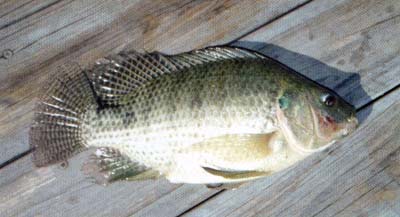
Obviously, different species of fish differ in their ability to use fat deposits. This, in turn, affects the temperature range in which different species can grow and survive. For example, Nile tilapia do not store excess lipids in the muscles but instead rely on visceral deposits, which it is incapable of using at low temperatures, resulting in high mortalities when water cools.
However, many pond species that are capable of using lipids (fat) from muscular and visceral deposits can survive much colder temperatures under the same conditions. It is believed that the lipid composition in the fish muscle plays a vital role in the ability of fish to adapt from one temperature to another. Variations in the liver weight of largemouth bass reflect storage of glycogen, fat, and water, which vary with consumption rate. Consumption was high during the late spring and summer, yet the liver-somatic index (LSI) of both sexes declined. This decline may have been related to the utilization of energy for reproduction and temperature-induced metabolic demands. Other studies have found this same pattern in the LSI for field-collected bluegill over a year and attributed the low summer LSI to spawning and temperature.
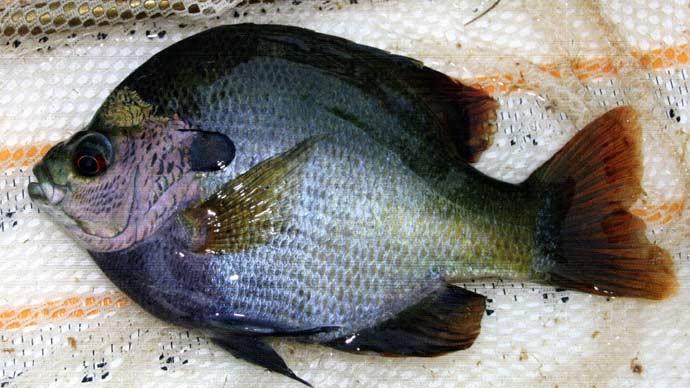
Fall is the period when many species accumulate these fat deposits while adjusting to a lower metabolism. Of course, it depends on a pond's location and the type of fish involved. Bluegill, like bass, consumed at higher rates in the Fall but had very little food during the Winter in more northern climates. In contrast, Yellow perch (a cool water fish) ate much more food than did bluegills during the Winter and did not have to indulge in the Fall feeding frenzy to the same degree.
So, as you watch the Fall changes around you, also look for falling fish as they eat away, packing on fat in preparation for Winter.
Reprinted with permission from Pond Boss Magazine