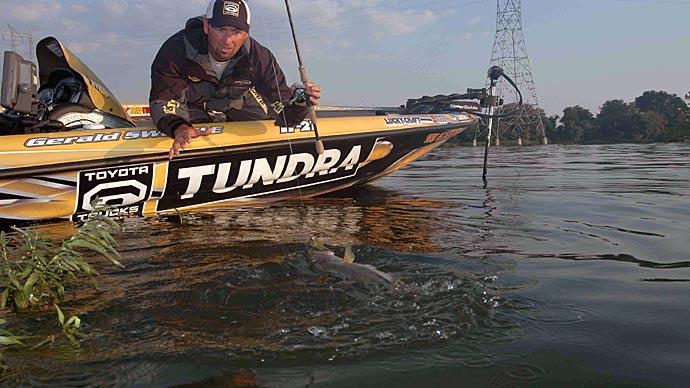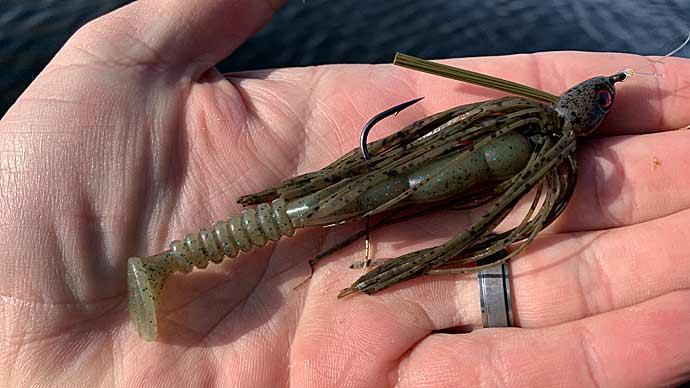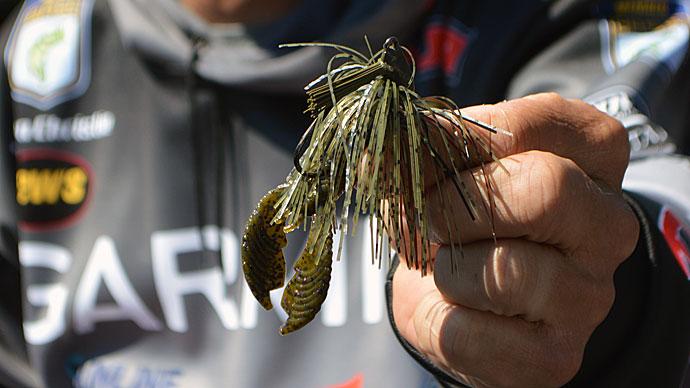



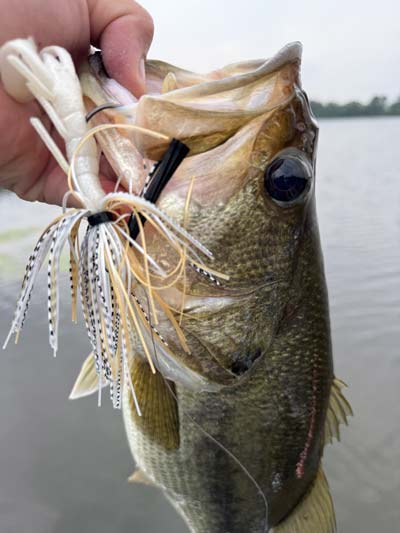
Swimming a jig is a proven way to catch bass, especially when fishing around vegetation. Standard casting and flipping jigs have been used on the bottom for decades and can be used with a swimming retrieve, but versions specially designed as swim jigs are excellent tools that come through cover very well.
The basics of fishing a swim jig are simple: cast it out and reel it in, but there are some tips and tricks when it comes to retrieves, gear selection, and type of jig that will take your swim jig fishing to the next level.
Vary Your Retrieve
A swim jig will catch fish with a standard cast and retrieve, but imparting action in the bait will it up a notch. One common way to fish these is by constantly shaking the rod as you bring the jig back to you. Popularized by anglers fishing around bank grass in Alabama, this retrieve is often called the “Alabama Shake,” but works everywhere. By popping and shaking the rod during the retrieve, you can get the jig to dance like a swimming fish, and the skirt will flare with each rod movement.
Even when using a standard retrieve, mixing in some pauses and twitches of the rod will give the bait more action. Sometimes these little movements are all it takes to trigger a bass that is slowly following your jig to get a better look, so be sure to impart some irregular action occasionally. After a few fish, you will also sense what the fish are reacting to on a given day on the lake, and this makes it easy to replicate it and hopefully catch more bass.
Choosing the Right Jig
Most swim jigs look the same: they have a pointed head that comes through grass and other debris, a skirt, and a hook, but there are some nuances to pay attention to. One of the biggest is the hook and specifically the gauge of the hook.
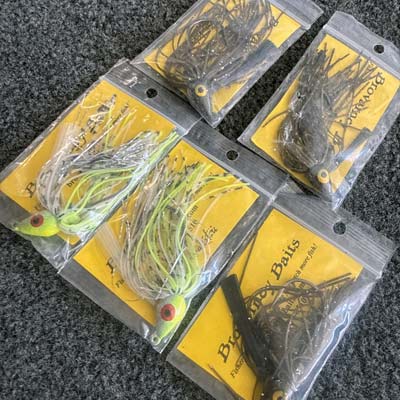
While a light wire is great for penetrating and hooking fish, they may be too light if you are using braided line. In this case, a beefier swim jig, such as the Strike King Hack Attack Heavy Cover Swim Jig or the Dirty Jigs No-Jack Swim Jig, will be the way to go. These heavier hooks are great for fishing around thicker cover and are also the choice for lakes with monster bass.
In most situations, a standard swim jig with a standard-gauge hook will be perfect, especially if you are using fluorocarbon line. Some good ones to check out are the Booyah Mobster Swim Jig, Greenfish Tackle Swim Jig, and Game Changer Baits Rocker Series jig.
When using thinner-gauged hooks, there are plenty of good versions on the market, and some are regional favorites in the Midwest, where swim jig fishing conditions are ideal, especially on the Upper Mississippi River. Two examples of these are the Brovarney swim jig and the Lethal Weapon II Swim Jig, each featuring a thin hook, a hand-tied skirt, and a finesse profile.
Jig Colors and Trailers
One of the best things about a swim jig is that it can imitate just about anything a bass eats. They can look like any forage species, just by changing up the skirt color and picking the right jig trailer.
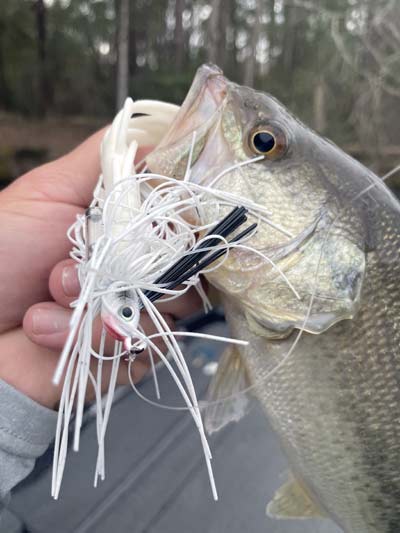
While many different colors will work, three are must-haves: a shade of green pumpkin, a white version, and black and blue. These three will cover just about any situation, and you can use a green pumpkin version to mimic a bluegill, white to match shad, and go with black and blue in dirtier water.
Soft plastic trailers can also help make your swim jig look more like food for a bass, and there are several ways to go here. A simple single-tailed grub like the Zoom Fat Albert Grub is a classic choice that still works very well. You can also opt for something with more of a crawfish appearance by going with a Strike King Rage Menace Grub.
Some other good trailer options are paddle-tail swimbaits like the Keitech Swing Impact FAT, which come in a host of colors and perfectly imitate the tail kick of a small fish. Another great one is the Yamamoto Zako, which comes in a standard version with a flat, vertical fish tail, as well as one with a larger, more aggressive paddle tail.
Swim Jig Gear
Now that you’ve picked your swim jig and trailer, you have to decide what gear to fish them. Like all jigs, baitcast gear is the way to go, and if you fish other jigs, you likely already have the perfect setup. A rod somewhere around 7 feet, give or take a few inches, is a good place to start, and you can fish them on both medium-heavy and heavy rods, depending on your preference and how thick the cover is around you.
For the reel, a higher-speed reel, somewhere around 7.1:1 or even faster, is a good option. This allows you to take up slack more quickly as you work the bait, and also gives you the ability to catch up to fish that quickly strike the jig and run towards you after they are hooked.
Swim jigs can be fished with both fluorocarbon and braided line, and heavier is generally the way to go, especially when fishing around thicker grass. A 15- to 20-pound fluorocarbon like Seaguar InvizX and braid between 30- and 40-pound test will give you enough power while remaining thin enough for longer casts. A four-strand braid like Seaguar TactX is also beneficial, as the rough edges of the line will act like a serrated knife as it cuts through vegetation.
The swim jig is a highly effective lure that works in many situations, across the country, and for the better part of the year. While you can make them as simple as you want to with the basics, little tricks when it comes to choosing the right jig, trailer, gear, and retrieve can make them even more productive.