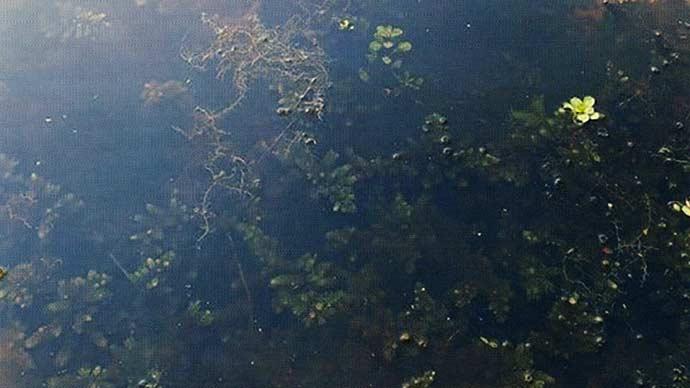


It's that time of year. We're knocking on the door of Summer Solstice, the longest sunlit day of the year. Aquatic plants are at their peak, growing strong. Depending on where you are and what species of plants you've got, growth will continue to escalate.
If your underwater salad bar is diverse, some plants tend to submit to others. Plant A grew well in early spring but slowed as the temperature rose. That rise on the thermometer opened the window for another species, Plant B. Even though it got a later start, Plant B grew in moderation because Plant A dominated a bunch of space.
They work together in a form of water harmony.
Then there's Plant C. That one, in particular, loves your pond and has been taking over more space over the last two or three years.
Funny thing, they are all native species to your area. You may have one or two of the pondweed species, or coontail, or Chara, or... you get the picture.
By mid-summer, the plants you appreciated over the last couple of years have migrated into areas that are now causing issues. They are invading your no-invade zone. What's a pondmeister to do? Start with the fundamentals. A key thing to remember is that plants are never the "problem." They are a symptom of the "problem," whatever that is. Plants are the sneeze, not the disease.
The "problem" is what caused the plants to become invasive.
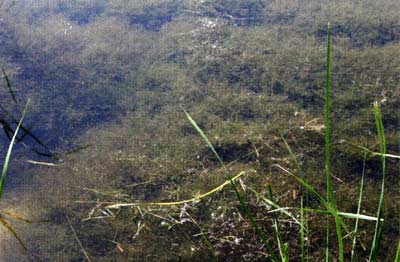
To analyze it, we need to understand the cause. Plants grow because of three things coming together. Take away any of the Big Three, and plants won't grow. Plants require food, a suitable temperature, and sunlight. Often, you'll notice a line of plants ringing the shoreline of a pond. Those rooted species grow to a certain depth and stop because sunlight penetration ceases at that point.
Plants typically grow in the littoral zone of your pond or lake. That's the shallowest area around the perimeter.
If you don't want plants to invade certain areas, make those areas deeper when you build the pond.
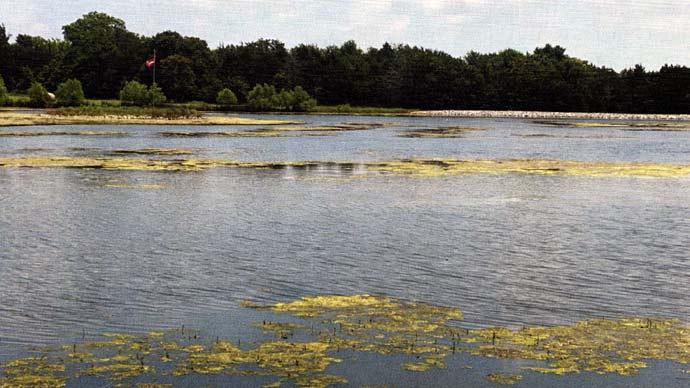
So, you didn't know that when you built the pond. Now, those plants that provided key habitat and escape cover for your tiniest fish over the early years have encroached where you really don't want them to grow. They've covered the beach you built for the grand peeps five years ago. Dense mats of plants clog the boat launch. Every time someone backs a boat into your pond, the trailer axle catches a wheelbarrow full of leafy pondweed and some stringy algae stuff.
When you cast off the side of the dock, your crankbait drags a mess of salad straight to the dock. You have to switch fishing tactics.
As your minor irritation button percolates in your head, the notion of doing something about the plants shifts closer to your crosshairs.
Then, you tie into a pretty nice fish, battling it almost to your dock. It makes a run for the border - plant border - and the thick mat of greenery beside the dock. Now the fish is hung up, and if you pull too hard, you'll break off, and the otherwise healthy bass tries to escape with a lure in its maw and a tug-along salad bar headed toward its Lalaland.
You decide to work through it gingerly, and after ten minutes of finessing and manipulating, the fish is free from the mess. The fight was robbed, and the fish is exhausted.
Time to do something.
What to do? You've read and grown to believe that some plants are a healthy part of your pond's ecosystem. That's still true.
As you ponder, so to speak, you conclude that some plants need to stay.
Now, you head to the University of Google to figure out your best game plan.
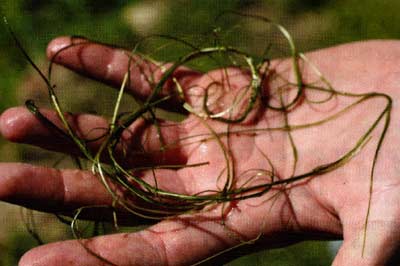
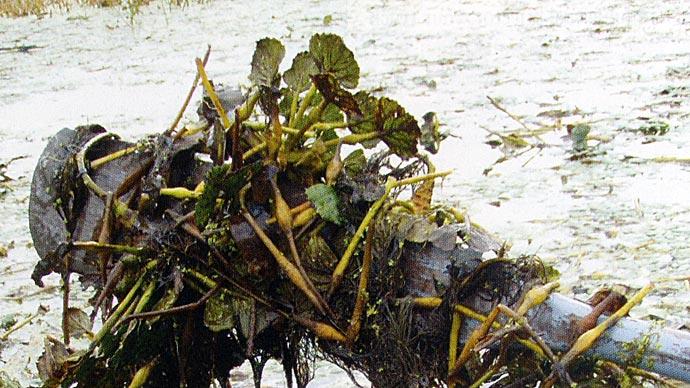
There are three basic approaches to dealing with invasive amounts of plants. You can physically remove them if it makes sense. That works with some plants but not so well with others. There are special rakes and cutters to assist this mission. Promise the local high school football team a cookout if they help you remove some of the excess foliage from your pond. Removing plants helps because when the plants are removed, so are the nutrients they use to grow well.
If physically removing them isn't necessarily your cup of tea, look at the use of triploid grass carp. Caveat—not all states allow these fish, and most states require a permit. Before deciding on this biological method of control, make sure your plant species is on the preferred list for grass carp. One more caveat—grass carp don't take instruction well. You can't tell them what to eat and what to leave. Grass carp gonna do what grass carp gonna do.
Your third option is to use an EPA-approved herbicide and take out the plants
you want. As you study, you find there are systemic herbicides, contact killers, and a wide choice of brands.
Here's your biggest pickle on this project. It's imperative to correctly identify the species you wish to target. Mis-identify your plants, and don't expect the herbicide you choose to work. You might get lucky...but luck isn't a qualifier for this event.
Identify your plant.
Since you're online, go to Texas A&M's AquaPlant website. It's a great place to spend time identifying the species of plants you're dealing with and then compare the different options for managing them.
For heaven's sake, don't just run over to the big-box store, buy some utilitarian herbicide, and toss it into your pond.
That's likely to end badly.
Take some time to figure out what you've got and then dial in on what is best for you to take out those areas where your salad bar has moved from the produce section into the canned goods aisle.
Reprinted with permission from Pond Boss Magazine