

A common request coming across my transom is to talk about northern ponds, especially smaller ones. From above, it's easy to see those little sparkles dotting the northern landscape. Lots of small ponds, two acres and less, settle in low spots in the countryside in states as New York, Illinois, Pennsylvania, Ohio, Indiana, and Illinois. Coming around the Great Lakes, with states like Michigan, Wisconsin, Minnesota, and Iowa, with their natural lakes, and Iowa, with lots of farm ponds, there's a slightly different mindset. The Dakotas have naturally formed prairie potholes, and Montana is dotted with farm ponds, with recreational ponds on the uptick.
Few pond owners in those northern states understand their little sparkles can be managed, much less know how to do it.
Some states, such as Montana, want to push back on people having ponds. A bureaucrat's unhealthy thought process perceives that people are taking publicly owned water and impounding it for other than the public good. They're scratching their heads over how to regulate people who dare to capture water for recreation or enjoyment, even though they use it only temporarily.
So, many people do not really understand the good things they can do with their ponds.
Starting in the Midwest and migrating north, pond owners view their waters very differently from folks in the southern and southeastern parts of the nation.
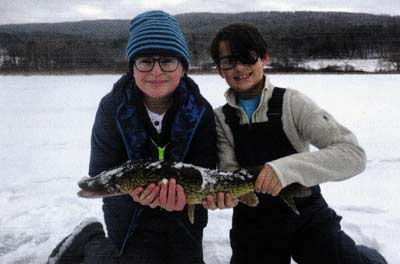
Fishing is not necessarily important for northern pondmeisters. Aesthetic beauty is important. Ice-related recreation is important. Ice-skating is a big deal, especially in the northeast. Ice hockey on frozen ponds is important there. Where fishing is important, ice-fishing often has greater value than summertime angling. In the Midwest, swimming is a big deal. People there want a gravel or sandy beach right out the back door for a couple of months of summertime enjoyment. Lots of those ponds have a dock, and Midwesterners love to catch big sunfish, yellow perch, and other cool-water fish.
In northern waters, biologists downplay the importance of fish management. They frown on fertilizing water to improve the food chain for newly hatched fish, and pretty much thumb their noses at feeding fish. Fisheries management is regionally important and often seems part of local culture... where fishing or fish production is important.
Toss in tougher regulations in those states, and fisheries management often sits on the back burner. While local culture in each of those states is significant, another key component of states north of the Mason-Dixon Line that southern states don't deal with is equally significant.
Winter.
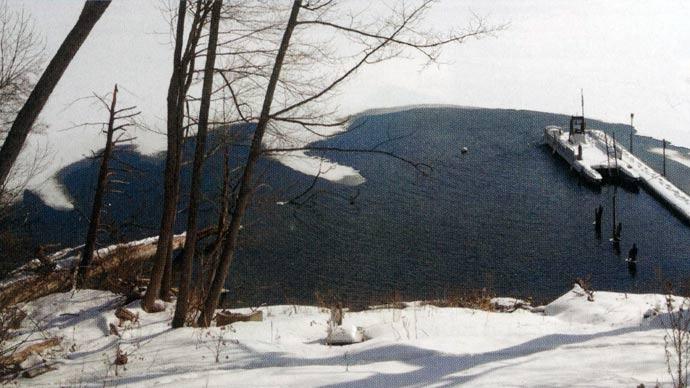
Ice cover.
With cultural differences embedded in the mindset, pond management in the northern tier states, as well as much of the Midwest, often involves dealing with water under the ice. That's a big reason biologists frown on fertilizing and feeding a fishery. Water with high levels of reused nutrients is susceptible to winterkill.
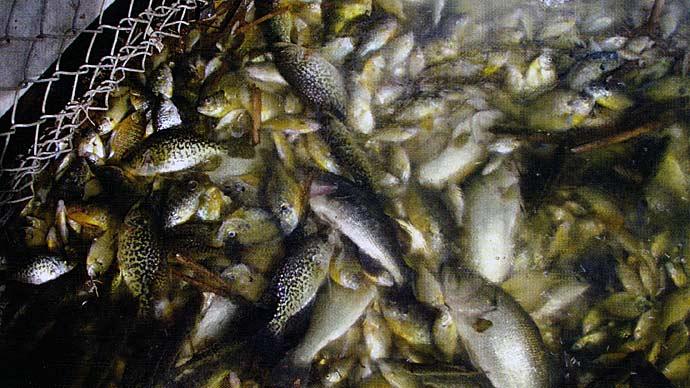
Winterkill.
That's the Number One strategy to manage around in your northern waters. How do we avoid winterkill? The true answer is: "You can minimize the risk...but not eliminate it."
Southern pond owners run the risk of oxygen depletion, pond turnovers, and fish kills in the summer; northern pond owners have a parallel risk in winter, under ice, especially cloudy ice.
To mitigate the risk of winterkill in small northern ponds, focus on water quality. Nutrient-laden water feeds green plants, from phytoplankton and tiny algae to rooted mats. Biologists' strategies are to minimize the inputs...thus the "no-feeding" and "no fertilizing" mindsets. Nutrients support more fish, maybe bigger fish, but the byproducts degrade water quality.
Mitigating degrading water quality is a short list. Aeration is undoubtedly a key player. Aeration expedites the breakdown of nutrients in the water column, but doesn't eliminate them.
You want to avoid carrying too much plant mass into the winter, and certainly don't want much of a plankton bloom during ice-up....and through the winter.
Winterkill occurs because water under the ice runs out of oxygen.
To address that, we must understand how dissolved oxygen forms in water. Water receives oxygen only in two ways: by contacting the atmosphere and via photosynthesis from plants. Photosynthesis only happens during sunlight hours. Cloudy ice prevents oxygen production and speeds up the opposite process. In the dark, plants consume oxygen and give off carbon dioxide, which can stress a fishery by altering pH. Since the ice blocks contact with the atmosphere, oxygen can't transfer through that natural means, either. That's a double-whammy.
That's the problem.
For your northern pond, think about happy water all year round. What are the things to do in August to prevent winterkill in February? What are things you can do in January to help the pond decrease its risks?
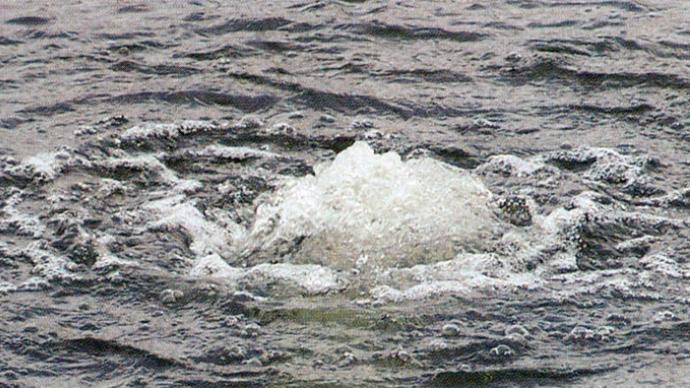
Watch plant growth each spring and summer. It's totally feasible to physically remove plant mats in small ponds. Rake them out. Compost that stuff for your garden, not your pond. As your water cools, consider newer ideas, such as sequestering phosphorus with products like Phoslock, to push key nutrients down to the pond bottom. Use aeration all summer to give water a boost in processing organic matter. Processing dead aquatic plants, leaves off your trees, grass clippings, fish poop...is all about moving the water. Moving water comes into contact with the atmosphere, allowing it to release natural gases from decomposition and to absorb oxygen, keeping those aerobic bacteria alive and doing what they do best.
Focus on your water.
Manage it to be as clear and clean as possible going into winter.
Another common question is whether to aerate during winter. I ride the fence on that one. In my opinion, if pond owners can have clearer, happier water going into the winter, there's little need to aerate, especially using bottom-diffused aeration. To me, ice safety is a much bigger issue than moving the water "just in case". Plus, by nature, northern ponds are supposed to ice over. If your water is healthy going into winter, don't aerate. Ice for northern ponds should be a good thing.
Learn this as well—ice protects northern waters from intense cold. Bottom water in northern ponds is typically 40 degrees. Aeration changes that. Even cold-water fish don't want colder than 40.
If your water quality isn't stellar as winter starts to close its icy doors, aeration may be your sole option to minimize the risk of winterkill. In that case, use a strategy. Drill holes, check oxygen levels. You can measure oxygen levels. If you don't know how, call an expert who can do it for you. Different fish species have different tolerances for oxygen before succumbing. If your water is trending downward, with dissolved oxygen levels heading toward lethal levels, you can use your aeration system "as needed" during winter to add just enough air and oxygen to keep it alive during the most critical times of winterkill risk.
Take care of your water year-round, and your small northern waters will respond in healthy ways.
Let's go ice-fishing!
Reprinted with permission from Pond Boss Magazine