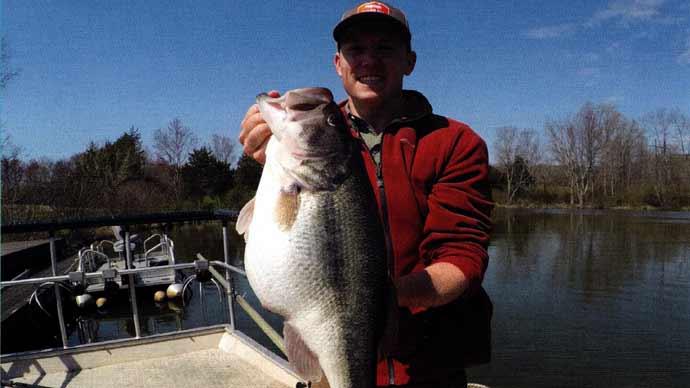


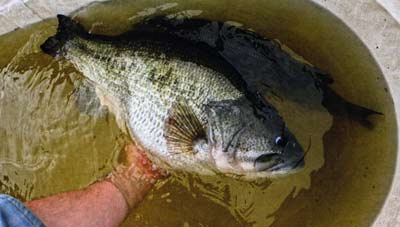
A Largemouth Bass fishery that continues to produce new generations of trophy fish is something to get excited about. At their core, these fisheries defy nature's natural course as they achieve sustained success. The path to trophy growth is narrow, and one slip-up can reduce top-end potential. Staying on track day after day, year after year, is nearly impossible.
Great water, the best habitat, and great genetics are a huge part.
But there's a lot more.
Most trophy bass fisheries produce just one or two generations before getting off-track. Although cultivating a single generation of trophy bass is an incredible accomplishment, it is often not the desired outcome for some landowners. It is disheartening to have to settle for less exceptional fishing following years of routinely catching trophy bass. As humans, many of us are wired to see improvement, which makes it even more challenging to watch a great fishery drift off course and have to settle for less than we expect.
A proper approach to sustainable success requires identifying all the ways the bass may fail to reach trophy size, then working diligently to prevent that failure.
Based on latitude, elevation, watershed, water depth, etc., each waterbody has a different likelihood of success, with some waterbodies having a significant advantage —i.e., a lower risk of failure.
Those with the highest odds of success are often those that naturally have robust, yet healthy levels of productivity, a long growing season, and limited external sources of risk such as flooding, drought, otters, cormorants, and other issues we may not expect.
Risks that lead to failure continually shift with the seasons and over the years. To complicate matters, issues vary from your lake to that lake to the one around the corner.
Although all fisheries are at risk of failing, trophy fisheries carry the highest risk, and it is normal for the probability of failure to be high. In some cases, a waterbody is not realistically capable of producing trophy Largemouth bass, making the goal unattainable from the start.
A few examples of this include: waterbodies with excessively high water flow rates throughout the growing season, water temperatures that are too cool for bass with great genetics to survive, thousands of fish-eating birds onsite daily at times when managers are not allowed to control them due to regulations, etc.
Oftentimes, even when the fishery is capable of achieving trophy status, the risk of failure is high relative to the available budget and effort required to succeed. In these cases, when the risk-reward is too poor, either the goal should be modified or a different, more suitable waterbody should be used to create the trophy bass fishery.
These risks can be broad or specific—broad meaning a threat to all fish, and specific meaning a threat limited to a single species, size class, or age class. Additionally, risks can be acute, meaning they immediately affect the fishery's ability to achieve its goal, or chronic, meaning the negative impact slowly chips away at the trophy fishery, preventing it from succeeding.
Knowing where to look and what questions to ask is a key part of achieving sustained success. After all, how can you identify potential risks if you don't know where to look or what to ask? These risks will either originate outside the waterbody (external) or within it (internal). Overlooking one place or missing one question is enough to derail an entire fishery. I have seen some of the best, most thought-through fisheries fail from an odd outlier that was not foreseen.
As always, stay proactive when possible. Reactive management is complacent management, and complacency reduces the probability of success. Given that success is not certain, a complacent approach is foolish.
Routine observations and data collection provide a constant stream of intel, clarifying the health of the ecosystem and key variables that help keep the fishery on track. The frequency of gathering the intel will vary based on the type of data.
For example, dissolved oxygen data should be checked far more frequently than the body condition of your trophy bass. And although the body condition of your bass is essential, if you are observing poor body condition, then things have been off track for a while. Water quality and the availability of forage fish both play significant roles in bass body condition, so rather than waiting until bass show signs of poor performance, make a greater effort to monitor the variables that lead to poor performance.
This approach of looking at leading indicators is undoubtedly more complex, since many of them also have leading indicators of their own. For example, baitfish are a leading indicator of bass growth, zooplankton are a leading indicator of baitfish, phytoplankton are a leading indicator of zooplankton, and water quality is a leading indicator of all of them. In some ways, this food chain example may seem straightforward. However, the complexities of the food web and environmental factors create a much more intricate system.
Water quality, weather, baitfish size, predator population, vegetation, disease, genetics, etc., all influence the overall balance. These interconnected factors contribute to the ecosystem's complexity.
A successful strategy requires boots-on-the-ground monitoring. A trained eye can pick up subtle details about what is going well and what risks may be present. Teamed with these intentional observations needs to be the use of specialized equipment to assess the ecosystem's vitals, similar to the bloodwork your primary physician looks at to monitor your health. In-field water quality monitoring provides key insights. Dissolved oxygen, temperature, Secchi reading, and pH are some of the data points to monitor. Additionally, water and sediment samples need to be analyzed in a lab, particularly for parameters that require precise techniques due to their low detection limits. Phosphorus and nitrogen are the two most vital parameters to assess in a high-quality laboratory.
In-field observations and water-quality monitoring, combined with lab results, provide a sufficient number of data points to begin identifying where the fishery is at risk. What parameters to monitor will vary from one waterbody to another, and the frequency at which you monitor them will depend on how much they fluctuate, as well as how well they stay within their ideal reference range.
Creel data and electrofishing data are both key to the fishery's long-term success. Angler data provides intel on the predator fish population. An electrofishing vessel, another specialized piece of equipment, provides significant insight into many fish species and allows an experienced biologist to determine whether the other observations and data available accurately reflect those collected while electrofishing. This is incredibly important when assessing whether you have the necessary puzzle pieces and whether they fit into place. Looking at comprehensive data, a biologist—or you—can see into the past and present and even predict the future to some degree, providing clarity in a complex scenario.
Failure almost always results from something you don't see coming, or from something you are being complacent about, and may not even know it. In other words, you may think you have a piece of the puzzle figured out, but in reality, you misinterpreted the available information or lack sufficient data. This is an error I see regularly while coaching high-quality, less experienced biologists. They have a natural tendency to trust a data point so much that they fail to validate it, even though they have other pieces of data at their fingertips that tell a different story.
Fortunately for those wise enough to look further, many variables are interconnected, providing ample opportunities to review multiple related pieces of information, but at times they tell different stories. These thoughtful moments can help you avoid the full extent of the failure you would have otherwise suffered. Whenever possible, take the time to validate what you believe to be true.
After all, we don't know what we don't know. It's wise to question your own observations. Bounce them off the pros.
When mitigating risks, it is essential to prioritize resources, ensuring you address them in the proper order of importance, starting with the more likely and working your way towards the less probable. Understand that solving one risk increases the likelihood that another will become problematic. This is a seemingly never-ending loop.
Even as technology advances and success is further automated, Mother Nature will still bring uncertainty.
Success is made easier with a management plan drafted by an experienced fisheries biologist who can effectively interpret data and provide necessary insights to make informed decisions. The ability to make informed decisions using subjective data is incredibly valuable if you are serious about growing big bass. The right experience, teamed with the right perspective, allows important details to be honed while dismissing less relevant observations with confidence.
David Beasley is a Fisheries Biologist and the Director of Fisheries at SOLitude Lake Management, an environmental firm providing sustainable lake, pond, wetland, and fisheries management services. Learn more about this topic at www.solitudelakemanagement.com/ knowledge
Reprinted with permission from Pond Boss Magazine