

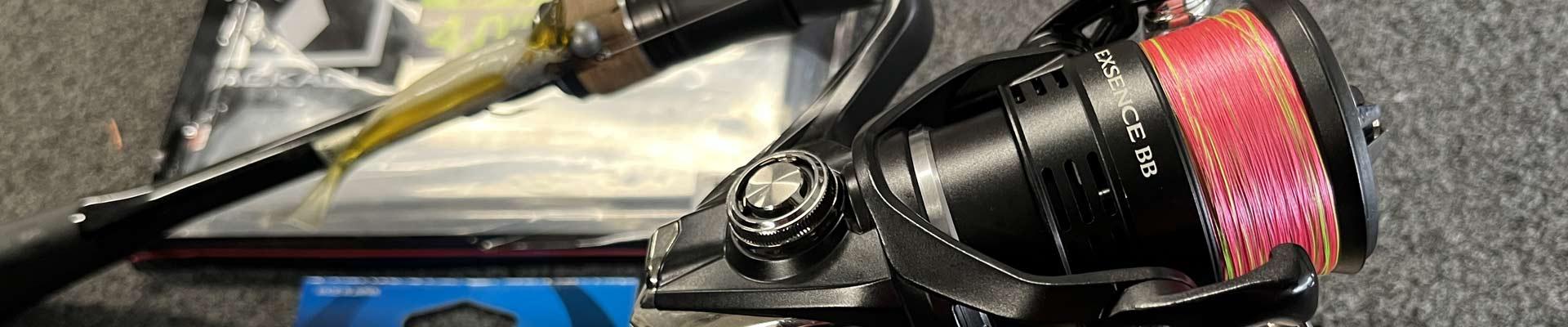
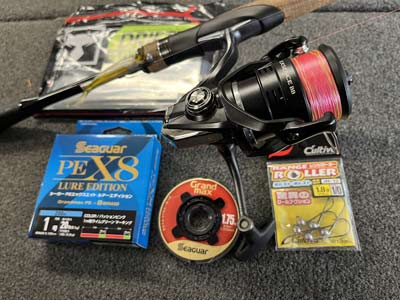
The only thing connecting you to your catch is your fishing line, and it can make the difference between landing a fish and becoming another fish story. That’s why fishing line is so important, and for some reason, many anglers neglect it, don’t take proper care of it, or try to skimp on their line budget.
Fishing line also comes in many different types, and it keeps getting better, so choosing a quality fishing line becomes even more important for catching more fish. With so many recent changes in fishing line, here are some things to consider before you get ready to spool up for your next trip.
Advances in Braided Line and Leader Materials
Braided line has now been out for decades, but bass anglers are finding more and more uses for it. Originally made for catching big bass in heavy cover, it still works for that, but it has also become the go-to for most bass anglers on their finesse spinning gear setups. Paired with a fluorocarbon leader, you get the casting distance and sensitivity of the braid, along with the nearly invisible properties of fluorocarbon.
With the popularity of braid on spinning gear, it’s becoming thinner and stronger, so you can get even better performance. One example of this is the Seaguar PEX8 braid, which was developed and sold in Japan before it came to America. This line is much thinner, so you can go up a size or two without sacrificing performance.
For fluorocarbon leader material, you can use any fluorocarbon you like, but some are designed for short sections as a leader rather than as a main line. These include leaders like Seaguar Grand Max, which comes in many sizes and offers very little stretch and very good abrasion resistance, two key features for a leader material.
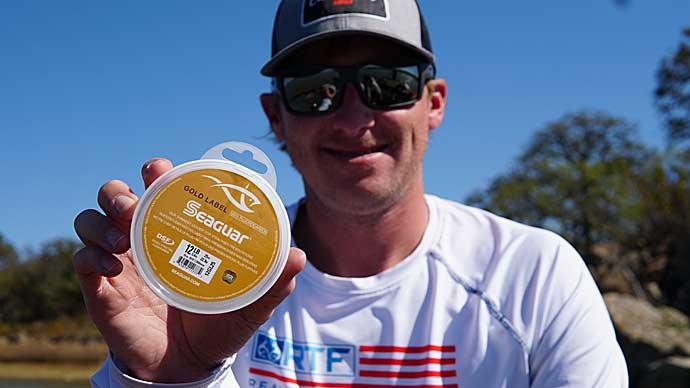
Two more options are Seaguar Gold Label, which is incredibly thin, allowing you to use a heavier line than you normally would. Another less expensive option is Seaguar Pounce, which is very abrasion resistant, has great knot strength, and very little stretch.
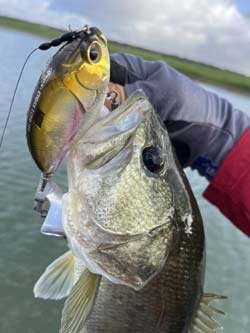
Another great way to use braided line is with topwater baits, because it casts so well and its zero-stretch properties help you get better hookups. This is especially important with techniques like this, where missed and lost fish are more common than we’d like. A 30 to 40-pound braided line is a great choice for just about any walking or buzzing topwater bait, and you’ll be amazed at how far it will cast.
Fluorocarbon is the Standard
For most bass fishing applications, fluorocarbon fishing line has become the standard. It has properties that make it great for bass fishing, including its near-invisibility underwater and very little stretch, which gives you a great feel for what your lure is doing. This also helps to detect light bites, leading to more hooksets and bass landed.
Even though it’s so popular and readily available, choosing a fluorocarbon line can be confusing with so many different brands offering it. Even within the same brand, there are many different choices, so here’s a quick rundown of some of the lines from Seaguar, the inventor of fluorocarbon.
Since they develop their own fishing line from resins and can control the formula, each line they make has a “recipe” that gives it its own personality and properties, making it different from the others.
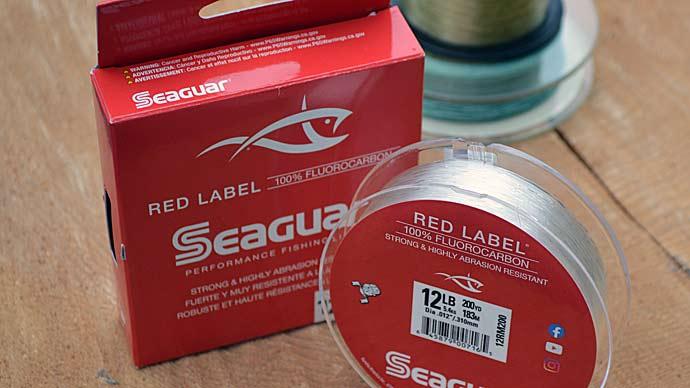
Some of the most popular lines they produce are BasiX, Red Label, and InvizX, and they are completely different. BasiX is the lowest-priced line they make and was developed for anglers looking to make the jump from monofilament to fluorocarbon. It’s a smooth, good-casting line that works for just about any technique, including those on spinning gear. Red Label is another very popular option that won’t break the bank, with great knot strength and low stretch, while InvizX is much softer and more manageable.
Two others to consider are AbrazX, which, as its name suggests, was designed to be more abrasion-resistant. This makes it a perfect option for techniques like cranking when you are working your bait around rocks and wood. It’s also a great choice for anything where you are dragging a bait along the bottom, and your line takes the brunt of the abuse.
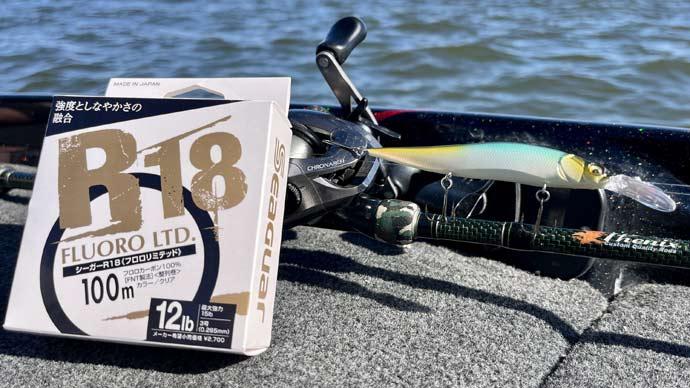
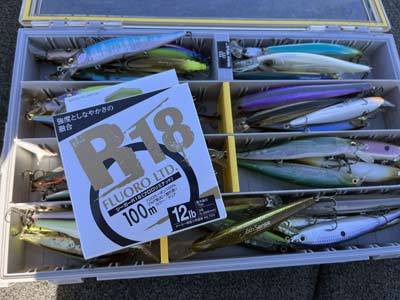
The top-of-the-line from Seaguar is Tatsu, a double-structure fluorocarbon that features a hard core for strength and sensitivity and a soft exterior for suppleness and knot strength. It’s a high-end line that offers the best performance of any fishing line today and works well with any bass-fishing technique that calls for fluorocarbon. Similar in design to Tatsu is R18 Fluoro Limited, which comes from the JDM market and offers unique sizes so you can dial in your presentation to precise pound tests.
Is Monofilament Still Relevant?
With the advances of braided line and the explosion in popularity of fluorocarbon, is monofilament still an effective tool for bass fishing? The short answer is yes, it’s worked for many decades and will still work just fine today, even if it may not be the best choice for some techniques.
While some anglers choose fluorocarbon because it has less stretch than monofilament, some stretch can be beneficial in certain situations. This little bit of stretch can be beneficial with some baits that use treble hooks, like crankbaits and topwaters. Monofilament works well with these baits, and many anglers still spool it up when fishing them.
Another benefit of monofilament is its floatability, making it ideal for wake baits and topwater lures. Braided line also floats and casts farther, but monofilament works great for these techniques and is especially good for wake baits worked slowly on the surface and walking topwater baits.
Like all things in bass fishing, fishing line has become much more specialized and driven by technological advancements. It’s a vital part of bass fishing, so choosing the right line for the job is an important decision, and thankfully, we have many great options to choose from.