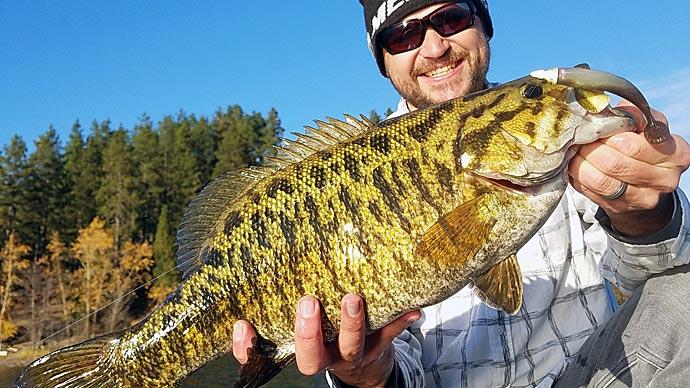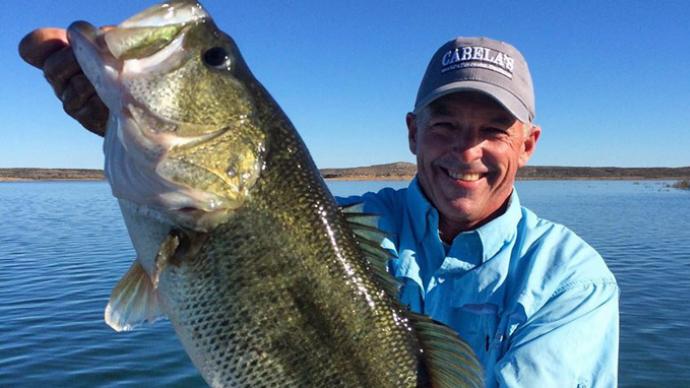


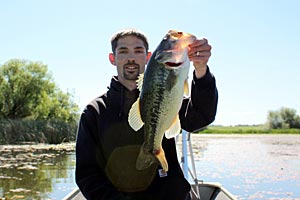
Sight fishing during the pre-spawn and spawn is a challenge, but the payoff can be huge. Some of the largest fish can be caught, and quite interestingly, there are only a few rules you need to know to be successful.
1. Polarized glasses are a must
2. Sounds and boat vibrations are your worst enemies
3. Patience is a virtue
My Gear
Polarized glasses help reduce glare. Good quality lenses will reveal underwater structures, cover, and fish. While you can choose different color lenses for specific water clarity, I find grey- and brown-tinted lenses work best here in the Pacific Northwest. If you would like to know which models I use, check out the NOCS from www.solarbat.com.
Frames are often overlooked, but just remember that on a bright sunny day, you want to eliminate any outside light from entering around your eyes. Choose a pair of glasses with excellent polarized lenses and a frame that covers your eye sockets completely.
A strong medium-heavy rod and fluorocarbon is essential, but there are no limitations on reels. I prefer a high-speed gear ratio, but this is not required. The Shimano Curado E7 has been a staple in my selection, but the Lew’s Tournament Pro has given me greater control with its dual-braking function.
Game Plan Success
Blindly entering spawning flats or cruising with your trolling motor on high will give away your location and make it very difficult to effectively sight-fish. Pockets and coves, especially those with cover such as lily pads, are the perfect place for largemouth bass to spawn. You will often find fish sitting underneath or around pockets of openings in these pads. Females like to have cover around, but other features, such as logs, rocks, and gravel bottoms, can be important depending on your body of water.
There is no easy way of finding these fish, but if you spook a female and she swims away, patience will more often than not reveal her position. Females often circle their beds after being spooked, so sitting still for five or ten minutes should allow that area to calm down and return to a normal state. Once you can effectively see the fish, position your boat at a “flipping or pitching” distance.
Your boat distance can range from ten feet to thirty feet, but casting at these females will often result in spooking the fish once again. Flipping and pitching your lure with a soft entry (splash-free) has been the most effective for me, so being efficient with one of these two techniques will help you tremendously.
Here are my two biggest recommendations:
1. Never touch your trolling motor when set, and
2. Always use a bright colored lure
Patience
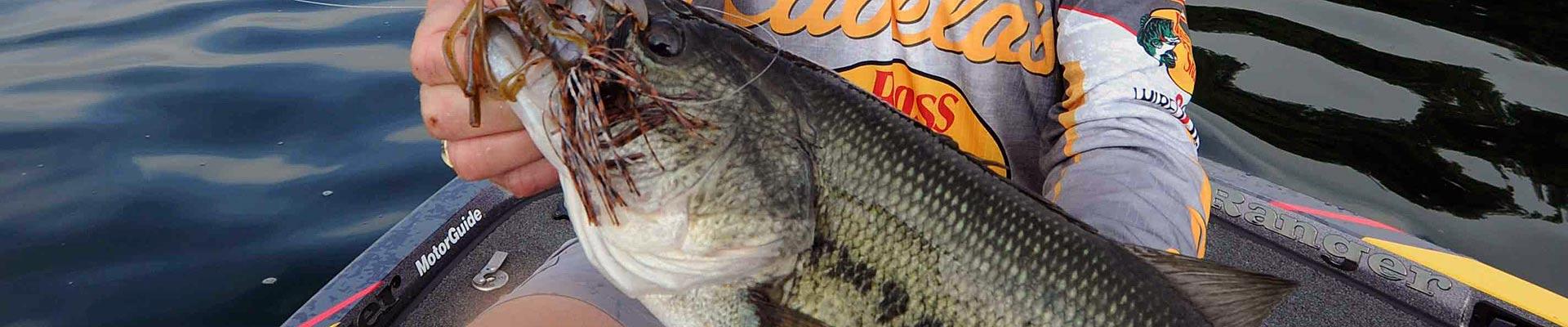
By using a bright colored lure, you are essentially making your job of seeing the ‘pickup’ easier. A female can pick up your jig and move it off the bed without you ever feeling the slightest of movements. It is no magic trick – they are just that good. An all white jig with a trailer has been my most effective combination, and to be honest, the trailer does not even have to match.
Working on a fish for 45 minutes to 2 hours is a real possibility, so patience is one of the most important ingredients. Reading the fish’s language —such as an irritated state —reveals fast-moving fins and behaviors like blowing on your lure. The more change you notice in her personality, the more likely you are to get her to bite.
Sight fishing is a method that many anglers simply avoid because it is hard and demanding work. Intense focus and casting skills are needed because these fish are at the height of their senses. By using a high-speed reel and fluorocarbon line, you can present your lure in the most effective way possible. By taking a quick photo and releasing her to the same position, you can be sure that you have accomplished one of the hardest tasks in bass fishing.
Image

Daniel Rice is a blogger and enjoys time with his wife, parents and man’s best friend. As a senior marketing student at Eastern Washington University, he looks forward to the next chapter of life. |