

It is generally accepted that there is a predator-prey "balance" between largemouth bass and bluegill. The predators eat the prey, keeping their populations from becoming overpopulated. In return, prey reproduce and make many more offspring than needed, feeding the predators. I have always preferred to think of this relationship as a spectrum rather than a balance.
On one side of the spectrum, you have too few predators. Prey overpopulates, depleting food resources to the point where prey growth rate is slow and maximum size is small. The condition of these prey also tends to be poor, often with bream that are about the size and thickness of a credit card (a bit of an exaggeration, but you get my point). This is a common situation anywhere where Largemouth bass are overharvested or recruitment is limited. In this situation, bluegill fishing is terrible, but the limited predators have practically unlimited small prey to eat. So, bass grow fast, large, and tend to be nice and plump, if you are lucky enough to catch one.
On the other side of the spectrum, the predators become too abundant. They eat any prey that can fit in their mouths, but the availability of prey is limited, so bass grow slowly, stay small, and rather skinny. The few prey that make it through the bass gauntlet have little competition and practically unlimited food available to them, so they grow fast, large, and fat. This is a common scenario where fishing pressure is light and when people have an aversion to killing bass.
Understanding this relationship, the pond manager can manipulate predator and prey populations to achieve the management objective, whether it is to maintain trophy bass, produce huge bream, or create an all-around quality fishery. It is all about maximizing food availability for the target species. Conversely, neglecting ponds typically leads to a bass-crowded situation, especially in southern ponds.
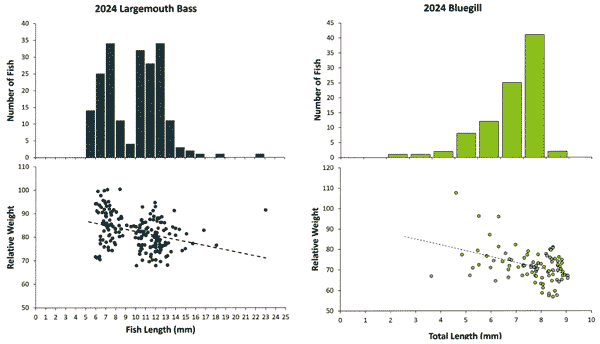
In one Mississippi pond, lack of fishing effort and general neglect by a lazy manager (yours truly) has led to this apparent bass-crowded situation. The pond has historically been used for sporadic research, teaching, and occasional fishing, so it naturally tends towards being bass-crowded. In the past few years, however, very little attention has been paid to the pond, and the overcrowding of bass has worsened.
This past spring, I decided to check the fish population. My student and I electrofished the 5-acre lake in March and collected all species to be measured and weighed.
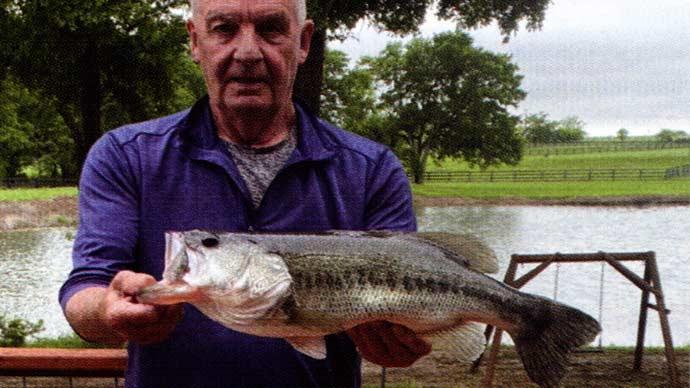
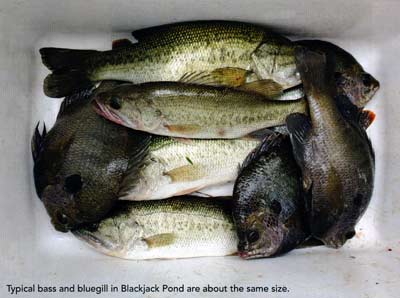
The bass looked exactly the way I expected. The vast majority were less than a pound, and I could count on one hand the number of fish in the 1- to 2-pound range. Only three fish exceeded 15 inches, and like many bass-crowded ponds, there was that one fish that somehow managed to escape the bottleneck and grow much larger. And, of course, the condition was poor, with fish averaging about 82% of their expected weight.
The typical bass-crowded situation, right? Not exactly. The coppernose bluegill were not representative of what I would expect. They weren't bad in terms of overall length. Most were at least a third of a pound, and some reached the half-pound mark. I would expect a little bigger, I guess, but a half-pounder isn't too bad. The real issue was with condition.
With the abundance of small, skinny bass, I had expected that the bluegill populations would be maintained low enough that prey for bluegill would be abundant. Yet, my fish are all skinny! Overall, bluegill weighed only 72% of their expected weight, and fish eight inches and larger were at only 69%. What the heck is going on?
Usually, when I see both prey and predator populations underperforming, I suspect unhappy water. When water chemistry is poor, as in basins with very low alkalinity and hardness, I often observe poor performance from all species. Likewise, if ponds have very low nutrients or a high rate of water turnover, the same can occur. However, this pond is averaging around 60 mg/L for both alkalinity and hardness; the retention time is more than adequate, but the nutrient loads are somewhat high. The water seems happy enough to me.
The next potential scenario is an excessive number of weeds. In a pond with excess plants, the bass simply cannot catch the available prey because the plant structure is too complex. The bass stay small because they cannot eat, and the bluegill stay small because they can avoid capture and thus become overpopulated. There was a bit of a filamentous algae bloom at the time of sampling, but this is an annual yet temporary phenomenon that typically resolves within a month or so. There was also a little slender spikerush, but it had just recently appeared and was not very dense. There simply had not been enough time for it to impact condition.
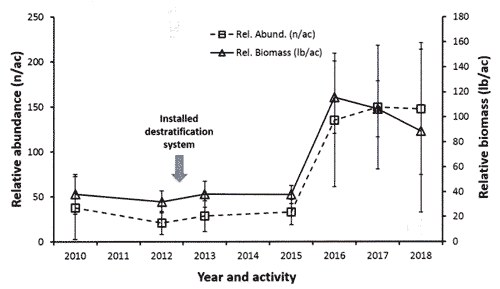
If you have been a long-term reader of Bassresource, you may remember another article that I published in the September 2018 issue under the same name as this article. I described a study where my students and I had installed a destratification system in this same pond and found that bass biomass tripled over the next few years. It is safe to assume that if predator biomass increased, so did the biomass of the prey that supported them. I concluded that the action of continuously mixing the pond had increased the carrying capacity of Blackjack Pond.
The mechanism of the increase was a little less clear. Maybe it was as simple as increased habitat availability during the summer. Often, waters deeper than 4-5 feet have very low oxygen in the summer months, restricting fish to the warmer, shallower waters. This limits food availability and increases metabolism. Destratification would double the available summer habitat and lower bioenergetic costs by keeping fish cooler, as they can now go deeper when needed.
Destratification can also impact the physical and chemical functions of ponds, which in turn can influence biological productivity. Research has demonstrated destratification affects thermal and oxygen patterns, chemical processes, and nutrient dynamics, among other things. One study reported that productivity was three times higher in lakes when aerated, and this increased production should be transferred up the food web. When carrying capacity increased in Blackjack Pond, both bass and bluegill reproduced to fill the void.
The compressor for the destratification system was rebuilt shortly after that study; however, by 2022, it was showing signs of wear again. Less air was being drawn to the diffusers, resulting in reduced water circulation. At some point in 2023, the power to the compressor was shut off. It had been run from an old building nearby, and university administrators decided to demolish the building. To recap, aeration had been reduced and then ceased over the past two years. As you can guess, once destratification ended, the pond no longer had the conditions that allowed for the increase in carrying capacity.
It is much like when you stop fertilizing a pond after many years have passed. Suppose you have properly fertilized a pond for six years but decide it is too expensive and time-consuming to continue. After fertilizing for that long, the system has double or triple the natural "unfertilized" biomass due to the nutrient additions. Then, you suddenly stop fertilizing. Productivity declines almost immediately, and the pond can no longer support the standing biomass. That is when bad things happen. The condition responds first, and the fish all get skinny. Eventually, the size of predator and prey populations begins to decrease towards the old carrying capacity, but that requires mortality to occur and can take several years—meanwhile, hungry fish.
In other words, Blackjack Pond returned to its original carrying capacity when the destratification system ceased to function, and the fish populations are now beginning to respond predictably. It will likely take a few years, although some judicious harvest will help. We will continue to sample them so that we can better understand this process.
Maybe this article series will be a trilogy.
Dr. Wes Neal, Extension Professor at Mississippi State, serves as State Extension Fisheries Specialist and is passionate about educating the public on small lake and pond management. He is an avid researcher on topics from farm pond management to sport fish genetics. Wes is the lead editor of Small Impoundment Management in North America, the only textbook on the subject. He loves to hunt and fish. wes.neal@msstate.edu
Reprinted with permission from Pond Boss Magazine