

There is so much to learn, so little time! Peeling back the layers of pond management takes some time to truly comprehend how those layers got there in the first place.
You all know the drill, those fundamentals. Happy water, excellent habitat, super food chain, best genetics, and a harvest plan for the bounty outside your goals. That's the basics, the core principles of having a pond you can truly enjoy as a fishery.
It gets a little more ticklish when we raise the lid on each of those principles for your particular sweet piece of water.
Is your water happy? Doing enough, based on a good learning curve, can guide you to a "yes". Water chemistry is part of that. Water temperature is the driver. Minerals and metals dissolved in your water, along with the different nutrient parts, are the vehicle to create the journey for whatever lives in your water.
Water chemistry is valuable to know. But the important part is understanding how all that stuff is intertwined for your pond. Water quality parameters guide the wet stuff to do its job. Part of your job is figuring out what all those parameters mean to you and your goals.
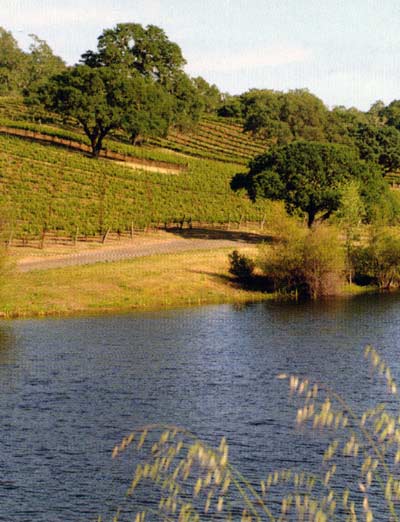
The habitat part is a strong piece. How much is enough? Do you have all the right stuff for all the different size classes of your fish that are, and are yet to be? If you don't, there will be a weak link in your biological chain, like trying to pull your truck out of the mud with a two-piece tow chain held together with baling wire.
There's always an obstacle.
That's an absolute truth you can take to the proverbial bank...pond bank, that is.
Obstacles
Just as you have that favorite water hole exactly where you think you want it, here comes a curve ball when you are looking for a fastball.
Just wait until nature throws a change-up, which will absolutely happen.
There's another absolute truth in pond management. Change-up. Change will happen. It has too. It's a law, a truth. Storms, droughts, floods, neighbors adding some fish because they think it's helpful. Poachers with two legs, poachers with four legs and sleek tails in the middle of the night, birds, unforeseen incidents...you'll see if you haven't already.
My mom used to say, "If it ain't one thing, it's another!"
I was in my 30s before finally figuring out what that meant.
For the rest of us, as slow as I am, it means something is going to happen, and we best expect it. If we do, our stress levels drop and we can deal with that issue, whatever it is.
For our ponds, we expect for things to shift. When one of us makes a decision, or if we don't, there are consequences. Those consequences lead to results. Results lead to more decisions. The further down the line of a decision we can look, the better decisions we can make.
Okay, Lusk, enough double-talk. What in the world are you trying to say?
As you ponder your pond, think way past the easy. For example, you plan to feed the fish. Good call. Then, what? Your fish will grow. Then what? If feeding a good feed suitable for those fish, you'll get good conversion rates. Then, what? When you feed 100 pounds of feed, you'll likely get 75 pounds of fish, and 25 pounds of fish waste, whether breathed into the water or out the tailpipe of your fish. Then, what? Your happy water has to digest that extra stuff, while it holds another 75 pounds of fish you just grew. Do that over and over, and at some point, there's a pushback.
If your habitat doesn't sustain lots of baby fish, then those great fish you are feeding will age out without a substantial junior varsity coming up the pipeline. Then, what? After six or seven years, you'll start to see waning numbers of your great fish. Then, what?
Then, what?
You can take those five fundamental principles and play them with and against each other, depending on how adequate each one applies to your pond.
I know we're not really trying to earn a Ph.D. in pond management. But we want to be as proactive as possible...and that means raising the hood and studying this vehicle we call our ponds and lakes.
If we do, we can have a nice trip.
Reprinted with permission from Pond Boss Magazine