

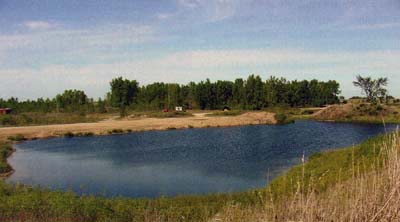
Three years ago, a thoughtful question crossed the transom at the "Ask the Boss" discussion forum on the Pond Boss website. A Michigan pond owner, a subscriber of the magazine, queried, "I have a half-acre pond, about six years old, and am wondering about different goals for northern ponds. We are always talking about trophy fish, but what about the guy who wants as little maintenance as possible"? He wanted to know if people can have a "mother nature" kind of pond—keeping an eye on the health of the water and just letting everything else go on its own.
One of our northern pond gurus, microbiologist...seer of things both small and large, Bill Cody, chimed in with an excellent response.
In summary, here's what Cody said, "One can easily have a relatively low maintenance pond with a lower natural density fish community. No feeding, only warm-season aeration, natural fish balance, with maybe occasional fish harvest to adjust fish numbers as appropriate for that pond.
In my opinion and experience, the most significant factor for a lower-maintenance pond is to build it so that it receives minimal external organic inputs. Without feeding in a 1/2-acre pond with central Michigan soil fertility, expect around 80-100 to possibly 120 total fish pounds in 0.5 acres.
You determine how those pounds of fish are distributed among the fish present. More little ones, more larger ones, or some sort of nature's reproduction balance based on predator—prey species. A good fish combination for mid-Michigan would be yellow perch, maybe pumpkinseed sunfish, and smallmouth bass. Smallmouth bass have very little control over bluegill numbers. Largemouth bass would soon eliminate all perch once the original stockers died of old age, unless the pond had beds of submerged vegetation. However, common weed beds would not be low-maintenance.
Weeds would tend to become overabundant. They always do. If you stock perch with Largemouth bass, you usually eventually have just those bass, once the stocker perch die.

If you want a real low-maintenance fishery, then just stock several smallmouth or Largemouth bass. No forage fish; let them eat just invertebrates. They won't grow bigger than 10-12 inches, but will achieve a numbers balance as mostly adults, and keep larger invertebrates and frogs at lower numbers".
While stocking a single species, such as Largemouth bass, is a rare occurrence, Cody does make a valid point with that suggestion. The question centered on low maintenance and a single-species predator fish population, which surely simplifies management strategies and keeps overall productivity low. Low productivity helps with the low-maintenance caveat.
Odds are high, however, that other species will swim into the pond in flood events, even in northern ponds.
Another key comment Cody made was referencing aquatic vegetation. If it thrives in your northern waters, expect the plant's nature to become more invasive over time. Be aware.
One of the most critical points about ponds in the northernmost regions of the United States is to totally understand the value of managing water quality. That's the number one issue.
You'll service your car, winterize your equipment—the same principles apply to your pond. Service your water—during warm months. The farther north, the deeper a pond should be. In the Midwest and the South, depth is more of a concern for storage capacity. In the north, it's more of an oxygen storage capacity under the ice, all winter.
Those of you with northern ponds understand that drill.
As more organic matter slowly decays under the ice, more oxygen is consumed, with no way to replenish it until the ice melts. The longer a pond is covered with ice, the more likely you'll see winterkill. Shallowness magnifies the issue.
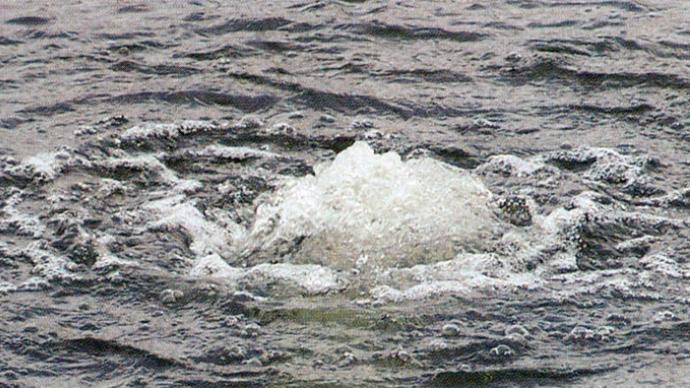
Winter aeration is undoubtedly a viable option, but with extended periods of below-freezing temperatures, a pond owner needs to understand the limits of the equipment and the pond itself. Keeping the bottom diffuser in the deepest water increases the risks of losing fish to frigid temperatures. After all, the ice actually acts as insulation. We want to keep our deepest water protected from the bitter cold. Keeping a hole open near the shoreline can certainly make sense in shallower water—minimal risk of fish kill, open water for wildlife, and oxygen refuge for fish. A large, open hole in the middle, with a bubble plume pushing water upward, causes the temperature to plummet throughout the water column.
While striving for a "maintenance-free" fishing pond in the north may be a goal, it's unlikely to happen if you want to maintain any semblance of a substantial, fishable population of your favorite creatures.
Reprinted with permission from Pond Boss Magazine